
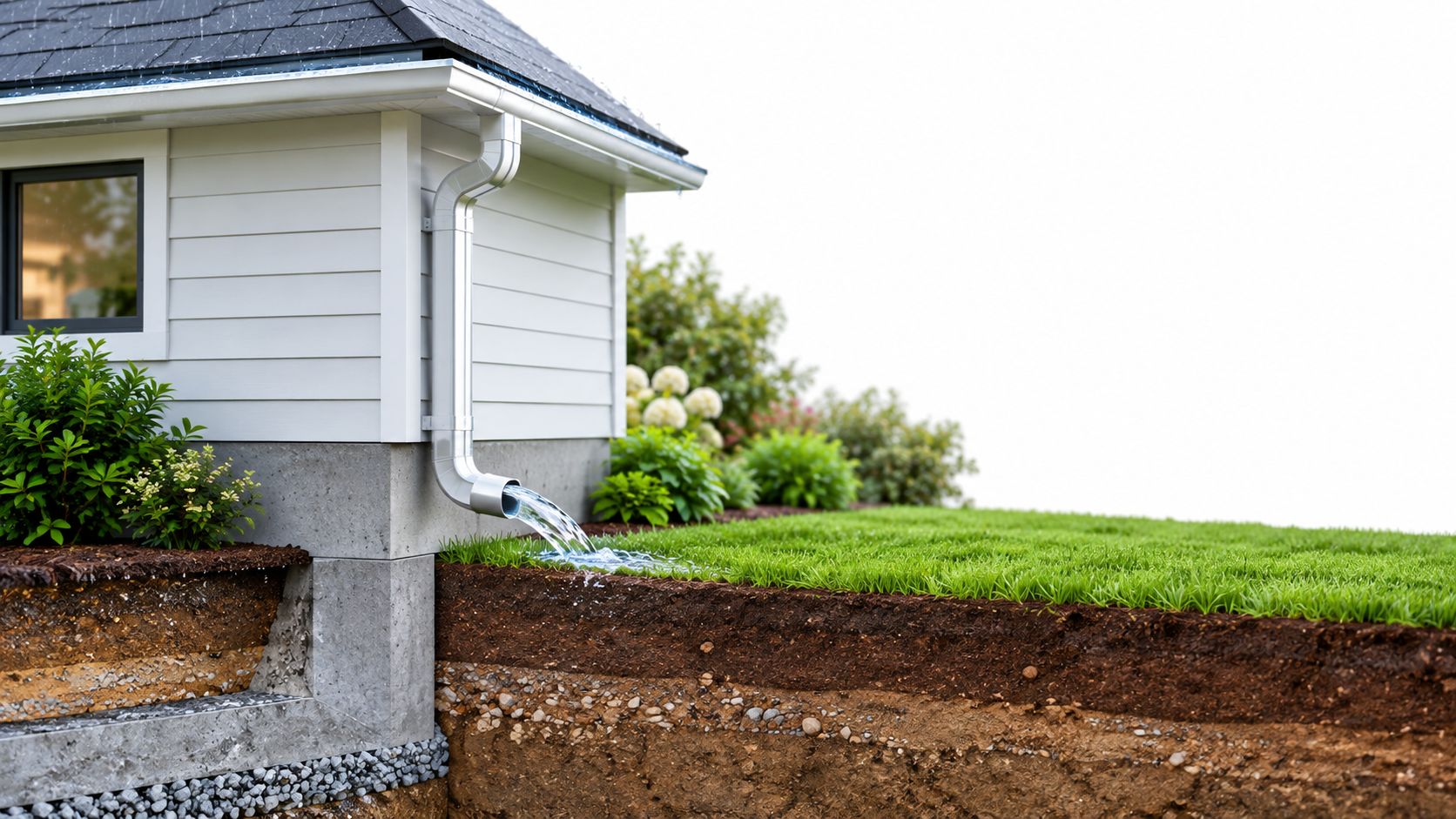
Why Gutters Are Important and How They Protect Your Home
A lot of homeowners in Fort Worth and the surrounding DFW cities don't think much about gutters until the next hard rain. Then you hear it. Water slamming off the roof edge, splashing flower beds flat, streaking siding, and pooling right where you don't want it, near the house.
That moment explains why gutters are important better than any sales pitch can. Your roof isn't just getting wet. It's acting like a collection surface, and during a storm it can dump an enormous amount of water in a very small area. A 1,000-square-foot roof can collect roughly 623 gallons from just 1 inch of rain according to this history and rainwater overview. Without a working path for that runoff, all of that water has to go somewhere.
In North Texas, that "somewhere" often ends up being the soil around the foundation, the roof edge, or the wall below the eaves. That's why homeowners in Fort Worth, Arlington, Plano, Irving, Denton, Richardson, Grapevine, Dallas, Carrollton, Frisco, Southlake, Lewisville, Garland, McKinney, Allen, Coppell, Grand Prairie, Flower Mound, Mesquite, Bedford, Rockwall, Hurst, North Richland Hills, Keller, Burleson, Euless, Wylie, Colleyville, Prosper, and Mansfield all run into the same basic issue. Rain falls on the roof, but the damage often shows up at ground level or along the trim.
Table of Contents
- Introduction Why Gutters Matter More Than You Think
- How Gutters Move Water Away From Your Home
- How Gutters Protect Your Foundation and Soil
- Protecting Your Roof Edge Soffits and Exterior Walls
- What Happens When a Home Has No Gutters or Failing Gutters
- Gutter Maintenance and Sizing Tips for DFW Homeowners
- Conclusion Protect Your DFW Home With the Right Gutter Plan
Introduction Why Gutters Matter More Than You Think
A Fort Worth storm can turn a calm afternoon into a roof dump in minutes. Water races down the shingles, hits the edge, and falls in the same narrow strip beside the house again and again. What looks like a simple drip problem often starts a much more expensive chain of damage.

A gutter system works like traffic control for rainwater. The roof collects water across a large surface. The gutter catches that runoff at the edge and sends it to a safer exit point. Without that control, the water does not disappear into the yard evenly. It lands hard at the perimeter, where homes are often most vulnerable.
People have been building ways to manage roof runoff for thousands of years. Ancient builders understood a basic rule that still applies today. Water needs a planned path away from the structure, or the structure pays for it later.
That idea matters even more in DFW because our weather is not gentle. North Texas storms often deliver fast, heavy bursts, and many homes also sit on clay-heavy soils that react badly to repeated soaking and drying. One poorly managed roof edge can feed water into the same area storm after storm. A gutter system is relatively low-cost compared with the repairs that can follow, especially when foundation movement or roof-edge rot enters the picture.
Homeowners often notice the small warning signs first. Splash marks on brick. Washed-out mulch. Muddy grooves under an eave. Peeling paint near the trim.
Those are not random cosmetic issues. They are clues that bulk water is missing its exit route.
The part many homeowners overlook is scale. A roof sheds a surprising amount of water during a storm, and all of it has to leave somewhere. If that flow is not captured and directed, it can stress the roof edge, soak the soil near the slab, and stain or wet the wall below. In the Fort Worth area, that can lead to repair bills far beyond the cost of installing or fixing gutters.
Gutters matter because they help your house manage force, not just moisture. They reduce repeated impact in the same places, and repeated impact is what turns ordinary rain into foundation trouble, fascia decay, and erosion around the home.
How Gutters Move Water Away From Your Home
During a hard Fort Worth storm, your roof can turn into a fast-moving collection surface. All that water hits the roof, runs downhill, and reaches the edge within minutes. If there is no controlled path waiting for it, gravity sends it to the same trouble spots over and over.
A gutter system works like a roof-edge drainage route. It catches runoff at the eaves, carries it across the house, sends it down through vertical drops, and releases it far enough away that the water does not keep soaking the area beside the home.
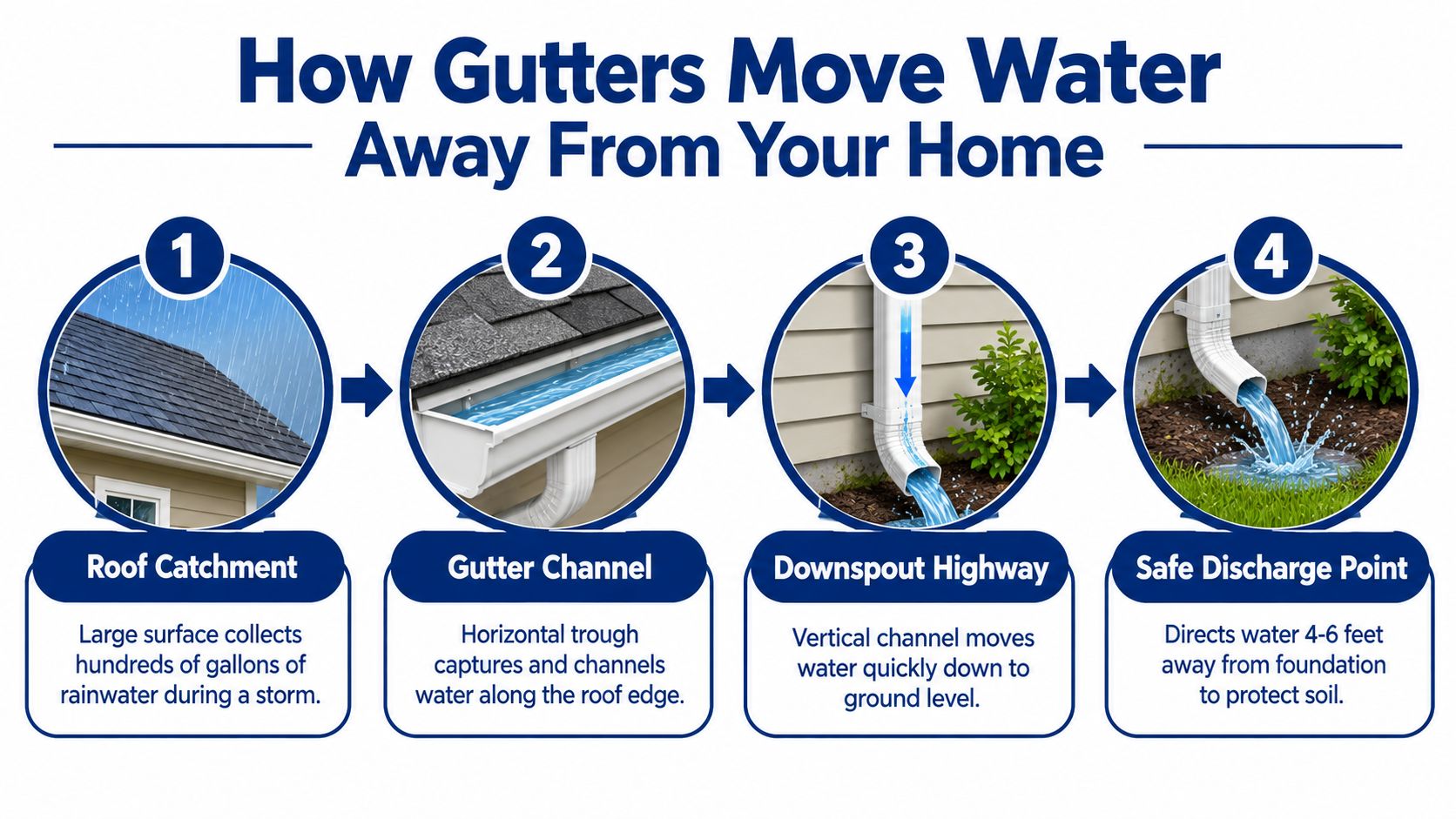
The flow path has four parts
Each part has one job. If one part fails, water starts looking for its own route.
Roof catchment
The roof collects rain across a large surface and pushes it toward the edges.Gutter channel
The gutter catches that concentrated edge flow before it drops straight down.Downspout drop
The downspout moves water from the roofline to the ground in a controlled way.Safe discharge point
The outlet sends water away from the house instead of leaving it beside the wall.
That last step gets missed a lot. A home can have gutters and still handle water poorly if the downspouts empty too close to the slab.
Why pitch and discharge location matter
Water in a gutter has to keep moving. If the channel is too flat, water sits. If the pitch is off, water slows down, backs up, or spills over the front edge during a heavy burst.
The slope does not need to look dramatic from the yard. It only needs to be enough to guide water toward the downspout. Fine Homebuilding explains that installers commonly pitch gutters slightly toward outlets so runoff drains instead of ponding in place, as described in this guide to gutter slope and placement.
Where the downspout ends matters just as much. The International Association of Certified Home Inspectors notes that downspouts should discharge away from the foundation so runoff does not collect at the base of the wall, as outlined in this overview of gutter and downspout function.
A gutter that dumps water right beside the house is only solving the top half of the problem.
A simple way to check your system in the rain
Go outside during a steady storm and follow one stream of water from start to finish.
- At the roof edge: Does the water fall into the gutter cleanly, or skip over the edge?
- Along the gutter run: Does water keep moving, or does it pool and spill from the middle?
- At the downspout: Does flow move down freely, or surge out at the top?
- At the outlet: Does the water reach a safer area, or does it land near the house and soak one narrow strip of ground?
That quick test tells you a lot.
In DFW, this matters because short, intense storms can force a lot of roof runoff through one small path in a hurry. A low-cost gutter system, sized and pitched correctly, helps manage that bulk water before it can contribute to the kind of foundation and roof-edge repairs that often cost far more than homeowners expect.
How Gutters Protect Your Foundation and Soil
One of the most expensive water problems around a house often starts in a strip of ground only a few feet wide.
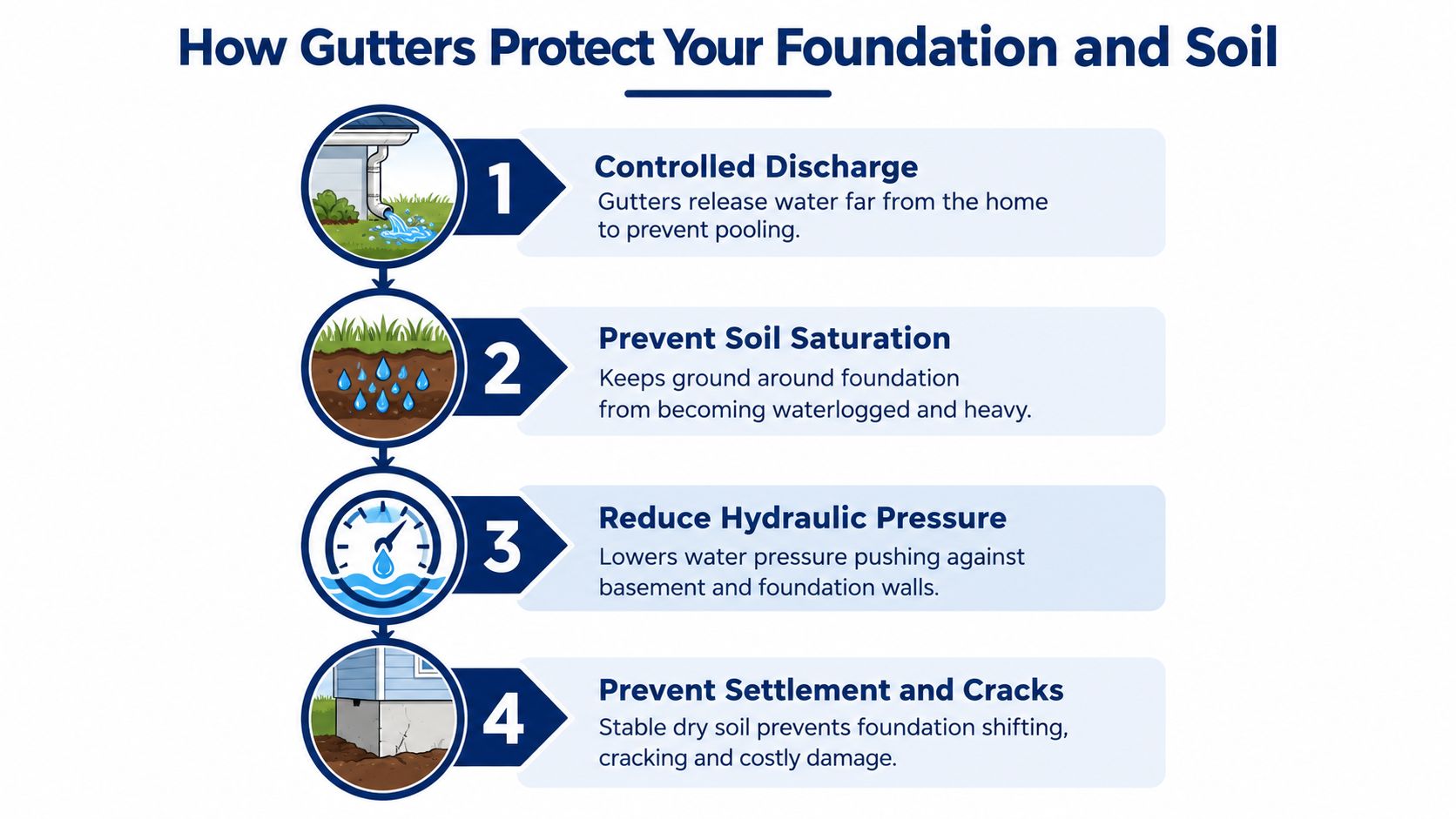
That strip is the soil beside your foundation. In North Texas, that area matters even more because many homes sit on clay-heavy soils that swell when they get wet and shrink when they dry out. If one side of the house gets soaked over and over while another side stays drier, the foundation can start reacting unevenly. Small water-control mistakes at the roofline can turn into slab cracks, sticking doors, or expensive structural repairs.
What water does to the soil beside a house
Soil under and around a home works like a support pad. It needs moisture conditions that stay reasonably consistent.
When a gutter overflows or a downspout drops roof runoff right next to the wall, that support pad can get too wet in one concentrated area. Water fills the spaces between soil particles, softens the ground, and changes how that soil carries weight. In plain language, the soil loses some of its stability right where the house needs dependable support.
The problem is not only "too much water." It is too much water in the same place, storm after storm.
How the damage usually develops
A lot of homeowners expect foundation trouble to come from one major flood. More often, the process is gradual and repetitive, like pouring the same cup of water onto the same spot in a yard until it turns into a rut.
Here is the pattern:
| Step | What happens |
|---|---|
| Concentrated runoff | Roof water lands in one narrow area near the house |
| Soil imbalance | That section stays wetter than the surrounding ground |
| Loss of support or erosion | Soil can soften, wash out, or shift |
| Foundation stress | Cracks, movement, seepage, or settlement may follow |
That sequence is why gutter systems do more than keep people dry at the front door. They control where thousands of gallons of roof runoff go over time.
Why grading still matters after the gutter does its job
A gutter only handles the collection part. The ground still has to finish the job.
As noted earlier, the soil should slope away from the house so discharged water keeps traveling outward instead of circling back to the foundation. If the yard dips toward the wall, water can collect right where you do not want it, even if the gutter itself is working.
A simple way to picture it is a road and a ditch. The gutter is the road that carries the water. The grade is the ditch that has to keep the flow moving away. If either one fails, the water stalls near the house.
What to check around your foundation
These signs often show up before major damage does:
- Wet bands of soil near the wall: One area stays muddy or dark long after the rest of the yard dries.
- Mulch washout or small trenches: Runoff is hitting the same spot with enough force to move soil.
- Exposed roots or bare patches: Water is stripping away surface cover.
- Hairline cracks or interior sticking doors: These do not always mean gutter trouble, but uneven moisture around the slab can contribute.
- Water collecting after short storms: The discharge area is not moving runoff far enough away.
For Fort Worth area homeowners, this is easy to underestimate because the gutter system itself is relatively low-cost compared with the damage it helps prevent. Redirecting roof runoff is often a basic exterior drainage fix. Ignoring repeated saturation near the slab can lead to repairs that cost far more, especially when movement starts affecting flooring, brick veneer, doors, or interior wall finishes.
Recent homeowner guidance from Bob Vila also notes that gutters help prevent erosion around the home and reduce the chance of water collecting near the foundation in this overview of why gutters matter.
That is the value. A properly planned gutter system helps keep roof water from turning one narrow band of DFW soil into the starting point for five-figure foundation trouble.
Protecting Your Roof Edge Soffits and Exterior Walls
A lot of articles stop at the foundation. That's only half the story. Gutters also protect the parts of the house that sit directly under the roof edge, especially the fascia, soffits, siding, window trim, and door trim.
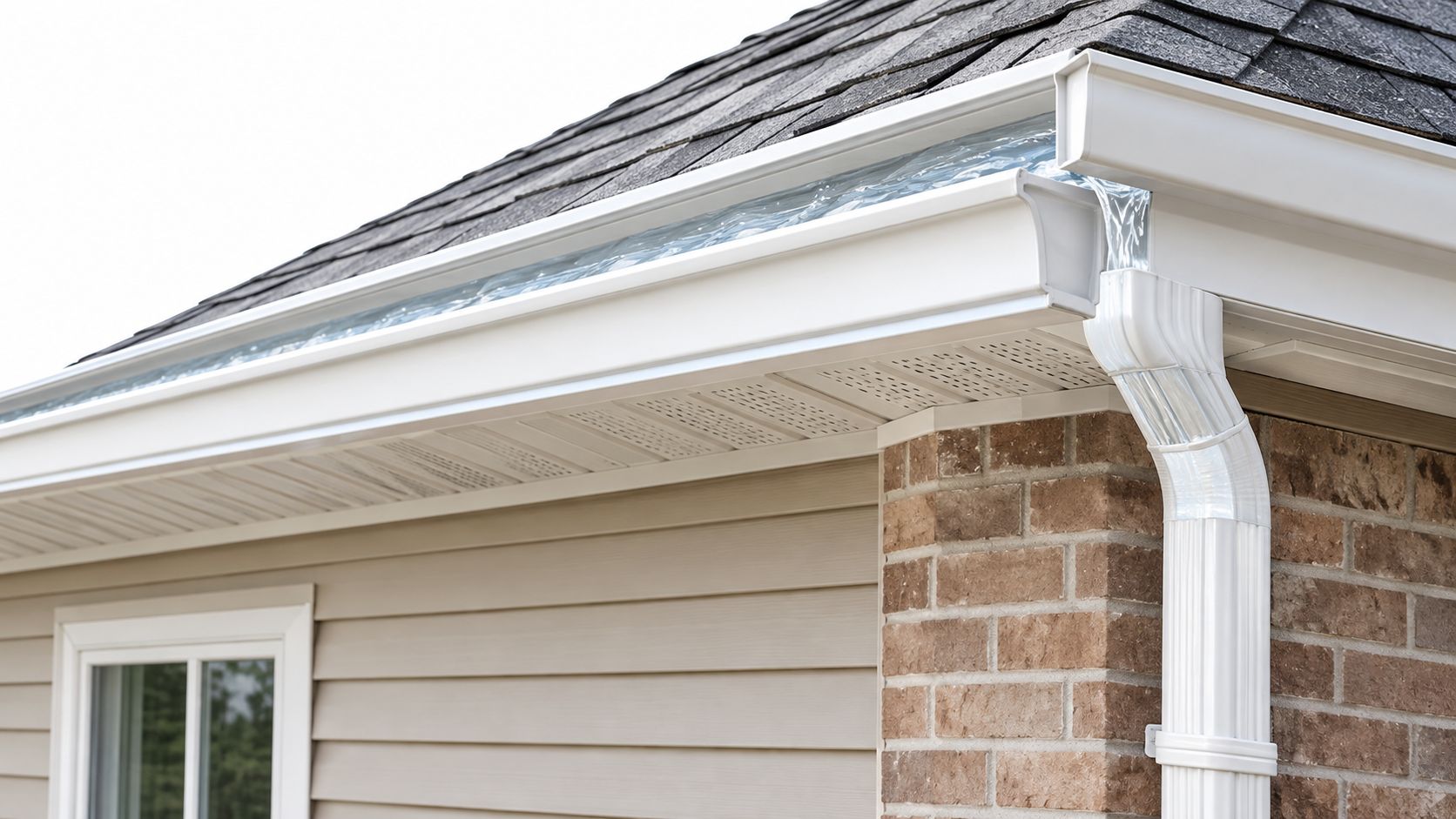
The roof edge takes the first hit
When gutters are missing or failing, water doesn't politely fall straight down. It runs over the edge, curls back under the eave, splashes outward, and wets surfaces again and again. Modern homeowner guidance notes that gutters protect multiple parts of the house at once by moving water away from the roof edge, soffits, and fascia while also reducing pooling near the base of the home in this overview of gutter necessity.
That repeated wetting is what shortens the life of trim and wall materials.
Why saturation at the eaves causes trouble
Moisture damage at the perimeter often looks small at first. A little peeling paint. A soft fascia board. Dark staining at the soffit vent. Swelling around a window corner. But these aren't separate cosmetic issues. They're often signs that the roof edge has been staying wet too often and too long.
A second source focused on roof-perimeter protection notes that gutters help reduce prolonged saturation around eaves, siding, windows, and doors in this discussion of why gutters matter for exteriors.
Common trouble spots to watch
Walk the house and look at the edge details, not just the ground.
- Fascia boards: Soft wood, peeling paint, or metal trim pulling loose can point to overflow behind the gutter.
- Soffit panels: Stains, warping, or signs of moisture around vented areas can signal repeated wetting.
- Siding below roof lines: Vertical streaks often show where runoff has been escaping.
- Windows and doors near eaves: Splashback and chronic dampness can increase the chance of moisture intrusion and pest entry.
Roof-edge damage is easy to ignore because it starts small. Water usually doesn't.
For homeowners already planning exterior work, gutters connect directly to fascia, soffit, and siding life. A well-routed gutter system doesn't just protect what sits below grade. It protects the visible trim line that gives the house its finished edge.
What Happens When a Home Has No Gutters or Failing Gutters
A North Texas storm can dump a lot of water in a short window. If that water is not caught and sent out through downspouts, it drops straight off the roof line like a row of small waterfalls. In DFW, that usually means hard impact at the soil, muddy splash against the house, and repeat soaking in the same narrow band around the foundation.
That pattern matters more here than many homeowners realize. Fort Worth area homes often deal with long dry stretches, fast heavy rain, and clay soils that expand when wet and shrink when dry. When one side of the house keeps getting overloaded with roof runoff, the ground moisture can become uneven. A relatively low-cost gutter system helps control that cycle before it turns into foundation movement, rotten roof edges, or other repairs that can climb into five figures.
Homes With Effective Gutters Versus Without
| Area at Risk | With Proper Gutters | Without or With Failing Gutters |
|---|---|---|
| Foundation zone | Runoff is directed away from the house | Water pools near the base and keeps soaking the same soil band |
| Basement or lower-level moisture | Less water collects near foundation walls | Intrusion and seepage become more likely |
| Roof edge and trim | Water leaves in a controlled path | Repeated wetting keeps edge materials exposed to avoidable moisture |
| Siding and openings | Less splashback reaches walls, windows, and doors | Staining, dampness, and water entry risks increase |
| Garden beds | Water exits at planned points | Mulch washout, trenches, and localized scour show up fast |
| Gutter structure itself | Water flows through the system as intended | Clogs, sagging, overflow, and pull-away get worse over time |
The repair side of the story
Homeowners often notice the cost only after the water has been misbehaving for a while. A clogged or undersized system can lead to foundation moisture problems, roof-edge wood decay, stained masonry, and runoff damage near entry points.
Some repair bills stay in the hundreds. The expensive ones do not. As noted earlier, foundation and water-intrusion repairs tied to poor drainage can pass $10,000, especially when the problem keeps repeating through multiple storm cycles.
That is why gutters deserve to be viewed as water-management equipment, not just trim attached to the eaves.
The yard gives early warnings
Your yard often shows the problem before the inside of the house does.
Look under roof edges after a storm. If you see trenches in bare soil, mulch pushed out of place, one corner that stays hammered by runoff, or a strip of dirt that never seems to settle, roof water is probably landing too close and too hard. It works like a hose left running in the same spot. The ground starts to carve, sink, and redirect flow in ways that usually get worse with each storm.
If you're dealing with larger site runoff or hardscape drainage problems too, a practical companion read is this commercial landscape drainage guide, which helps show how surface drainage and roof drainage affect each other.
What failing gutters usually look like
Failing gutters are often still attached to the house. They just are not finishing the job.
- Overflow during rain: Water spills over the front edge instead of entering the downspout.
- Sagging runs: A section holds standing water because the pitch has changed.
- Leaking seams or corners: Water escapes before it reaches the outlet.
- Short discharge points: The downspout empties too close to the house, so collection happens but safe exit does not.
- Water marks below one section: A dark streak or dirty splash zone often points to one repeat trouble spot.
A gutter system only works when all parts of the path stay open and properly aimed. Catch, carry, and discharge. If one step fails, the water still finishes its trip. It just finishes it on your fascia, your soil, or next to your foundation.
Gutter Maintenance and Sizing Tips for DFW Homeowners
Most homeowners don't need to climb onto the roof to catch gutter problems early. A careful walk-around during rain, or right after it, usually tells you plenty. In Fort Worth, Arlington, Plano, Irving, Denton, Richardson, Grapevine, and the broader DFW area, that simple habit can prevent a much larger repair later.
What to check from the ground
Use this checklist on the next rainy day.
- Watch the edges: If water spills over the gutter face, the system may be clogged, undersized, or losing pitch.
- Check the downspouts: You want strong flow out of the bottom, not dribbling at the elbows or backup at the top.
- Look at the soil: Fresh trenches, displaced mulch, and recurring muddy spots usually mean runoff is landing too close.
- Read the wall surfaces: Splash marks on brick or siding often show where discharge isn't controlled.
Field check: The best time to inspect a gutter system is while it's actually handling water.
The sizing and routing details that matter
A good gutter plan is about capacity and direction. The gutter has to collect the roof area feeding it, move water along the run, and send it out at a safe point. If any one of those steps is undersized, water escapes before the system finishes the job.
A few practical targets help:
- Pitch: A common target is about 1/4 inch of drop per 10 feet of run, as noted earlier in the foundation runoff guidance.
- Discharge location: The outlet should terminate beyond the high-risk zone near the foundation, not right at the wall base.
- Grade: Soil should continue carrying water away once it leaves the downspout.
- Cleaning cadence: Industry content notes that only a minority of homeowners clean gutters twice a year and contrasts maintenance costs in the low hundreds of dollars with average water-damage losses in the five figures in this gutter maintenance statistics overview.
That prevention gap is real. People often wait for visible damage, but the cheaper fix is usually routine service before the next storm loads the system again.
When to call for service
Call for help when you see overflow, standing water in the gutter after rain, loose sections, repeated washout at one corner, or signs of moisture at fascia and soffits. If you're comparing upkeep habits, this article on how to prevent water damage with clean gutters is a useful plain-language reminder of why cleaning matters.
For homeowners who want an inspection or replacement option in the same conversation, Blue Lake Roofing & Remodeling handles continuous gutters along with fascia and soffit work, which is useful when drainage issues are tied to roof-edge materials rather than the gutter alone.
Conclusion Protect Your DFW Home With the Right Gutter Plan
The clearest answer to why gutters are important is this. They control where roof water goes before that water can attack the most vulnerable parts of your home.
That job starts at the roof edge, but it doesn't end there. A good gutter system helps protect the foundation zone, keeps soil from staying over-saturated, reduces erosion, limits splashback against siding and trim, and lowers the chance that soffits and fascia stay wet storm after storm. When the system is clogged, sagging, too short at the downspout, or missing entirely, the water still moves. It just moves in the wrong direction.
For DFW homeowners, that matters across a wide service area that includes Fort Worth and surrounding cities such as Arlington, Plano, Irving, Denton, Richardson, Grapevine, Dallas, Carrollton, Frisco, Southlake, Lewisville, Garland, McKinney, Allen, Coppell, Grand Prairie, Flower Mound, Mesquite, Bedford, Rockwall, Hurst, North Richland Hills, Keller, Burleson, Euless, Wylie, Colleyville, Prosper, and Mansfield. This isn't a niche issue. It's basic exterior water management.
The smart move is to treat gutters as part of the home's protective shell, right alongside the roof, flashing, fascia, and grade. If you can follow the water path from the shingles to a safe discharge point, you're already thinking about your house the right way.
Blue Lake Roofing & Remodeling has served the Dallas-Fort Worth Metroplex since 1995 as a family-owned contractor based in Forest Hill, working across Tarrant, Collin, Denton, and Dallas counties. That local footprint matters because gutter performance is never isolated. It ties directly into roofing, storm damage, fascia, soffits, and the exterior details that keep a house dry.
If you're not sure whether your current system is doing its job, a site inspection before the next major storm is the practical next step.
If you want a closer look at how your roof runoff is behaving, Blue Lake Roofing & Remodeling offers free on-site inspections for gutter, roof-edge, and exterior drainage conditions across its DFW service area. You can visit Blue Lake Roofing & Remodeling to schedule an inspection and get a clear picture of what your gutter system is protecting, and where it may need correction before the next storm.
