
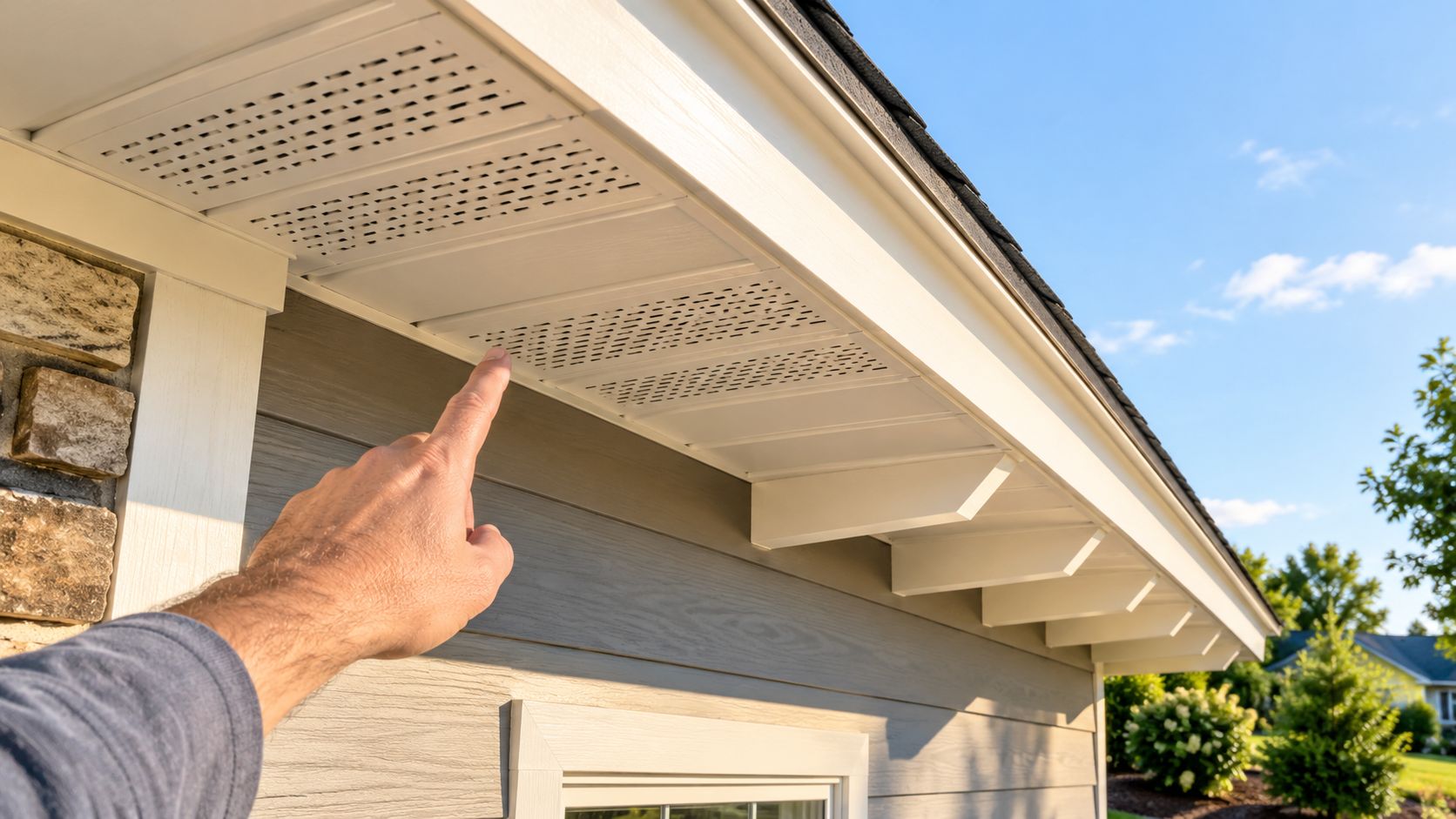
What Is a Soffit and Why It Matters for Your Roof
A soffit is the finished underside of the roof overhang where the fascia meets the wall. It helps your roof look clean from the street, and it can also move outside air into the attic so heat and moisture don't get trapped.
A Fort Worth homeowner usually notices it without knowing the name. You pull into the driveway on a hot July afternoon, look up at the roofline, and see the trim tucked under the eaves. That hidden strip is part of the roof edge that affects airflow, weather protection, and curb appeal.
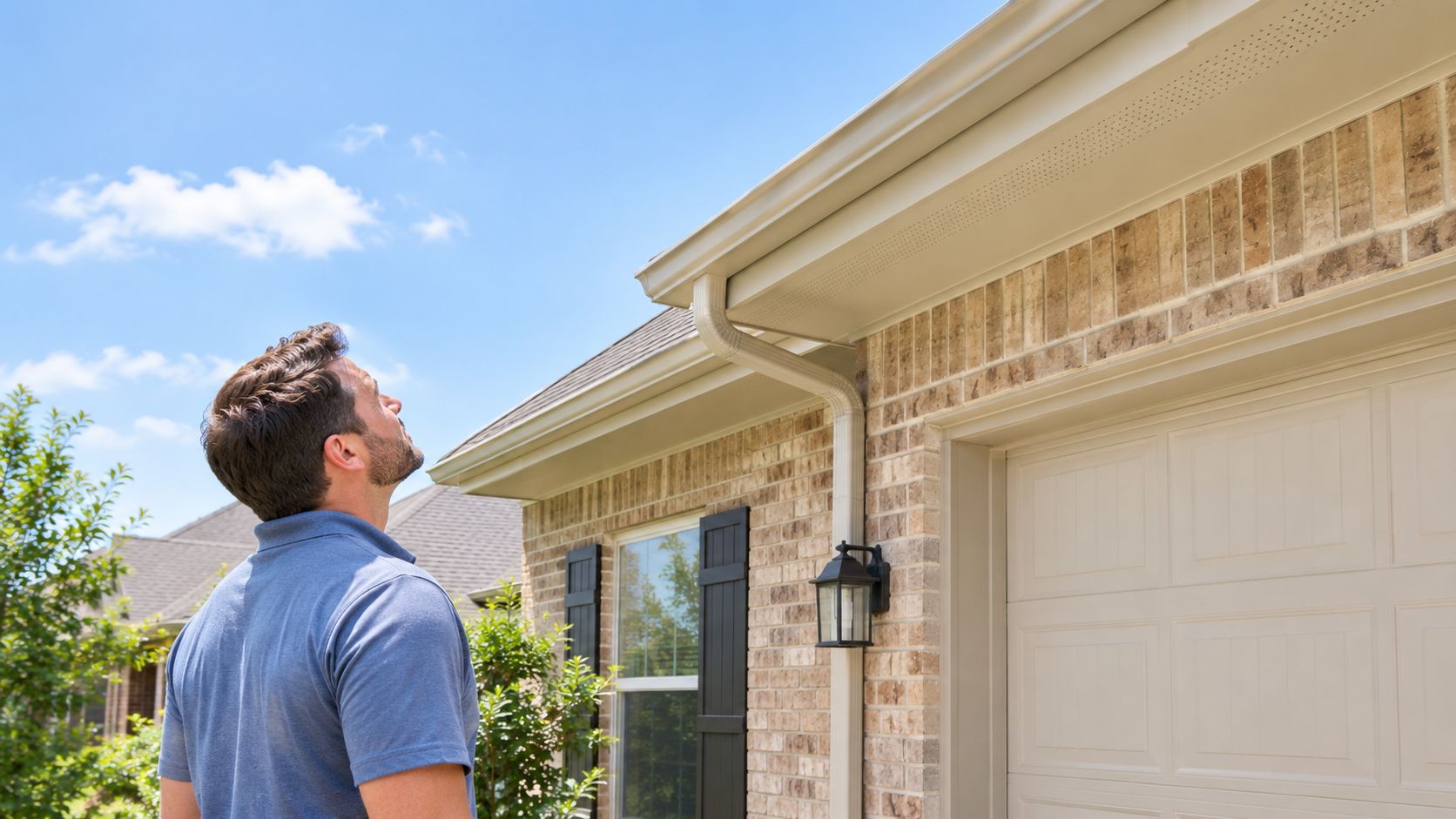
Table of Contents
- The Part of Your Roof You Never Think About
- Where a Soffit Sits on a Modern Home
- What a Soffit Actually Does Every Day
- Common Soffit Materials in North Texas Homes
- Reading the Warning Signs on Your Roof Edge
- Soffit Care and the Smart Next Step
The Part of Your Roof You Never Think About
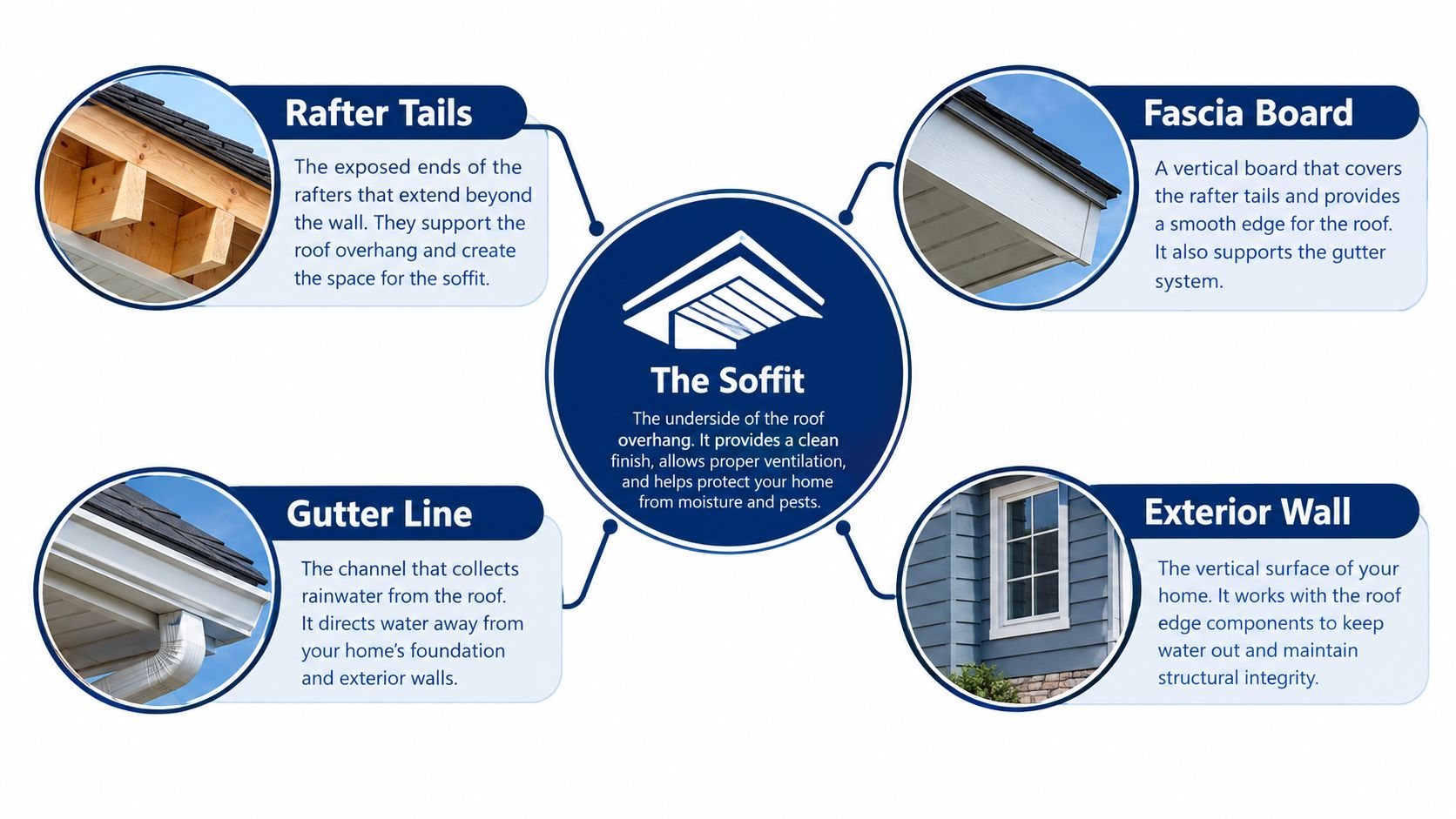
On a routine visit in Fort Worth, I'll stand in the driveway and point homeowners to three different pieces along the roof edge. The fascia is the vertical board at the front, the gutter hangs off that edge, and the soffit is the underside that closes in the overhang. Once you can separate those parts in your head, the roof starts making a lot more sense.
A lot of people see the soffit every day but think of it as decoration. That's understandable, because it does clean up the look of the eaves and gives the roofline a finished edge. But it also sits in the exact spot where the roof meets the exterior wall, so it has a job to do beyond looking neat.
Practical rule: if you can't tell whether a problem is on the fascia, gutter, or soffit, start by looking at where the damage sits. That one detail usually tells you who should inspect it next.
If you want a second plain-English explanation, the SuperiorPRO soffit explanation is a useful place to compare the parts of the roof edge without getting buried in jargon. I'd still recommend thinking of the soffit the way a contractor does, as the underside panel that helps finish and protect the eave.
In DFW, that matters because the roof edge gets punished by heat, sun, hail, and wind-driven rain. A soffit that looks fine from the street can still be hiding blocked vents, loose panels, or wood damage behind it. That's why I tell homeowners to treat the soffit as part of the roof system, not a separate cosmetic trim detail.
Where a Soffit Sits on a Modern Home
Start with the roof overhang
The easiest way to picture a soffit is to look at a porch ceiling. The ceiling closes in the underside of the porch roof, keeps the space tidy, and blocks birds and weather from entering the cavity above. A soffit does the same thing under the eaves.
Architecturally, that underside has been part of building design for a long time. Dictionary etymologies trace the word back through French and Latin roots, and the long history matters because modern roof soffits are part of an old building vocabulary, not a new fad in exterior trim Dictionary.com soffit history.
On a modern house, rafter tails project past the exterior wall, then the soffit closes that gap from beneath. The fascia finishes the outer edge, and the gutter hangs from that line if the home has one. Together, those pieces shape the visible roof edge you see from the street.
Why the width changes from house to house
Soffit width isn't the same on every home. Roof pitch, overhang depth, and architectural style all change how much underside surface you can see. Newer DFW subdivisions often have deeper overhangs than older homes, so the soffit can be wider and more visible.
That's where the roofline starts to matter beyond appearance. A deeper overhang gives the home a stronger shadow line, but it also creates a larger space that has to be closed in properly. If that soffit is vented, the openings need to stay clear and sized for the roof system, not just cut in wherever it was easiest during installation.
Plain takeaway: a soffit is the finished underside of the roof edge, and its width is tied to the shape of the roof above it.
A home in Fort Worth's older neighborhoods may have a simpler eave profile, while newer builds in surrounding DFW cities often use larger overhangs for a more substantial look. Either way, the soffit lives under that projecting roof edge and acts like the ceiling of the overhang, not a decorative strip stuck on after the fact.
What a Soffit Actually Does Every Day
The clean finish you see from the street
The first job is visual. A soffit gives the roof edge a clean transition from wall to overhang, so the underside doesn't look open, rough, or unfinished. That matters on homes where the eaves are prominent, because the roofline becomes part of the home's curb appeal whether anyone plans for it or not.
The second job is mechanical. Vented soffits admit cooler outside air into the attic or roof space, which supports balanced ventilation when the system has a matching exhaust path near the ridge. A soffit isn't supposed to fight the attic system, it's supposed to feed it.
That airflow matters because hot air and moisture need a path out of the attic. When the soffit intake is blocked by insulation, paint, or bad framing, the space above the ceiling can hold heat and humidity longer than it should. Over time, that can contribute to shingle aging, condensation, and wood damage.
What changes when the airflow is wrong
In an August DFW attic, the heat load can feel brutal even before you step inside. When the attic is pulling stale air but can't get enough intake through the soffits, the system stops breathing properly. The result is usually more heat stress on the roof deck and more moisture lingering where it shouldn't.
A homeowner often notices this kind of failure only after a repair call. The ceiling may smell musty after rain, the insulation may look stained, or the attic framing may show early signs of decay. By then, the soffit was doing more than its share of the work for too long.
| How a Soffit Performs Two Jobs at Once | Healthy Soffit | Failing or Sealed Soffit |
|---|---|---|
| Function | Gives the roof edge a finished underside and supports intake airflow | Looks closed off, uneven, or patched, and may block air movement |
| Attic effect | Helps outside air enter the roof space through vent openings | Traps heat and moisture near the roof deck |
| Homeowner impact | Cleaner roofline, better roof-edge performance | Higher risk of condensation, rot, and heat buildup |
If you want a deeper ventilation explanation, the keeping your attic dry and efficient resource from HIBCO ROOF LLC goes into the attic-airflow side of the topic in more detail. That's the part homeowners usually miss when they think a soffit is just trim.
Common Soffit Materials in North Texas Homes
What shows up most often around DFW
Material choice usually comes down to durability, appearance, and how much upkeep the owner wants to take on. In North Texas, I see vinyl, aluminum, wood, and fiber cement on residential soffits most often. Each one behaves differently in the Texas sun and storm cycle, and each one fits a different type of home.
Vinyl is common on newer subdivisions because it's affordable, easy to keep clean, and usually holds its color well. Aluminum is a strong choice where hail is a concern, but dents don't bounce back the way homeowners hope. Wood shows up on older craftsman homes, especially when the original design relied on painted trim for character. Fiber cement gives a wood-like appearance without the same rot risk, but it's a heavier, more involved material to work with.
Matching material to the rest of the roof edge
The smart choice isn't just about the soffit panel itself. It has to work with the fascia, the gutter style, and often the neighborhood's look. On a home with painted trim and a traditional roofline, wood or fiber cement may make sense visually. On a newer home with cleaner lines, vinyl or aluminum is often easier to maintain.
| Soffit Materials Compared for North Texas Homes | Avg. Cost / Linear Ft | Lifespan | Maintenance | Best Fit |
|---|---|---|---|---|
| Vinyl | Low to moderate | Good in typical suburban use | Low, occasional cleaning and inspection | Newer subdivisions and simple rooflines |
| Aluminum | Moderate | Good when denting isn't a concern | Low, but inspect for dents and loose sections | Hail-prone areas and practical updates |
| Wood | Moderate to high | Good if maintained well | Higher, regular repainting and moisture checks | Older homes and historic character |
| Fiber Cement | Higher | Good where exposure is a concern | Moderate, inspect paint and joints | Wood look without the same rot risk |
The right answer often comes down to how the home already looks. A soffit that fights the fascia color or the gutter style can make the whole roof edge look patched together. In DFW, that's where HOA expectations, older neighborhood character, and plain maintenance reality all meet.
Reading the Warning Signs on Your Roof Edge
What you can spot from the ground
You don't need to climb a ladder to catch a lot of soffit problems early. Start from the driveway and look for peeling paint, sagging panels, rust streaks from nails, or sections that look darker than the rest. If the soffit line isn't straight anymore, that's a clue, not just a cosmetic annoyance.
Wasp nests and animal entry are also worth noticing. Soffits help block insects and animals from entering the roof structure, so a gap or opening at the eave can mean the roof edge is no longer sealed the way it should be HowStuffWorks soffit overview. If you're seeing nests near repeated openings, something about the roof edge is giving them access.
Cosmetic damage, ventilation trouble, or real water intrusion
A stained panel with no other symptoms may be a surface issue. A soffit that sags inward, though, often means the board behind it is compromised, not just loose. In many cases, the underlying problem is rotten fascia, damaged rafter tails, or a roof-edge leak that spread past the first visible layer.
Watch the attic, too. Stained insulation and musty smells after rain suggest the problem has moved beyond appearance. If the soffit vents are blocked or the mesh is sagging, the attic may be starved for intake air even if the exterior still looks mostly intact.
Inspection cue: if the soffit damage lines up with gutter overflow, soft wood, or staining under the roof edge, ask for a full roof-edge inspection, not a quick trim patch.
| Sign You Notice | What It May Mean | Next Move |
|---|---|---|
| Peeling paint or faded finish | Surface wear or aging materials | Cosmetic repair or repainting |
| Sagging panel or uneven line | Possible rot behind the panel | Inspect fascia, rafter tails, and attic edge |
| Wasp nests or animal entry | Openings in the roof edge | Seal access points and check vent integrity |
| Musty smell or stained insulation | Moisture issue in the attic system | Inspect ventilation and roof leaks together |
In DFW, ice-dam-style drip marks are uncommon, but if you ever see water tracing along the eave after a gutter backup, don't shrug it off. That's a roof-edge drainage problem, and soffit damage may be only one part of it. The point is to read the signs together, not in isolation.
Soffit Care and the Smart Next Step
A simple seasonal routine
Fort Worth weather gives you a practical inspection rhythm. After spring storms and pollen season, look for clogged vent openings, fresh stains, and loose paint. In midsummer, check whether the attic feels unusually hot or humid, because that can tell you the soffit intake isn't feeding the roof the way it should. In fall, clear leaves and debris before they load up the gutters and spill back toward the eaves.
A soffit replacement decision shouldn't start with the panel alone. It should start with four questions: how old is the current material, is there visible damage, is the attic showing heat or moisture problems, and is there any sign that animals have found an entry path. If the answer points to more than one issue, the repair is probably bigger than a single board swap.
When to repair one part and when to look at the whole edge
A soffit-only repair makes sense when the damage is isolated and the rest of the roof edge is still sound. Once the fascia is soft, the gutter apron is failing, or roof-edge flashing is compromised, replacing just the soffit can mean paying twice. That's especially true when the visible damage is being caused by something behind it.
Blue Lake Roofing & Remodeling handles exterior remodeling work that includes fascia and soffit updates, along with roof repair and related roof-edge work. That matters because soffit issues often sit right next to gutter, flashing, or roof-deck problems, and the fix should match the actual cause rather than just the visible symptom.
If the soffit is damaged and the attic is showing signs of heat or moisture, I'd want the whole roof edge checked before anyone starts swapping panels.
A professional roof-edge and attic inspection is the fastest way to sort maintenance from repair and repair from replacement. It's also the safest way to find out whether the soffit is the problem, or just the first place the problem showed up.
If you're seeing roof-edge stains, sagging soffits, or attic heat that doesn't make sense, Blue Lake Roofing & Remodeling can inspect the roof edge, fascia, and attic as one system and tell you what needs attention. Visit Blue Lake Roofing & Remodeling to schedule an inspection and get a straightforward next step for your home.
