
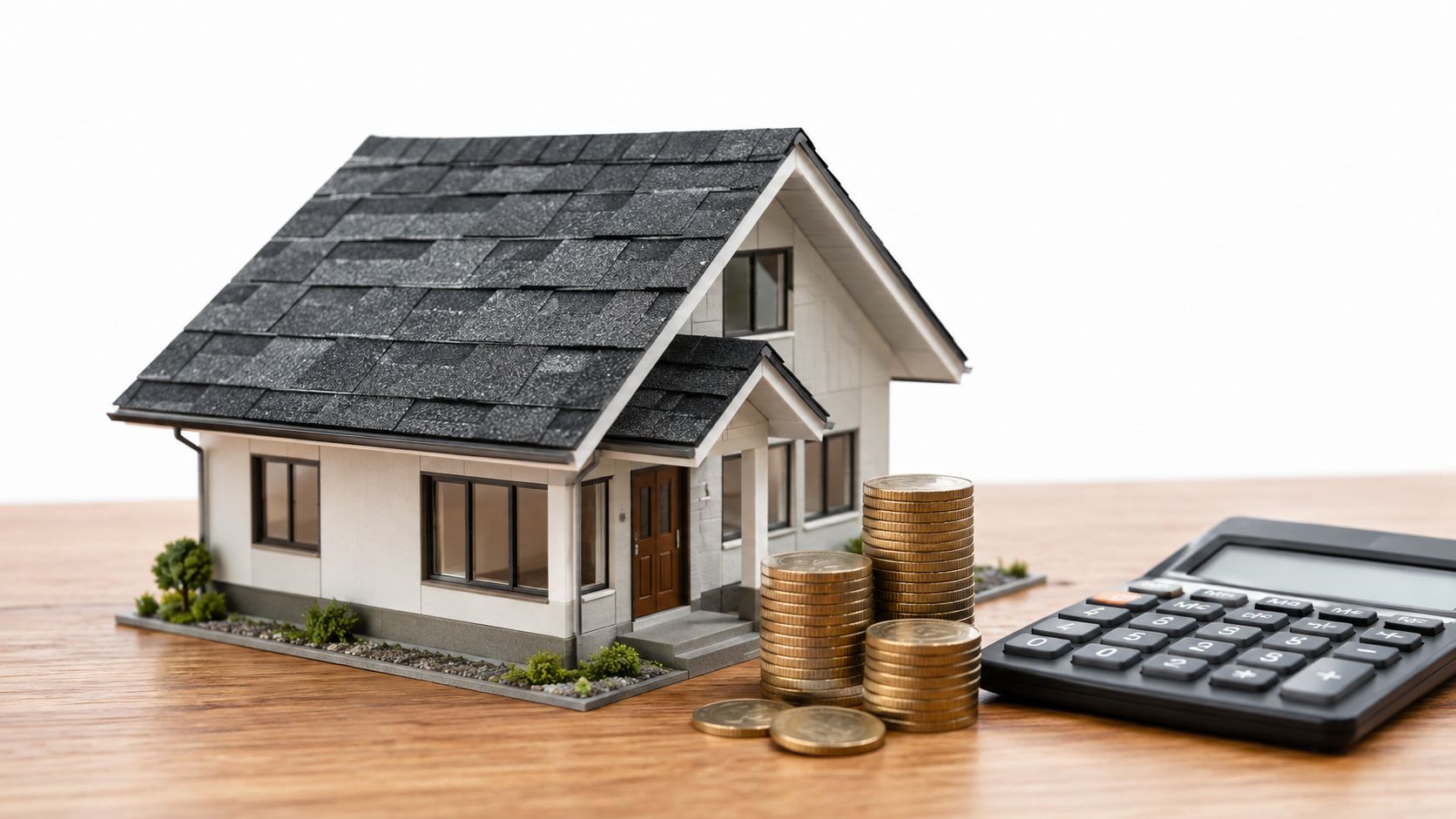
Three Tab Shingles Cost: A Homeowner's Pricing Guide
A typical 2,000-square-foot roof covered with three-tab shingles costs roughly $6,000 to $11,000 fully installed. The shingles themselves are cheap, but tear-off, disposal, labor, flashing, ventilation, permits, and regional pricing determine the final bill.
That gap is where homeowners get misled. A bundle may look inexpensive on a store shelf, yet a roof isn't a stack of bundles. It's a complete weatherproof assembly installed several feet above the ground, often after an existing roof has been removed and hauled away. If you compare only the shingle price, you're comparing the smallest part of the job.
The right way to evaluate three tab shingles cost is to normalize every proposal to installed cost per roofing square. One roofing square equals enough material to cover 100 square feet. Once every contractor prices the same scope, a suspiciously low bid becomes much easier to spot.
Table of Contents
- What Most Homeowners Actually Pay for a Three-Tab Roof
- What Three-Tab Shingles Are and Why They Sit at the Entry Level
- How Material Prices Turn Into an Installed Roof
- From Bundle Price to Total Project Price
- Why Labor and Region Move the Number More Than the Shingle
- Three-Tab Versus Architectural and Other Asphalt Options
- Where Three-Tab Shingles Stop Being the Smart Buy
- Deciding Whether Three-Tab Fits Your Roof and Budget
What Most Homeowners Actually Pay for a Three-Tab Roof
The typical 2,000-square-foot roof falls between $6,000 and $11,000 fully installed, according to the Angi overview of three-tab shingle costs. The shingles account for only part of that bill. Tear-off, disposal, labor, flashing, ventilation, permits, roof complexity, and repairs often create the larger gap between quotes.
A lower bid may cover a straightforward roof, one layer of tear-off, standard underlayment, basic ventilation, cleanup, and installation by a lower-cost regional crew. It may leave out damaged decking, upgraded flashing, permits, chimney work, or repairs found after removal. Get every exclusion in writing. A low starting price can rise quickly once the existing roof is opened.
A mid-range proposal usually carries a fuller replacement scope. It may include disposal, starter shingles, ridge caps, drip edge, standard flashing, ventilation work, cleanup, and a workmanship warranty. That makes it easier to compare, because fewer necessary items sit outside the headline price.
Read the scope before judging the price
A project can reach the upper end when the crew replaces deteriorated decking, rebuilds flashing, improves underlayment, corrects ventilation, or works around a complicated roof layout. These items affect how the shingles sit and how water moves around edges and penetrations. They are part of the roof system, not optional decoration.
Normalize each bid to installed cost per roofing square before comparing contractors. One roofing square covers 100 square feet. This calculation exposes whether a contractor is cheaper or has omitted work from the proposal.
Use this bid test:
- Lowest quote: Confirm tear-off, disposal, permits, flashing, and deck repairs.
- Middle quote: Check the exact shingle product, ventilation plan, cleanup standard, and warranty terms.
- Highest quote: Demand a line-by-line explanation for decking, metalwork, labor, and every upgrade.
Estimator's rule: A low price is legitimate only when the scope is equally complete. If the scope differs, the price comparison fails.
Treat $6,000 to $11,000 as a planning range, not a guaranteed offer. The roof area sets the starting point, while removal conditions and installation requirements determine how far the final project price moves.
What Three-Tab Shingles Are and Why They Sit at the Entry Level
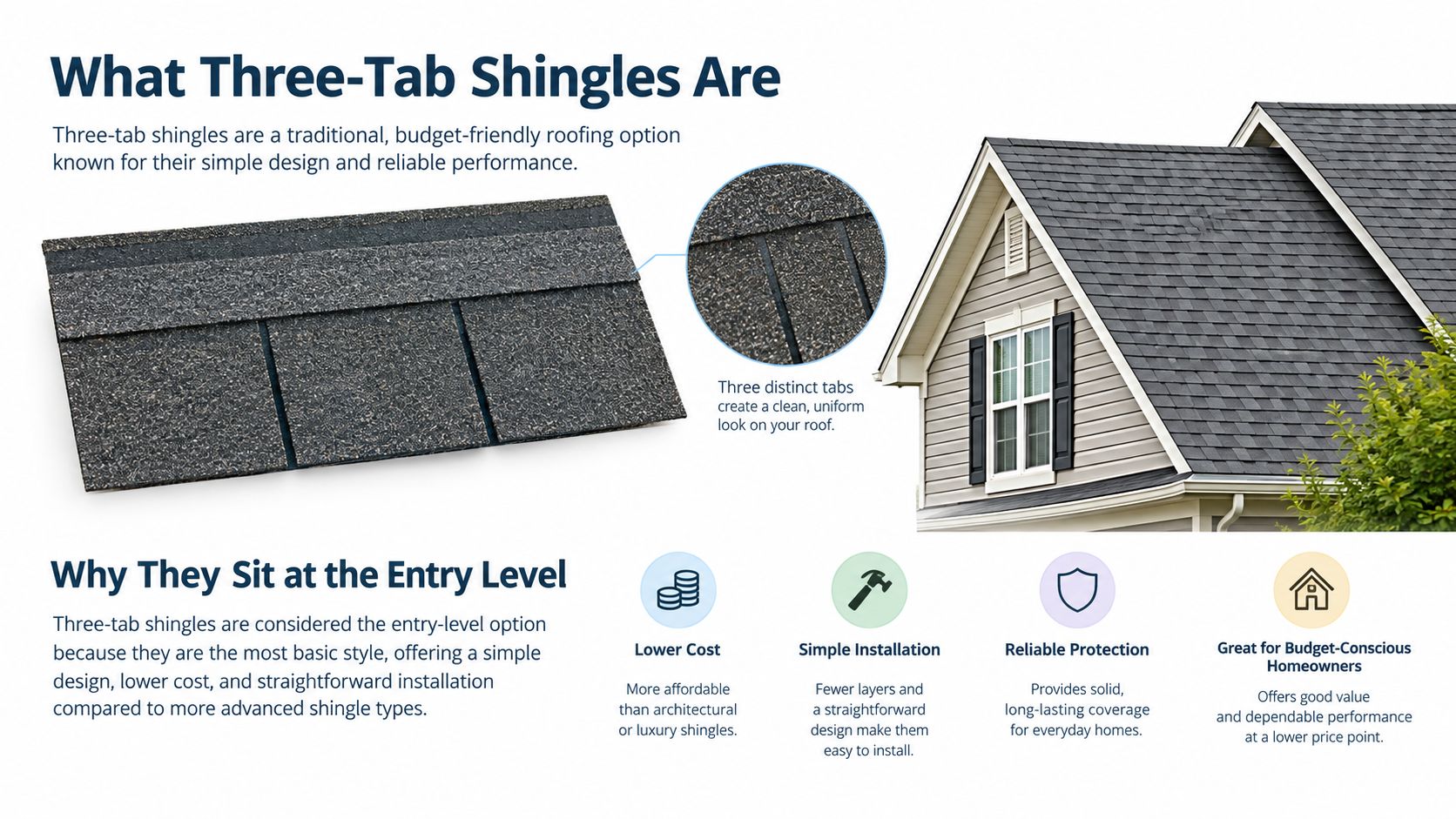
Three-tab shingles are traditional asphalt shingles with a flat profile and three uniform tabs cut into each strip. Those tabs create the familiar repeating pattern across the roof. Architectural shingles use laminated layers to create a thicker, more dimensional surface, while three-tab products keep the construction simpler and lighter.
A useful visual comparison is a single-thickness cracker versus a doubled-up sandwich cookie. The cracker costs less and weighs less, but it doesn't provide the same thickness or visual depth. Three-tab shingles occupy that simpler role in the asphalt roofing category.
Their lower material cost comes from that thinner, more uniform construction. The trade-off is a less substantial appearance and generally less performance margin in demanding wind conditions. Manufacturers commonly position three-tab products within a 20- to 25-year lifespan window, but actual service depends on installation quality, ventilation, weather exposure, and maintenance.
Why builders still specify them
Three-tab shingles make sense where the immediate budget controls the decision. Builders working on cost-sensitive construction, landlords managing functional rental properties, and homeowners preparing a property for a short ownership period may prioritize the lowest acceptable installed price.
That doesn't make three-tab shingles a bad product. It makes them a limited product. They can be a reasonable choice for a straightforward roof in a mild environment when the owner understands the expected replacement horizon and doesn't need a high-end appearance.
The mistake is treating the entry-level price as the whole value proposition. A roof is exposed to sun, rain, wind, and maintenance demands for years. If your priority is long-term ownership, resale presentation, or stronger resistance to severe weather, you should compare three-tab shingles with architectural products before signing.
How Material Prices Turn Into an Installed Roof
A three-tab bundle can cost $38.97, or about $1.17 per square foot, according to this Home Depot three-tab shingle listing. Broader material estimates run $30 to $45 per bundle, or roughly $90 to $135 per roofing square, according to The Roofing Brief's three-tab pricing guide. Those figures explain the low shelf price. They do not tell you what a crew will charge to put a watertight roof on your house.
A roofing square equals 100 square feet. Shingles are sold by the bundle, and the required bundle count varies by product. Cuts, valleys, hips, overhangs, and waste increase the order. The visible shingle count is only one part of the material package.
The material package is larger than the field shingles
A proper takeoff should account for:
- Field shingles, the main visible roof covering.
- Starter strips, installed along eaves and rakes.
- Ridge caps, used at roof peaks.
- Underlayment, which adds a water-shedding layer.
- Ice-and-water protection, where the roof design and local conditions require it.
- Drip edge and flashing, which protect edges and roof transitions.
- Ventilation components and fasteners, which support airflow and secure attachment.
The table below helps you read a bid. It is not a universal price sheet. Material and installed ranges are available, while accessory and labor costs depend on the roof and local market.
| Line Item | Typical Cost per Square | Notes |
|---|---|---|
| Three-tab shingles | $90 to $135 | Material-only range cited by The Roofing Brief |
| Starter, ridge, underlayment, and accessories | Varies | Confirm whether these are included in the material allowance |
| Tear-off and disposal | Varies | Depends on existing layers, access, and local disposal charges |
| Installation labor | Varies | Crew cost and roof complexity drive the amount |
| Completed installation | $350 to $550 | Typical installed-per-square range cited by The Roofing Brief |
Material pricing and installed pricing answer different questions. A low bundle price does not make a low installed bid legitimate, and a higher bid may include work the cheaper quote leaves out. Compare proposals by cost per square, then verify the scope behind that number.
Practical rule: Ask each contractor for the installed price per square and the material allowance separately. Do not treat a bundle price as the cost of the finished roof.
From Bundle Price to Total Project Price
A bundle quote answers only one question: what do the visible shingles cost? A replacement estimate covers the complete job, including removal, deck preparation, installation of a code-compliant roof system, and protection from leaks.
The gap between those figures comes from five cost areas: tear-off and disposal, underlayment and water protection, metal and ventilation, labor, and permits or contractor overhead. The property and local market determine the amount. A contractor who will not show the scope makes it impossible to compare bids fairly.
What a complete proposal should identify
Require a written description of:
- Existing roof removal, including the number of layers and disposal method.
- Decking repairs, with a unit price or defined allowance for damaged panels.
- Underlayment and edge protection, including materials at eaves, valleys, and penetrations.
- Flashing and ventilation, especially around chimneys, walls, skylights, and roof-to-wall transitions.
- Labor, cleanup, permits, and warranty, with exclusions stated plainly.
A 2,000-square-foot roof is often described as roughly 20 squares, but the roof surface may be larger because of overhangs, slopes, valleys, and waste. Use the contractor's measured roof area, not the home's floor area, to judge the material allowance.
| Line Item | Cost Per Sq Ft | Share of Total |
|---|---|---|
| Shingle material | Varies | Material-only portion |
| Tear-off and disposal | Varies | Removal, hauling, and disposal |
| Underlayment and protection | Varies | Water-shedding layers and vulnerable-area protection |
| Flashing, drip edge, and ventilation | Varies | Metalwork and airflow components |
| Labor | Varies | Installation, staging, and site handling |
| Permits and overhead | Varies | Administration, insurance, supervision, and business costs |
Why “per bundle installed” is a weak quote
“Per bundle installed” hides the items that drive the finished price. The phrase may exclude removal, disposal, accessories, deck repairs, steep-slope handling, or warranty coverage. Even “materials included” can refer only to the visible shingles unless the contract lists the full assembly.
Material costs may sit around $30 to $45 per bundle, while a fully installed project for a typical 2,000-square-foot roof can reach $6,000 to $11,000, as noted earlier. That spread is a reason to inspect the scope, not proof that the contractor is overcharging.
Normalize every proposal to cost per square. Then compare the material allowance, removal work, accessories, repairs, cleanup, and warranty behind that figure. A low bundle price can still produce an expensive roof, while a higher installed price may include work the cheaper bid omits.
Practical rule: Ask every contractor for the installed price per square and the material allowance separately. Do not treat a bundle price as the finished-roof cost.
Why Labor and Region Move the Number More Than the Shingle
The same three-tab product can produce bids that differ by thousands because contractors price the entire job, not a bundle of shingles. Crew wages, roof access, insurance, disposal, scheduling, supervision, and job-site risk often outweigh the brand difference.
A simple roof in a lower-cost labor market may be quick to stage and install. A roof in a higher-cost market may require higher wages, stricter compliance, more expensive disposal, and added protection for landscaping or nearby structures. Those costs belong in the installed price, even when the visible shingle is identical.
Geography changes the labor equation
Local wage conditions, contractor insurance, dumpster rates, permit requirements, and post-storm demand all affect labor pricing. A contractor using local crews and carrying appropriate insurance has expenses that an informal crew may avoid. That cheaper quote becomes a poor deal if property damage occurs or the warranty is difficult to enforce.
Roof geometry changes the estimate too. A clean, accessible roof lets a crew work with fewer interruptions. Multiple slopes, valleys, dormers, skylights, chimneys, and difficult staging increase handling time. Steeper roofs require additional safety procedures and slower movement. These are measurable job conditions, not arbitrary add-ons.
Normalize every bid to installed cost per square. Then compare the scope behind that figure, including the shingle allowance, tear-off assumptions, accessories, repairs, cleanup, and warranty terms. A low bundle price can still lead to a high total if the contractor excludes necessary work.
Two bids can use the same shingles and still describe different jobs. Compare the work package before comparing the totals.
A regional comparison needs local verification
Regional price ranges repeated in roofing discussions should not be treated as universal. The verified benchmark places fully installed three-tab roofs around $3.20 to $7.75 per square foot, with an average near $4.65 per square, according to Angi's three-tab shingle cost reference.
| Region | Installed Cost Range | Primary Cost Driver |
|---|---|---|
| Lower-cost local market | Confirm through local bids | Labor, access, and disposal |
| Mid-range local market | Confirm through local bids | Crew pricing and standard scope |
| Higher-cost local market | Confirm through local bids | Labor, insurance, compliance, and logistics |
Get at least two or three written estimates from contractors who inspect the roof in person. Convert each total to cost per square, keep the scope visible, and reject any quote that will not show what the price includes.
Three-Tab Versus Architectural and Other Asphalt Options
Three-tab shingles keep material costs low, but the installed roof can cost far more than the bundles suggest. Architectural shingles use laminated construction for a thicker, more textured appearance. Luxury and designer asphalt products add another premium tier. The decision is how much roof performance, appearance, and replacement value you want for the ownership period.
Material-only pricing for three-tab shingles runs around $90 to $135 per roofing square. A typical installed price rises to approximately $350 to $550 per square, according to The Roofing Brief. That gap covers more than labor. It can include tear-off, underlayment, flashing, ventilation, fasteners, disposal, repairs, overhead, and warranty obligations.
Two contractors can quote the same house thousands apart while naming the same shingle category. Normalize both bids to installed cost per square, then compare the scope attached to that figure. A cheaper bundle does not make a cheaper roof if the estimate excludes removal, accessories, deck repairs, or cleanup.
Compare the assembly, not just the label
Three-tab shingles have a flatter, repetitive pattern and lighter construction. Architectural products create more visual depth and may suit owners who prioritize curb appeal, resale presentation, or a longer replacement interval. Luxury products increase appearance and material costs again, but their value depends on the roof design, budget, and local conditions.
Some planning figures for lifespan, wind performance, and warranty coverage are not verified here. Require the contractor to document the exact product and terms instead of relying on a broad category label.
| Shingle Type | Installed Cost / Sq Ft | Lifespan | Wind Rating | Warranty |
|---|---|---|---|---|
| Three-tab | Verify by local written bid | Manufacturer's stated range | Verify product documentation | Verify manufacturer terms |
| Architectural | Verify by local written bid | Verify product documentation | Verify product documentation | Verify manufacturer terms |
| Luxury or designer asphalt | Verify by local written bid | Verify product documentation | Verify product documentation | Verify manufacturer terms |
When the premium deserves consideration
If the architectural upgrade is modest on your actual bid, compare it with the cost and disruption of another replacement, not only today's material difference. Its thicker, more dimensional profile may also fit the house better when the siding, trim, and exterior are otherwise well maintained.
Ask for the product name, installation requirements, warranty exclusions, wind provisions, and ventilation specifications. Those details determine whether the higher installed price buys a meaningful improvement or only a more expensive label. Reject any premium quote that cannot show exactly what the upgrade provides.
Where Three-Tab Shingles Stop Being the Smart Buy
Three-tab shingles stop being attractive when their lower entry price forces you to accept compromises that don't fit the property. A roof exposed to severe weather, difficult maintenance access, or demanding resale expectations can punish a short-term decision.
The thinner profile may leave less margin against wind-related damage than a heavier laminated product. Repairs can also be harder to blend as the roof ages, especially when tabs lift, crack, or disappear. If the product lacks features suited to the local environment, the owner may spend more time managing the roof even when the original installation was correct.
Look past the installation day
Three-tab shingles may be a poor fit for:
- High-wind locations, where attachment details and product ratings deserve close scrutiny.
- Hail-prone areas, where the contractor should explain product limitations and insurance implications.
- Steep or complicated roofs, where installation and future repairs cost more.
- Long-term ownership, when another replacement would create an unwelcome financial burden.
- Homes prepared for resale, where a flat, aging roof can weaken the property's presentation.
The planning examples that compare a lower-cost three-tab replacement with a higher-cost architectural roof over time aren't supported by the verified data, so they shouldn't be used as universal lifecycle math. Instead, calculate your own scenario using the actual bids, expected service interval from the product documentation, maintenance assumptions, and the cost of future tear-off.
| Cost Factor | Three-Tab Shingles | Architectural Shingles |
|---|---|---|
| Initial material cost | Usually the lower entry point | Usually higher than three-tab |
| Installed project cost | Driven by the complete scope | Driven by the complete scope |
| Appearance | Flat and uniform | Thicker and more dimensional |
| Weather suitability | Confirm product rating for local exposure | Confirm product rating for local exposure |
| Future replacement risk | Evaluate expected service interval | Evaluate expected service interval |
| Resale presentation | Basic appearance | Often offers a more substantial look |
The cheapest roof is the one that meets your ownership plan, climate, and maintenance tolerance. A low invoice isn't a bargain if it forces an early second project.
Deciding Whether Three-Tab Fits Your Roof and Budget
Judge a three-tab proposal by its installed cost per square, not by the bundle price. Two contractors can quote the same house and differ by thousands because one includes tear-off, disposal, flashing, ventilation, deck repairs, permits, and cleanup while the other does not.
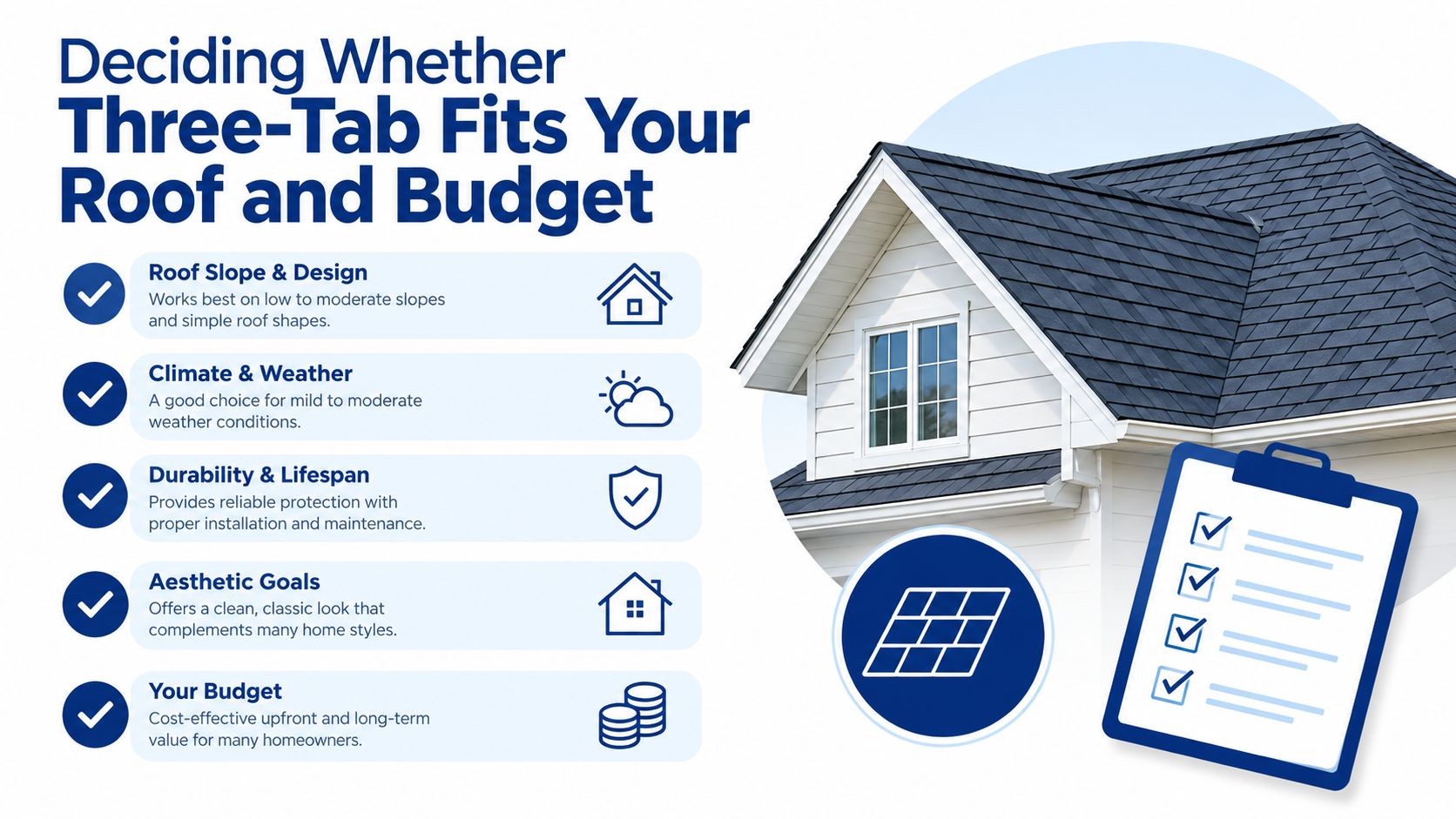
Before accepting a bid, confirm that the roof is simple enough for a clear installation scope. Review the product documentation, local weather exposure, ventilation, existing deck condition, and how long you expect to own the home. Three-tab shingles make the most sense for a straightforward roof, a relatively mild climate, limited severe-weather exposure, and an owner focused on controlling the immediate cost.
Make the bid answer these questions
- Scope: Does the price include tear-off, disposal, starter strips, ridge caps, underlayment, flashing, ventilation, cleanup, and permits?
- Measurement: Has the contractor priced the actual roof surface in squares instead of using the home's floor area?
- Product: Does the proposal name the exact three-tab shingle and list its manufacturer warranty?
- Repairs: Does the contract explain how damaged decking and flashing will be priced?
- Comparison: What is the installed cost per square, and how does that figure change with an architectural product?
- Ownership: Are you comfortable planning for another roof project within the manufacturer's stated service window?
The verified installed benchmark is broad, roughly $3.20 to $7.75 per square foot, with an average near $4.65 per square foot. Treat those figures as a comparison point, not a bid. Your local proposal must be judged by the work included, since labor, tear-off, access, and regional conditions can push the final total well above material-only pricing.
My recommendation is direct: choose three-tab shingles only when the scope is complete, the roof and climate are forgiving, and the installed savings versus architectural shingles justify the trade-offs. Get a local inspection before comparing bids. Blue Lake Roofing & Remodeling provides residential roof inspections, replacement estimates, storm-damage evaluations, and insurance-claim assistance for homeowners across Tarrant, Collin, Denton, and Dallas counties. Visit Blue Lake Roofing & Remodeling to request an inspection and compare proposals using the same installed-cost scope.
