
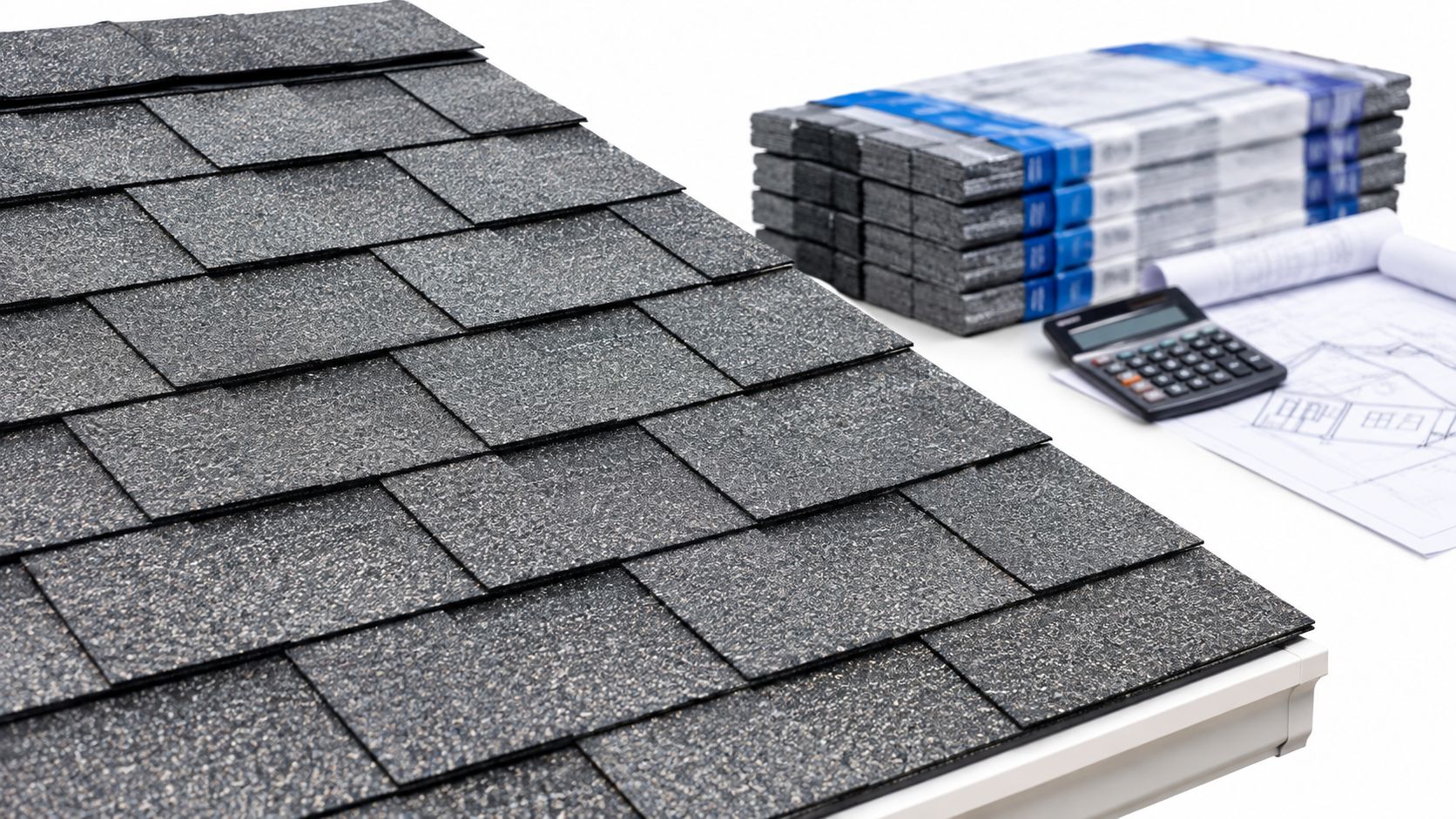
Three Tab Shingles Cost: What Homeowners Really Pay
Three-tab shingles typically cost $3.50 to $5.25 per square foot installed in the DFW area in 2026, or roughly $7,000 to $10,500 for a 2,000-square-foot roof before unusual repairs, complex access, or extra tear-off. The bundle price is only a small part of that bill.
That range gives you a practical starting point for comparing quotes in Fort Worth, Arlington, Dallas, Plano, Irving, Denton, Richardson, Grapevine, and the surrounding Dallas–Fort Worth Metroplex. National guides place three-tab materials near $80 to $130 per roofing square, or about $27 to $45 per bundle, while installed projects commonly reach $300 to $500 per square because labor, removal, disposal, underlayment, flashing, and roof design matter more than the package sitting on the contractor's truck. EcoWatch's asphalt shingle cost guide and HomeGuide's roofing shingle pricing data show why the material headline and final invoice can look like two different projects.
Table of Contents
- What Three Tab Shingles Cost in 2026
- What a Three Tab Shingle Actually Is
- Inside the Installed Price
- Three Tab vs Architectural vs Premium Asphalt
- Why Fort Worth and DFW Quotes Vary So Much
- The 30 Year Lifecycle Cost Comparison
- Who Should and Shouldn't Choose Three Tab
- Getting an Honest Quote in the DFW Metroplex
What Three Tab Shingles Cost in 2026
A straightforward 2,000-square-foot roof in Fort Worth or nearby DFW cities typically runs $3.50 to $5.25 per square foot installed in 2026, or about $7,000 to $10,500. That assumes ordinary access, one existing roof layer, and no major decking replacement. Broader market guidance places typical three-tab replacement projects around $5,700 to $12,000, depending on roof size and tear-off complexity. EcoWatch's current roofing cost overview provides a useful national comparison.
The bundle price is much smaller than the installed bill. Three-tab shingles may cost about $30 to $45 per bundle, or $90 to $135 per roofing square in this DFW estimate. A roofing square covers 100 square feet, and one standard bundle covers about 32 to 33 square feet. Measured area and waste therefore affect the material order, but bundles rarely explain the full gap between competing quotes.
Start with the scope, not the bundle
Your contractor is pricing several separate jobs:
- Shingles: The visible roof covering and its waste allowance.
- Tear-off: Removal of the existing roof layer.
- Disposal: Loading, hauling, and landfill or transfer-station charges.
- Underlayment: The water-shedding layer beneath the shingles.
- Starter and ridge materials: Components that protect roof edges and peaks.
- Flashing: Metal or specialized materials around walls, chimneys, vents, and penetrations.
- Labor and overhead: The crew, insurance, vehicles, supervision, permits, warranty administration, and business costs.
Independent pricing guidance places three-tab material around $0.80 to $1.30 per square foot and installed pricing around $3.20 to $7.75 per square foot. Roof complexity and project scope drive that spread. HomeGuide's roofing shingles cost breakdown helps put an unusually high or low quote in context.
Practical rule: A contractor discussing only the bundle price has not given you a roofing estimate. You have received a product price.
Compare itemized proposals. Each should identify the measured roof area, layers being removed, disposal method, underlayment type, flashing scope, ventilation work, labor, and warranty. Three-tab shingles are the entry-level asphalt option, but the installation still needs a complete, properly built roof assembly.
What a Three Tab Shingle Actually Is
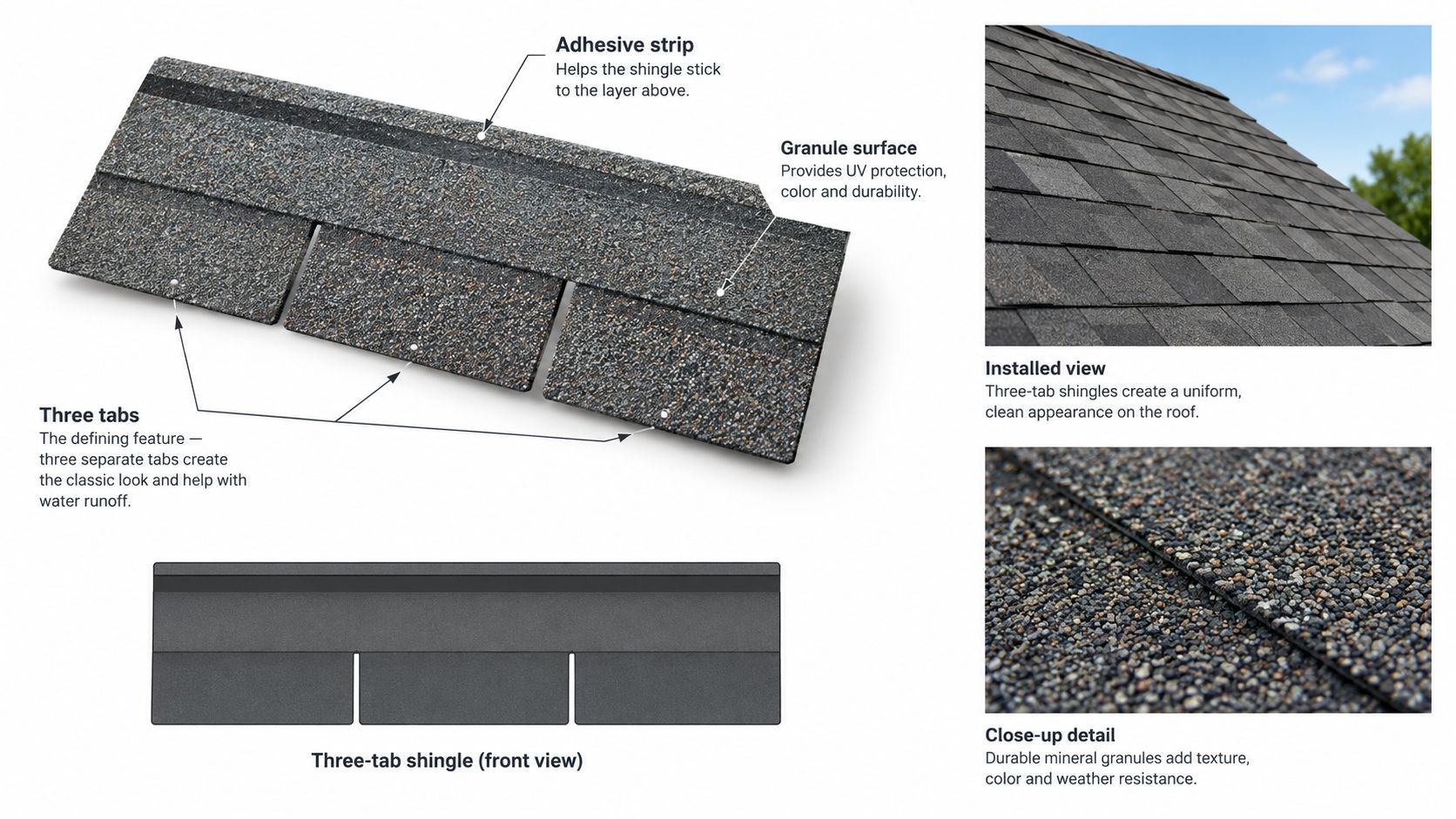
A three-tab shingle is a flat, single-layer asphalt shingle made with a fiberglass mat, asphalt coating, and ceramic granules on the exposed surface. Its lower edge is cut into three uniform tabs, creating the repeating horizontal pattern you see from the street. The design is simple by intention. Manufacturers produce it to shed water at the lowest mainstream asphalt material cost.
That construction explains both the price and the limitations. Three-tab shingles have a thinner profile and are lighter than architectural products. Industry comparisons commonly place them around 200 to 230 pounds per square, while architectural shingles use a thicker laminated construction that creates more visual depth. SquareDash's comparison of architectural and three-tab shingles describes the construction and performance differences between the two product families.
Architectural shingles, also called dimensional or laminated shingles, bond multiple asphalt layers together. The added material creates a textured surface that can resemble wood shake or slate. Three-tab shingles don't offer that dimensional appearance, and their uniform pattern can look dated on a higher-end home.
What the lighter construction changes
The profile affects more than curb appeal. Three-tab products generally have lower wind ratings, commonly around 60 to 80 mph, and a typical service life of about 15 to 20 years. Architectural products commonly offer stronger wind performance and longer service life, although the exact rating depends on the product, fastening pattern, roof design, and installation.
Warranty language also deserves attention. Market comparisons commonly place basic three-tab limited warranties around 20 to 25 years, while architectural products can carry 30-year to lifetime limited warranties, subject to manufacturer conditions. A warranty term isn't the same as a promise that the roof will perform for that entire period in North Texas weather.
For a basic garage, shed, workshop, or short-term rental decision, the simple profile may be perfectly reasonable. For a primary residence exposed to North Texas wind and hail, the lower price comes with a performance trade-off you should understand before signing.
Inside the Installed Price
The installed bill is a roof system price, not a shingle price. The roof covering may be the easiest line item to identify, but removal, preparation, access, and labor determine much of what you pay.
For a typical DFW roof, the following allocation is a useful estimating framework. It isn't a promise from every contractor, but it helps you spot a proposal that hides major work inside a single unexplained total.
| Cost Line Item | Typical Range | Share of Total |
|---|---|---|
| Three-tab shingles | $90 to $135 per square | 20% |
| Tear-off and disposal | Varies by layer and access | 15% |
| Underlayment and accessories | Includes starter, ridge, and flashing | 20% |
| Installation labor | Installation work | 30% |
| Contractor overhead | Insurance, vehicles, permits, warranty, and margin | 15% |
Materials and preparation
The shingle line should identify the manufacturer, product name, color, quantity, and waste allowance. Underlayment, starter strip, ridge cap, drip edge, pipe boots, valley materials, and flashing shouldn't disappear into a vague phrase such as “complete roofing system.”
Tear-off and disposal deserve separate attention. Removing one existing layer is materially different from removing two layers, hauling saturated debris, or replacing rotten decking discovered after the roof is opened. A quote that excludes decking replacement isn't necessarily dishonest, but it should explain the unit price or approval process for that work.
Labor and business costs
Installation labor covers staging, protection of landscaping and siding, material handling, fastening, cuts, cleanup, and final inspection. A contractor also carries insurance, trucks, equipment, office costs, supervision, warranty administration, and profit. Those expenses aren't optional, and a quote that omits them usually recovers the money elsewhere or leaves the homeowner with weak service.
HomeGuide notes that full installation can reach $300 to $500 per roofing square, while broader installed estimates rise when labor, tear-off, disposal, underlayment, flashing, and roof complexity are included. HomeGuide's roofing material price guide reinforces the central point: material cost alone isn't a reliable predictor of the final invoice.
In DFW, disposal and permit costs may vary by municipality and timing. Labor pricing remains competitive across Tarrant and Dallas counties, but steep slopes, multiple roof sections, limited driveway access, skylights, chimneys, and extensive flashing can change the production plan quickly. Negotiate scope clarity and allowances, not just the bottom line.
Three Tab vs Architectural vs Premium Asphalt
Three-tab shingles are cheap because they provide a basic, flat asphalt covering. Architectural shingles cost more because they use a thicker laminated construction, and premium or impact-rated products add heavier materials and stronger performance characteristics. The right question isn't which product has the lowest price. It's whether the added cost matches your ownership plans and weather exposure.
The following comparison uses the DFW planning ranges supplied for 2026. Actual pricing depends on roof geometry, tear-off, accessories, and the selected manufacturer.
| Shingle Type | Installed Cost per Sq Ft (DFW 2026) | Expected Lifespan | Wind Rating | Warranty |
|---|---|---|---|---|
| Three-tab | $4.00 to $5.50 | 18 to 22 years | 60 mph | 25-year limited |
| Architectural | $5.50 to $8.00 | 25 to 30 years | 110 to 130 mph | 30-year to lifetime |
| Premium asphalt or impact-rated | $9.00 to $13.00+ | 30 to 40+ years | 130+ mph | Lifetime |
Three-tab pricing can look attractive when the homeowner is focused on today's check. Architectural shingles often make more sense for a primary residence because they provide a dimensional appearance, stronger wind characteristics, and a longer expected service life. Premium products cost substantially more, but they may fit homes where hail performance, appearance, or insurance treatment carries more weight.
Neighborhood expectations matter
A flat three-tab roof can look out of place on a newer or more carefully designed home. Architectural shingles generally suit DFW subdivisions from Keller to McKinney, where homeowners commonly expect a dimensional roof profile. In neighborhoods such as Plano and Frisco, a basic three-tab roof may also create a resale conversation that wouldn't arise with an architectural product.
Don't confuse buyer preference with a guaranteed increase in sale price. The practical issue is inspection and negotiation. A buyer may accept a lower offer, request a credit, or question a visibly older three-tab roof even when it remains watertight.
For a detached outbuilding, a rental with a short ownership horizon, or a severely constrained repair budget, three-tab can be a rational choice. For a long-term owner in a wind- and hail-exposed part of the Metroplex, architectural is usually the more defensible default.
Why Fort Worth and DFW Quotes Vary So Much
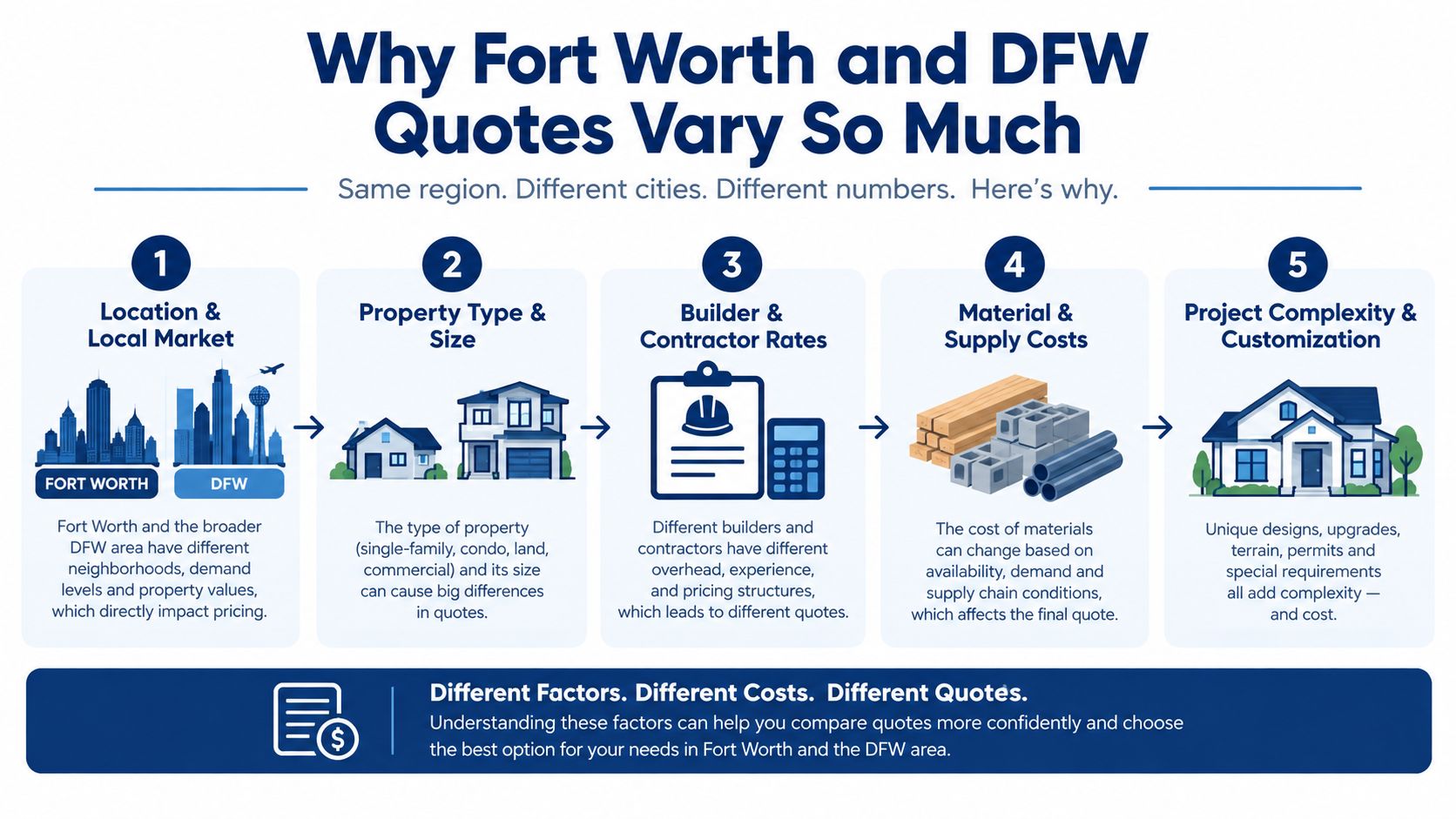
Two contractors can inspect the same roof near Fort Worth and produce very different totals without either one making an obvious mistake. The difference usually comes from scope, scheduling, disposal, municipal requirements, and how each company carries insurance and overhead.
Fort Worth is one of the principal cities in the Dallas–Fort Worth Metroplex, alongside Dallas, Arlington, Plano, Irving, Denton, Richardson, and Grapevine, as outlined in the Dallas–Fort Worth Metroplex overview. Those cities share a regional market, but they don't operate as one permitting or disposal jurisdiction.
Location changes the job
A proposal inside Fort Worth city limits may not use the same permit assumptions as one in unincorporated Parker County. Arlington, Irving, Grapevine, Colleyville, Plano, and nearby communities can apply different administrative procedures or accessory requirements. The contractor should identify which permit and inspection responsibilities are included rather than leaving you to discover them after work begins.
Disposal also moves with the storm cycle. After a major hail event, transfer stations and landfills can become more expensive or less convenient, while crews are booked heavily. A quote obtained soon after widespread storm damage may reflect constrained labor and disposal capacity, not a change in the shingle itself.
Roof design creates another major gap. A simple gable roof is faster to stage and install than a roof with valleys, dormers, intersecting sections, chimneys, skylights, and difficult access. One contractor may include replacement flashing and ventilation, while another may reuse existing components or exclude them as allowances.
Compare Arlington, Irving, Grapevine, and Colleyville proposals line by line. A lower total means little if one quote leaves out disposal, flashing, ventilation, or decking.
Crews may also price travel differently between Tarrant, Dallas, Denton, and Collin counties. Insurance requirements, local code interpretations, warranty administration, and company staffing all affect overhead. Ask each bidder to measure the roof, identify the number of existing layers, and specify every accessory before you compare totals.
The 30 Year Lifecycle Cost Comparison
A three-tab roof can win the first quote and lose the 30-year budget. Its usual service life is around 15 to 20 years, and it generally carries lower wind ratings than architectural shingles. SquareDash's roofing cost comparison links the lower upfront cost with shorter service life and greater storm-performance concerns.
Judge the roof by its full ownership cost, not the bundle price. Include installation, maintenance, repairs, replacement, and possible weather damage. A warranty period does not guarantee the roof will operate that long, and two DFW homes can experience very different storm histories.
The following figures are a DFW planning model, not a quote or promise. It assumes a three-tab roof installed for $10,000, a replacement around year 20, a $600 to $1,200 partial repair around year 12, and about $150 every three years for maintenance sealing. Those assumptions produce a 30-year total of roughly $14,000 to $16,000.
| Shingle Type | First Install (DFW 2026) | Replacement / Repair Costs | 30-Year Maintenance | Insurance Discount | 30-Year Total |
|---|---|---|---|---|---|
| Three-tab | $10,000 | One replacement, plus $600 to $1,200 repair | About $150 every three years | Not assumed | $14,000 to $16,000 |
| Architectural | $13,500 | Minor repairs, no planned full replacement | Minor repairs | Not assumed | $15,000 to $16,500 |
| Premium impact-resistant | $18,000 | Storm-dependent | Minor repairs | 10% to 25% in the supplied model | Storm-dependent, potentially competitive |
The architectural model assumes a $13,500 installation that lasts through the 30-year period, with minor repairs. Its projected total is near $15,000 to $16,500 under the same planning framework. Paying more at installation can therefore make financial sense for an owner who expects to keep the property.
The premium model needs written confirmation before you count any savings. It assumes one moderate hail event during the ownership period and an insurance discount of 10% to 25% in DFW. Your insurer may apply different rules based on policy terms, product certification, and documented installation. Ask the carrier to confirm eligibility and the actual discount in writing.
Three-tab shingles remain a valid budget choice for the right property. They stop being the value choice when North Texas repairs and an earlier replacement erase the initial savings. Compare the installed bill and the likely ownership path, not just the bundle price.
Who Should and Shouldn't Choose Three Tab
Three-tab shingles make sense when the property decision is short-term, functional, and tightly budgeted. They don't make sense because a salesperson calls them the cheapest option.
Reasonable uses
- Investor-owned rentals: A rental in Arlington or Garland with tenants expected to stay only a short time may prioritize immediate capital control over premium appearance.
- Detached structures: Garages, sheds, and small workshops often need a code-compliant roof without the visual or performance requirements of a primary residence.
- Limited storm-repair funds: When insurance proceeds or available cash constrain the scope, three-tab can restore basic coverage without pushing the project beyond reach.
- Simple gable roofs: A straightforward home under 2,000 square feet may receive little visible curb-appeal benefit from an architectural upgrade if the owner plans to sell or refinance within a short period.
The decision changes when you own the house as a long-term residence. A homeowner planning to stay 15 years or longer should think carefully before accepting a shorter-lived, lower-rated roof. Homes in Plano, Frisco, and McKinney communities with HOA profile restrictions may not permit the product you're considering.
Properties north of I-30 also deserve a serious weather conversation. Hail and wind exposure can make a lower-rated shingle a false economy, particularly when a replacement roof must serve through several severe-weather seasons.
A DFW buyer's inspector may flag a 25-year-old three-tab roof during an inspection. An architectural roof may present more remaining service life, although no inspector should approve a roof based on shingle category alone.
The storm-replacement trap is especially common. Replacing an architectural or impact-rated roof with three-tab shingles to save $3,000 to $5,000 may change the warranty, reduce wind performance, and leave the owner with less protection during the next hail event. Ask the insurer and manufacturer about the consequences before choosing a cheaper replacement assembly.
Getting an Honest Quote in the DFW Metroplex
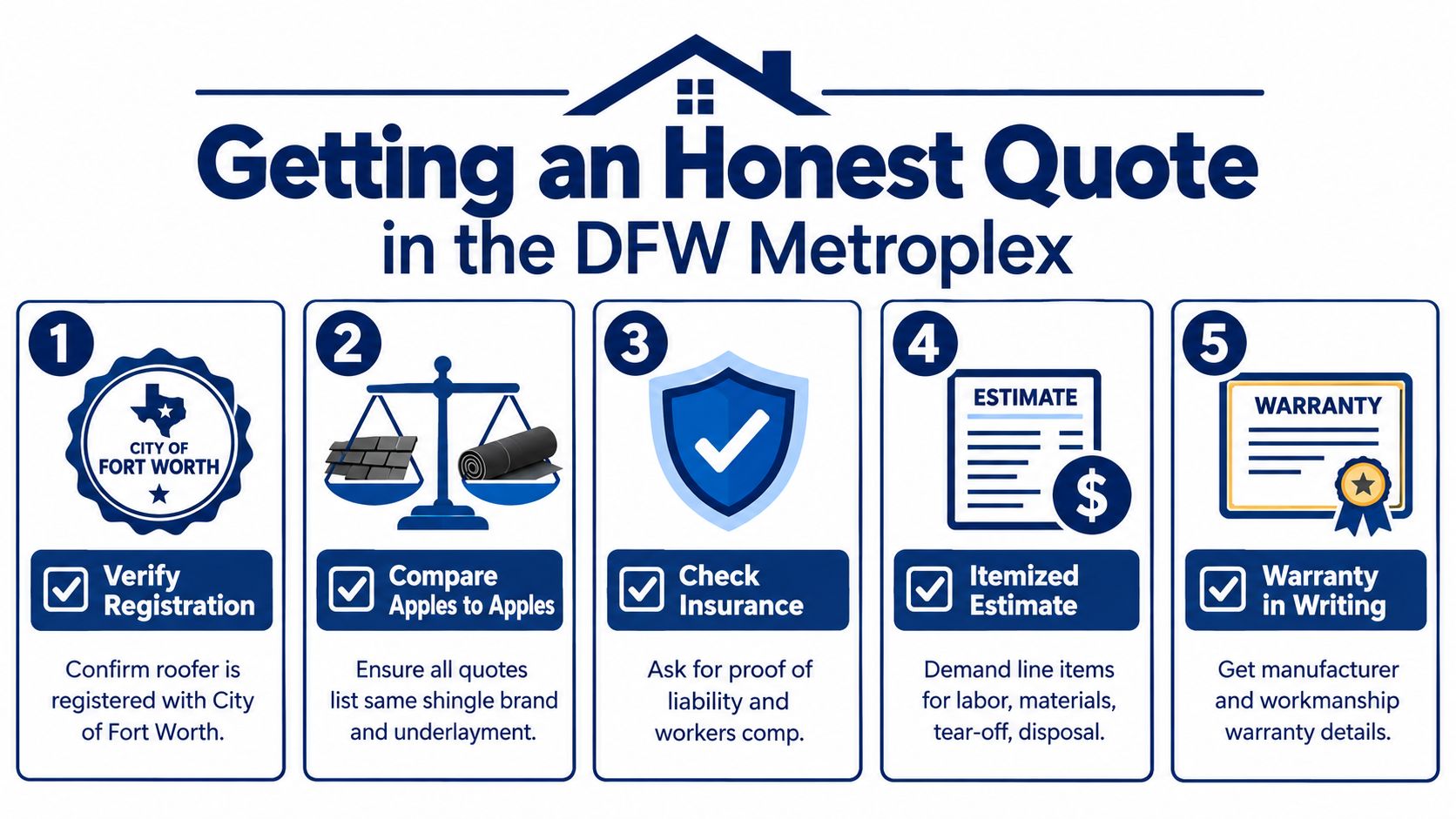
Start by requiring every contractor to price the same roof system. The proposal should show the measured roof area, existing layers, shingle manufacturer and product, underlayment, accessories, disposal, permit responsibility, and workmanship warranty. Without those details, three-tab shingles cost comparisons are unreliable.
A credible Fort Worth roofer will identify whether the price includes synthetic underlayment or felt, valley ice-and-water shield, drip edge, flashing replacement, pipe boots, starter strip, ridge cap, and ridge vent or box vents. Those line items often explain a quote that is thousands higher than another.
Use this comparison checklist
- Verify the company: Confirm the roofer works in the relevant Tarrant, Dallas, Denton, or Collin County jurisdiction, carries general liability and workers' compensation coverage, and can pull the permit under its own company name.
- Compare the tear-off: Require a price for each existing layer, including hauling and disposal.
- Identify allowances: Ask how the contractor prices rotten decking, damaged flashing, inaccessible areas, and code-required upgrades.
- Question the warranty: Confirm whether the shingle warranty is prorated or non-prorated, and identify the workmanship coverage.
- Review payment terms: Be cautious if a contractor demands full payment before work begins.
Door-knocker pricing after a hailstorm deserves extra scrutiny. The same applies to a proposal with no roof measurement, product name, or line-item scope. A low quote can be legitimate, but it must hold up against a detailed, side-by-side comparison.
Timing affects crew availability and pricing. Spring and early summer generally cost more than late fall in the DFW market, so a flexible schedule during a non-storm year may reduce the price for the same defined scope. Treat seasonal savings as a planning possibility, not a guaranteed discount, and confirm current pricing with local contractors.

Blue Lake Roofing & Remodeling provides residential roof replacement, repair, storm-damage inspection, insurance-claims assistance, and estimates across the DFW service area. For a second opinion on three-tab shingles cost, request an itemized comparison through Blue Lake Roofing & Remodeling, then compare its scope with the other proposals before signing.
