
Storm Damage Roof Repair in Fort Worth: A Practical Guide
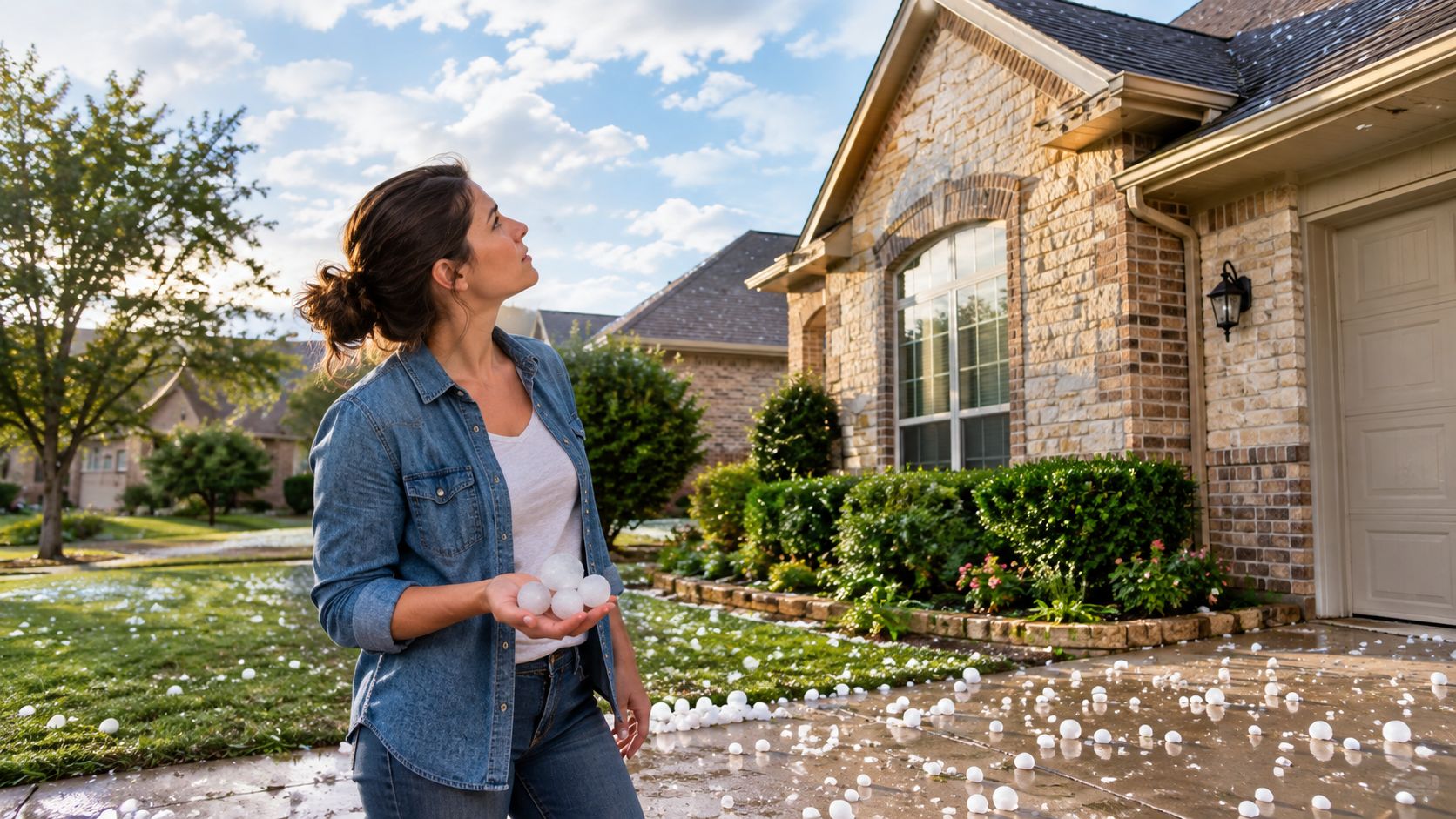
The first sign is usually quiet. A homeowner in Fairmount, Westover Hills, or north Arlington walks the yard after a June hailstorm, sees a driveway full of ice pellets, and hears that dull thud on the fence or patio set that tells you the storm didn't just pass overhead, it hit the house too. By the time the sun comes out, the roof may still look fine from the street, but the clock on storm damage roof repair has already started.
In Fort Worth, the next few hours matter more than the storm itself. Photos, a clean perimeter walk, and a fast inspection beat guesswork every time, especially when out-of-state door-knockers start showing up before you've even finished sweeping glass off the porch. The homes in Fort Worth, Arlington, Irving, Grand Prairie, Euless, Dallas, Plano, Denton, Richardson, and Grapevine all sit in the same hail-prone metroplex, but the damage pattern on each roof is still judged slope by slope, not by ZIP code.
Table of Contents
- The First 72 Hours After a Fort Worth Storm
- Inspecting the Roof Without Climbing Too Soon
- Documenting Damage the Way Texas Insurers Expect
- Temporary Tarps and Emergency Dry-Ins That Hold Up
- Repair or Full Replacement in a Hail-Prone Market
- Working the Insurance Claim in Texas
- Your DFW Storm-Damage Action Checklist
The First 72 Hours After a Fort Worth Storm
A Fairmount homeowner doesn't need a lecture at that moment, just a sequence. The storm's over, the yard is wet, and the roof may have taken wind, hail, and branch impacts in one shot. The right move is to protect the structure and the claim file at the same time.
Start outside while the light still holds. Walk the perimeter, look at downed limbs on the fence line, and photograph anything that looks newly dented or broken. Put your phone on date-stamp mode and capture the AC condenser fins, gutters, window screens, and any soft metal that took a direct hit, because those collateral marks often help confirm what happened up on the roof.
Practical rule: if water is already getting inside, the emergency dry-in comes before the insurance debate. Don't wait for an adjuster to tell you the roof needs protection.
A local DFW roofer should be on-site before the storm-chasing crews start leaving flyers on doors. That's when mitigation receipts, temporary tarps, and inspection notes need to be tied to the same job file, because carriers start building their timeline immediately. If a ceiling stain appears later, the homeowner can end up with two problems, one roof claim and one moisture issue that should've been prevented.
The industry data backs up why speed matters. A 2025 Verisk roof report cited in insurance-industry coverage said average residential roof replacement costs reached $17,631 and average repair costs were $4,699, while roof repair and replacement cost value totaled nearly $31 billion in 2024 and roof-related items represented more than a quarter of all residential claim value, according to that same coverage insurance-industry reporting on Verisk roof claims severity. That's why a “small” hail event in Fort Worth can turn into a major file fast.
The next three moves are simple, inspect safely, document the damage, and dry the exposed areas before the weather shifts again.
Inspecting the Roof Without Climbing Too Soon
The safest inspection starts at the curb and works upward. Most Fort Worth roofs give up clues on the edges first, not in the middle, and those clues are easier to read before anyone walks on the surface. The goal is to separate storm impact from normal wear without making the roof worse.
Work the edges before the field
Gutters tell a lot. Dented aluminum runs, splatter marks, and granules collecting at the downspout elbows often show hail impact even when shingles still look passable from the street. Move to window screens, casings, and soft metal items like flue covers, roof vents, and satellite mounts, because hail usually bruises those before it tears through the covering.
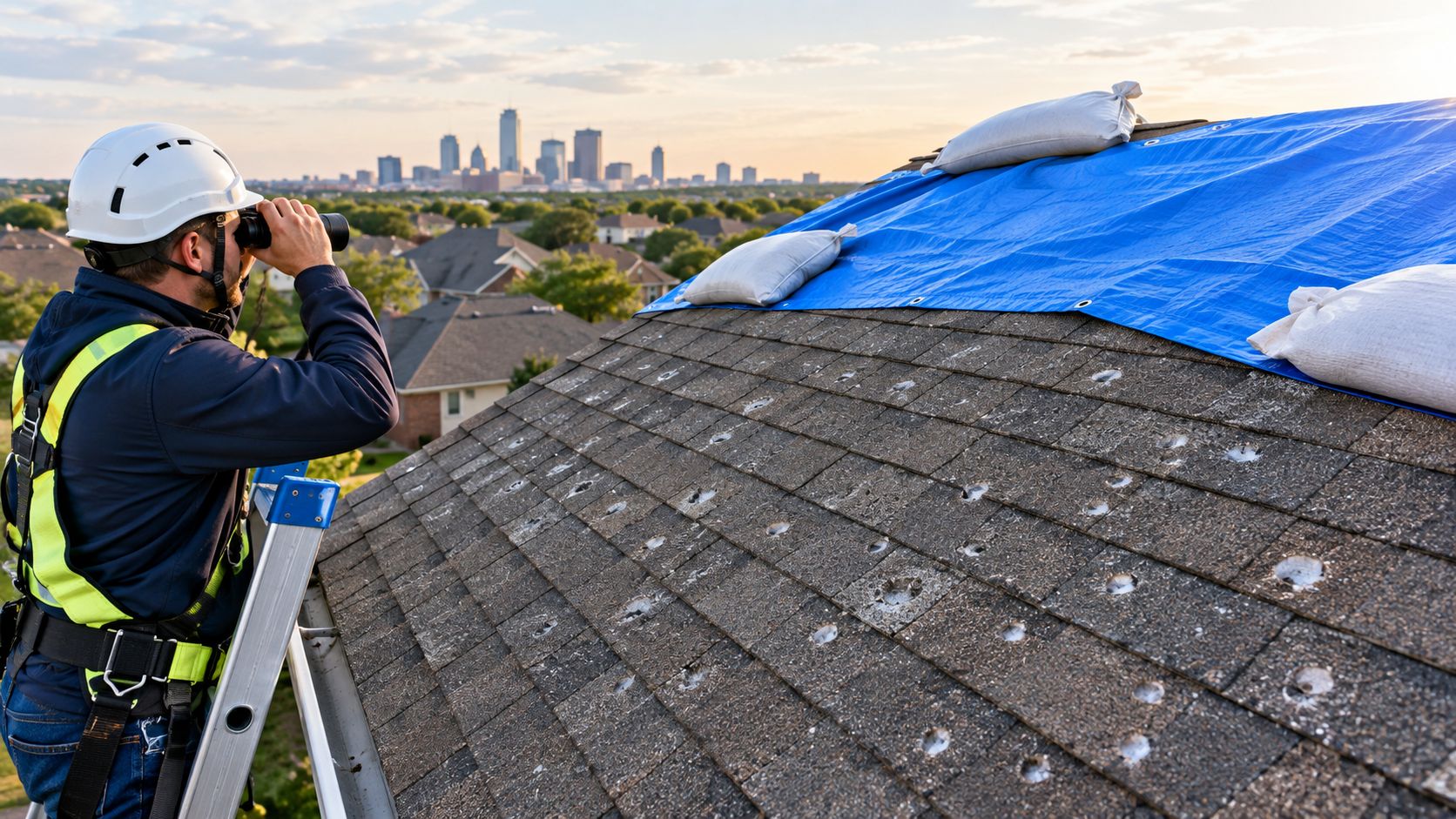
Then scan the valley flashing and ridge line. Crease lines in metal valleys, displaced caps, and curled or creased shingles on southwest-facing slopes are common after DFW storm cells push through from one direction. If the roof is wet, icy, or shedding granules, leave the slope alone and use binoculars from the curb or a drone flyover from a licensed roofer instead.
If you want a good outside reference on when a drone makes sense, this Ventura County Roof Cleaners drone guide is a useful example of how aerial inspection gets used when access is risky.
Know what climbing too early costs
A wet slope can hide the very damage you're trying to prove. Walking a bruised shingle field within 24 hours can knock off more granules, crease tabs, and confuse the later adjuster review. That's especially true on older North Texas roofs, where the mat underneath may already be brittle and the storm just made it more visible.
IBHS field research summarized in 2024 reporting found that among 933 houses investigated after hurricanes, 602, about 65%, had some level of roof cover damage, with average roof cover damage at 7.7% across all homes and 11.9% among the damaged homes storm-age and roof damage reporting. The point is plain, storm damage is often partial, hidden, and easy to miss from the ground.
Don't treat a quiet roof like an undamaged roof. Quiet just means the next leak hasn't shown up yet.
Documenting Damage the Way Texas Insurers Expect
Texas carriers and adjusters want proof that connects the storm to the damage, not just a few blurry photos of shingles. A clean claim file starts with wide shots, then moves to close-ups that show scale, location, and weather timing. Without that chain, the first estimate often comes back short.
Build the file before anyone visits
Take wide photos of each slope, then move in on dented gutters, bruised shingles, cracked window beading, patio furniture pitting, the mailbox, and any vehicle damage sitting in the driveway. Those collateral images matter because they help match the roof marks to the same storm event. Put the date and time on every image if your phone allows it, and keep a written log of when the hail started, when it stopped, and which side of the house looked hardest hit.
A 10-by-10 test square is still the practical anchor for a roof file. Inspectors use that sample area to compare hail hits on each slope, then they check whether the shingle surface shows granule loss, bruising, or mat exposure. The point isn't to count dents for sport, it's to show whether damage is localized or spread across enough slopes to matter.
| Documentation Item | What the Carrier Expects |
|---|---|
| Wide roof photos | Each slope shown clearly, with no obstruction |
| Close-up defect photos | Scale, location, and damage type visible |
| Collateral damage shots | Hail marks on metal, screens, and exterior fixtures |
| Dated damage log | Storm date, time, and visible effects |
| Expense file | Tarps, water mitigation, and contractor receipts |
Keep the paperwork clean
Write down every call, every email, and every voicemail. Save weather references that match the storm time, and put all receipts in one folder, even the small ones for emergency materials. That organization helps when the carrier asks for a re-inspection or questions depreciation later.
Texas hail-damage guidance also recommends documenting the storm and damage right away, including photos of gutters, vents, AC condenser tops, fascia, and visible roof surfaces before a contractor or adjuster arrives, then notifying the insurer in writing so there's a timestamped record Texas hail-damage insurance guidance.
Temporary Tarps and Emergency Dry-Ins That Hold Up
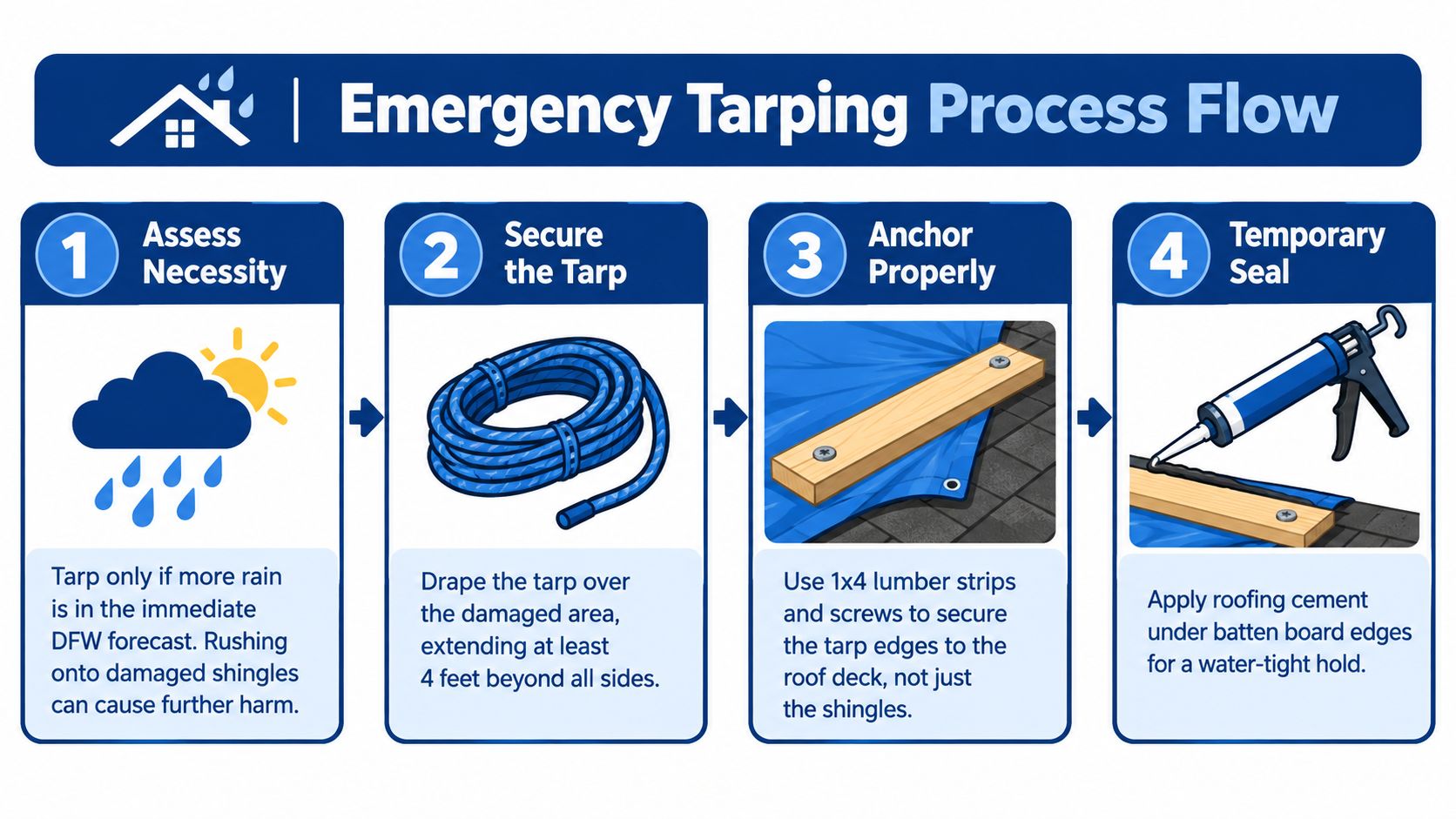
A tarp is not a repair, it's a brake pedal. Use it when rain is coming back before permanent work can start, not as a substitute for a proper inspection or scope review. The faster you keep water out, the less likely you are to end up fighting ceiling stains, damaged insulation, or interior finish claims later.
What good emergency work looks like
Tarp from the eaves up toward the ridge so wind-driven rain can't work underneath the edge. Overlap the damaged area by several feet on every side, and secure the cover so the wind doesn't balloon it loose in the next gust. When possible, anchor without puncturing more of the roof than necessary, because a sloppy emergency fix can turn into a bigger tear-off later.
Synthetic underlayment patches usually hold up better than builder's felt for a longer dry-in. That matters in Fort Worth when another cell pops up before the adjuster ever shows. Photograph the tarp placement, the exposed area it protects, and the fasteners or sandbagging used, then save those images in the claim folder.
What goes wrong fast
Stapling through compromised decking, leaving the tarp fluttering loose, or covering wet OSB and hoping the next dry day will solve it, those are the mistakes that create secondary damage. If the roof deck is exposed and moisture is coming through, the dry-in needs to happen immediately and cleanly. Don't improvise in a way that makes the eventual repair harder to price or harder to defend.
Practical rule: if the tarp can't survive the next wind shift, it's not finished.
The repair company you choose should know how to document emergency work for the carrier file. In Fort Worth, that kind of process is routine for a contractor like Blue Lake Roofing & Remodeling, which handles roof inspection, storm repair, and insurance-claims support across the metroplex.
Repair or Full Replacement in a Hail-Prone Market
Fort Worth homeowners usually want a simple answer, patch it or replace it. The answer depends on how many slopes show verified damage, how many test squares fail, and whether the shingles are still a matching, manufacturable product. Cosmetic damage on metal accessories doesn't drive the decision by itself, functional roof damage does.
Where spot repair still makes sense
Spot repair can pencil out when the hit is isolated, the roof is younger, and the damaged shingles are still available. That's often the case when one ridge area, one valley edge, or one windward slope took the brunt of the storm and the rest of the roof still tests clean. If the bruise count is light, the mat isn't fractured, and the repair won't create a patchwork mismatch across the street-facing slopes, a scoped repair can be reasonable.
Where replacement usually wins
Full replacement becomes the stronger answer when damage is spread across multiple slopes, the roof is aging out, or the shingle line is discontinued. In hail-prone North Texas, that's where the claim discussion stops being about appearance and starts being about performance. A roof can look “mostly fine” and still fail the standard once the test squares show functional damage.
| Decision Factor | Spot Repair Likely | Full Replacement Likely |
|---|---|---|
| Damage pattern | Isolated and localized | Across multiple slopes |
| Roof age | Younger system | Older, brittle system |
| Shingle availability | Current product still made | Matching product no longer made |
| Surface condition | Minor surface impact | Mat fractures and widespread bruising |
| Claim scope | Limited materials and labor | Broader loss and code-driven scope |
Typical DFW spot repairs often land between $400 and $1,200 for shingle replacement, while full replacements commonly run between $8,500 and $18,000 on a 2,000-square-foot home, depending on materials and scope. When RCV coverage applies and the damage crosses the test-square threshold, a code-required replacement often makes more financial sense than patching a roof that's already been compromised storm-damage repair cost and claim severity reporting.
Working the Insurance Claim in Texas
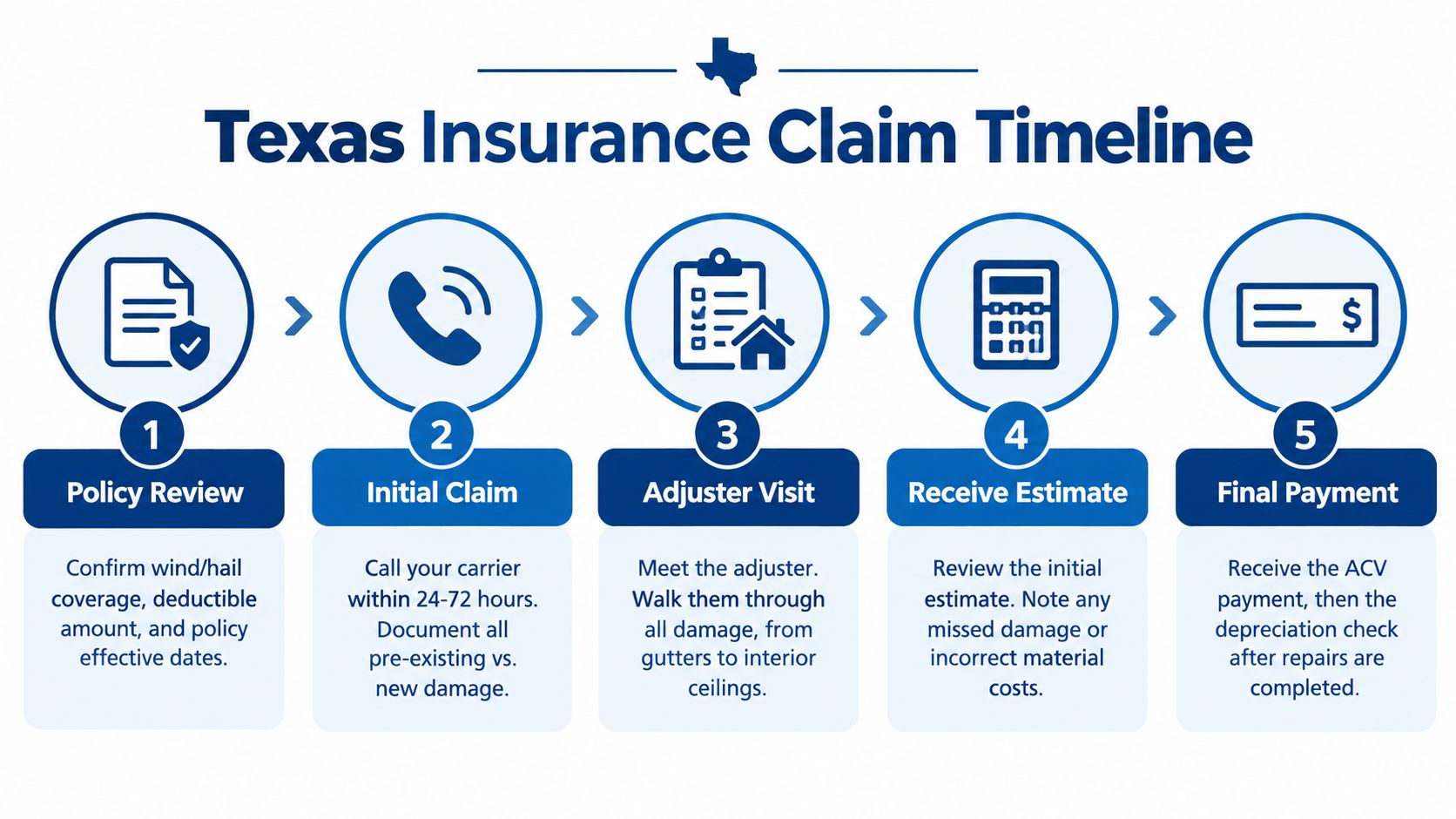
The claim lives or dies on the policy language first. Check whether wind and hail are covered, what the deductible is, and whether the policy pays RCV or ACV, because that difference changes everything after a Fort Worth storm. Older homes often end up with ACV treatment, which means age and depreciation matter a lot more than owners expect.
The Texas sequence that avoids delays
File the claim in writing as soon as the damage is documented. Then get the adjuster on-site with the contractor, because a field walk with someone who knows Texas hail damage can change the scope quickly when collateral hits or hidden bruising are missed. If the first adjuster skips a slope or undercounts the test square, ask for a re-inspection and keep the original notes in the file.
For a plain-English walkthrough of the claim sequence, expert guidance from ISU Insurance is a useful reference point for the policy, loss report, and documentation steps.
The deadlines that catch people off guard
The Texas Department of Insurance lists 800-252-3439 as the consumer help number, and Texas claim guidance says many policies require a claim to be filed within one year of the date of loss Texas Department of Insurance hail and windstorm guidance. That deadline matters even when the homeowner is frustrated or still waiting on a return call.
Keep every estimate, supplement request, and voicemail timestamped. The carrier's version of the file is not always the one the homeowner remembers.
If hidden damage shows up during tear-off, the contractor may need to submit supplements. That isn't a sign the job is going sideways, it's normal when hail damage hides under the surface and the full scope only appears after the outer layers come off.
Your DFW Storm-Damage Action Checklist
A Fort Worth homeowner can keep the week after a storm simple if the work happens in parallel. Start by photographing the property before cleanup, then walk the perimeter for collateral damage on gutters, vents, screens, and vehicles. That gives you the storm record before anyone accidentally changes the scene.
Pull the policy declarations page and confirm the wind and hail language, the deductible, and whether the roof is on an ACV or RCV basis. Then get a local inspection scheduled so a roofer can check the 100-square-foot test square areas on the relevant slopes instead of guessing from the driveway. If the roof is leaking, ask for a tarp or dry-in before the next rain band rolls through.
Use this short list to stay ahead of the claim:
- Photograph first: Capture the roofline, gutters, vents, fascia, and any interior stains before cleanup starts.
- Check the yard and vehicles: Document hail marks on the driveway, mailbox, patio furniture, and cars.
- Schedule a Fort Worth inspection: Get a local contractor to verify slope-by-slope damage and compare it to the storm pattern.
- Request emergency protection: Ask for tarping or dry-in work if active leaks are present.
- Collect the storm timing: Save the hail date and time from local news or NOAA storm reports.
- Review your policy: Pull the declarations page and confirm coverage and deductible details.
- File within the window: Don't let frustration push the claim past the Texas filing timeline.
The Fort Worth process moves faster when documentation, tarping, and carrier notice happen together instead of one after the other.
If your roof took hail or wind in Fort Worth, Blue Lake Roofing & Remodeling can inspect the damage, document what matters, and help you work through repair or replacement with insurance in mind. Visit Blue Lake Roofing & Remodeling to schedule a local roof evaluation and get the claim process moving before the next storm rolls through.
