
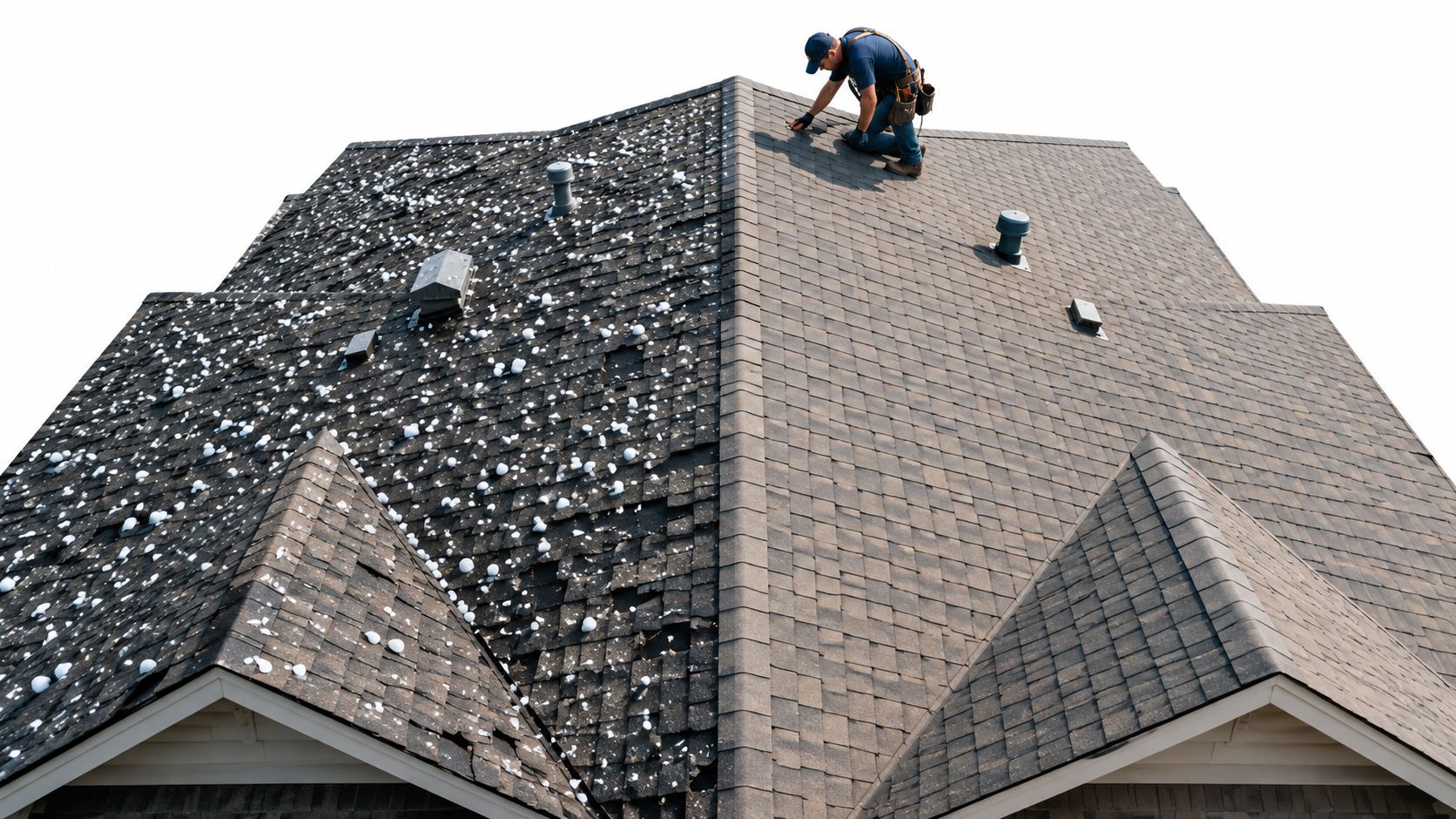
Frisco TX Roofing Services Repairs and Storm Help
A Frisco homeowner often notices roof trouble at the worst possible time. Hail has just crossed the neighborhood, a few shingles look out of place, and water appears near a ceiling vent after the storm. The immediate question isn't just whether the roof is old. It's whether the damage is functional, whether temporary protection is needed, whether insurance documentation is sufficient, and whether the project requires a Frisco permit.
Frisco TX roofing decisions also vary by property. A newer subdivision may need warranty support or repair after severe weather, while an established home may need a full replacement, upgraded ventilation, or a different material. This guide covers storm inspections, repairs, residential and commercial replacement, specialty roofing, permit paths, documentation, and service from Fort Worth through surrounding DFW communities. It also includes a useful local resource for broader exterior property care, Bare Roots Landscape Solutions in Frisco.
Table of Contents
- Storm Response, Repairs, and Replacement in Frisco
- Why Frisco Homes Need Proactive Roof Care
- Roofing Services Available in Frisco
- How Hail and Wind Damage Frisco Roofs
- Repair Replace or Wait After a Storm
- Frisco Permit Paths, Codes, and Inspection Milestones
- Cool Roofs Ventilation and Service From Fort Worth to Frisco
Storm Response, Repairs, and Replacement in Frisco
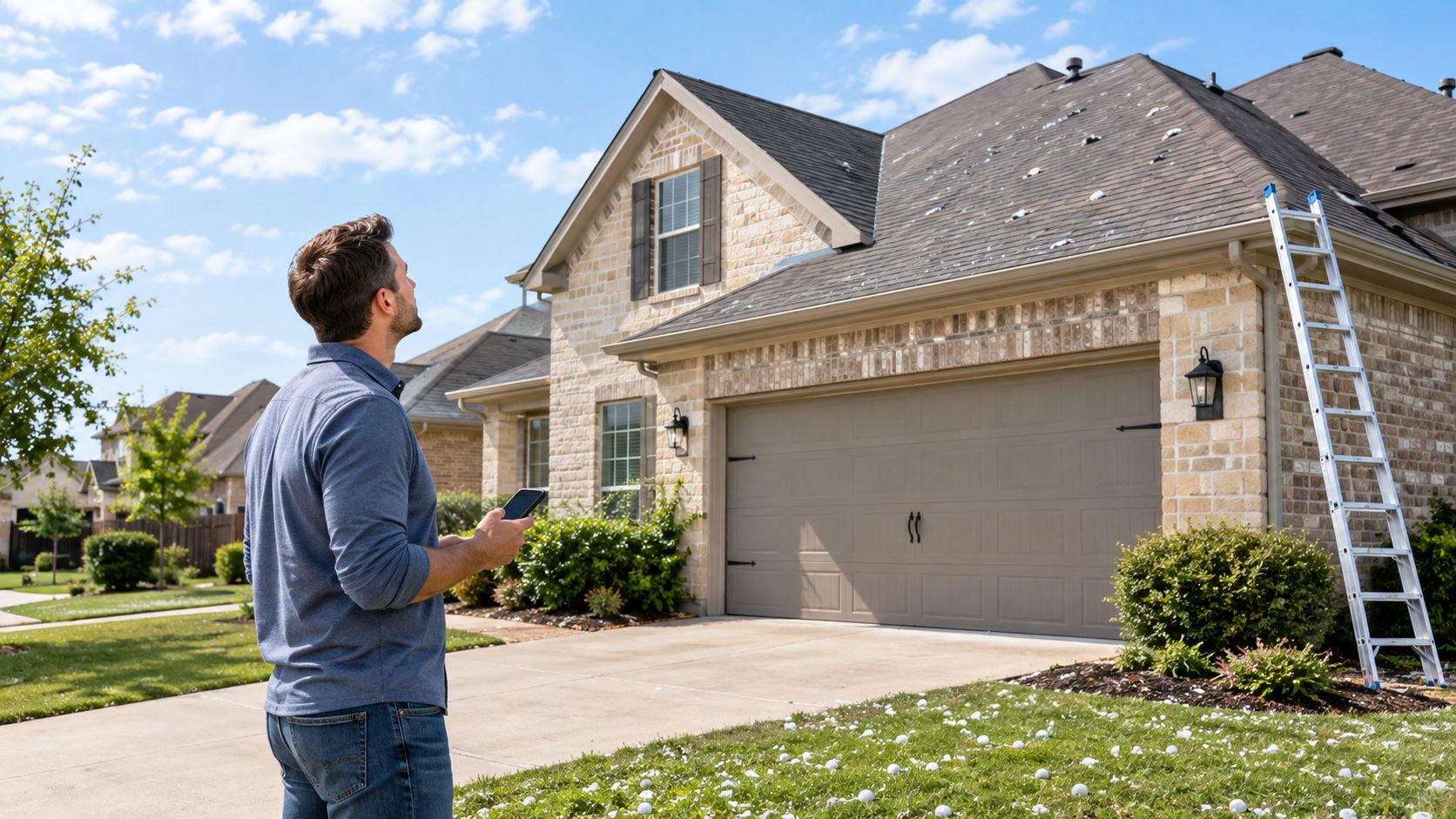
A Frisco roof can look intact from the driveway after hail or high wind, while damage is developing around flashing, vents, or the roof deck. Begin with safety and evidence. Stay off a wet or visibly damaged roof. From the ground, photograph missing shingles, displaced metal, dented gutters, fallen branches, and interior staining. If water enters, place a container below the drip, move belongings away, and arrange temporary mitigation before a qualified roofer examines the assembly.
A useful inspection answers more than whether the roof appears damaged. It identifies affected slopes, separates storm impact from age-related wear, and checks common entry points. These include valleys, eaves, pipe boots, skylights, wall transitions, flashing, and other roof penetrations.
First response rule: Protect people and belongings first, document conditions second, and make replacement decisions only after a professional roof evaluation.
Blue Lake Roofing & Remodeling handles work Frisco properties commonly require, including residential leak repairs, asphalt-shingle and standing-seam metal replacement, specialty roofing, commercial systems, storm documentation, and insurance-claim coordination. A written scope should state whether the recommended work is a repair, partial replacement, or complete system replacement. It should also identify connected components, such as flashing, ventilation, gutters, fascia, and soffits.
Frisco's growth and high home values make a clear record especially useful when storm work must align with insurance requirements, local permits, and an owner's schedule. The service path can differ by property. A newer home may involve installation or warranty questions, while an established property may have layered repairs, deteriorated decking, outdated flashing, or materials that no longer match the roof.
Commercial buildings need a separate review of membrane seams, drains, edge metal, rooftop equipment curbs, and maintenance history. A practical local reference for broader exterior property care is Bare Roots Landscape Solutions in Frisco.
The goal is a defensible record of the roof's condition, work that fits the building, and coordination with permitting, insurance, and the owner's schedule.
Why Frisco Homes Need Proactive Roof Care
A roof can look serviceable from the yard while wind-driven rain is already testing a loose shingle, flashing joint, or seal. In Frisco, that risk matters across both new subdivisions and established neighborhoods. The U.S. Census Bureau recorded 200,509 residents in the April 1, 2020 Census, while the City of Frisco reports a current estimate of 249,511, an increase of approximately 24.4% from that census count, as documented by the City of Frisco demographics data. The city estimates a build-out population of about 330,000, so construction and property turnover remain active.
That growth creates different roofing needs at the same time. Newer homes may require installation reviews, warranty support, or confirmation that materials were fitted correctly. Older neighborhoods may need maintenance, storm repairs, replacement, or exterior updates. A contractor focused only on emergency leaks can overlook the maintenance history that supports the whole roof assembly.
Property value raises the importance of sound decisions. The Census Bureau reports a median value of owner-occupied homes of $595,400 for 2019–2023, with 66.5% of housing units owner-occupied during that period, according to its Frisco city QuickFacts data. These figures do not dictate a premium roof system. They do make clear documentation, code compliance, compatible materials, and careful workmanship relevant to ownership decisions.

Growth changes the maintenance question
The City of Frisco maintains monthly population estimates using certificates of occupancy, vacancy rates, and persons-per-household calculations. Its Development Services department also publishes residential and commercial permit activity. Roofing work therefore spans new construction, occupied homes, additions, repairs, replacements, and commercial facilities.
A roof shields more than the rooms below it. It also helps protect insulation, drywall, framing, finishes, equipment, and the records that establish a property's condition. A small defect may be manageable when found early. After wind-driven rain reaches underlayment or damaged flashing, the same issue can require broader restoration.
Practical perspective: Find out what condition the roof is in before a storm, leak, or rushed sale forces the decision.
Keep inspection photographs, repair invoices, product details, warranty documents, and previous-leak notes together. These records let a contractor compare current conditions with earlier work and help an owner explain the roof's history to an insurer, buyer, HOA, or facility manager.
Roofing Services Available in Frisco
The right service depends on the failure point. A missing shingle and a deteriorated low-slope membrane may both produce a leak, but they require different materials, diagnostic methods, and installation details. A repair preserves a serviceable roof. Replacement makes sense when damage is widespread, the assembly has reached the end of its useful condition, or repeated repairs no longer provide dependable protection.
| Situation | Best Fit Service | What It Includes |
|---|---|---|
| Isolated leak, missing shingle, or damaged flashing | Residential roof repair | Leak tracing, shingle or flashing repair, sealant and interface review, and water-shedding checks |
| Widespread asphalt-shingle wear or storm damage | Residential roof replacement | Tear-off assessment, decking review, underlayment, shingles, flashing, ventilation, cleanup, and warranty documentation |
| Durable architectural upgrade | Standing-seam metal roofing | Panel layout, compatible underlayment, trim, penetrations, fasteners, and drainage details |
| Premium or historically appropriate home | Specialty roofing | Slate, cedar shake, clay tile, copper details, and restoration-sensitive flashing work |
| Low-slope commercial building | TPO or EPDM system | Membrane installation or repair, seams, perimeter attachment, drains, penetrations, and equipment curbs |
| Commercial appearance and longevity project | Standing-seam metal roofing | Panels, clips, trim, transitions, penetrations, and code-conscious installation |
| Exterior water-management or finish problem | Siding, fascia, soffit, and gutters | Replacement or repair of exterior components, drainage improvements, and compatible metal details |
| Unusual transition or custom component | Custom metal fabrication | Purpose-built flashing, chimney caps, vent hoods, trim, and other exterior components |
Repair or replacement
Repair is usually the better fit when the damage is localized and the surrounding roof remains sound. The scope should identify the source of the leak, not merely cover the visible stain. That can require checking adjacent flashing, fasteners, underlayment, pipe boots, and drainage paths.
Replacement deserves consideration when the roof has widespread functional damage, persistent leaks, failing interfaces, or conditions that make isolated repairs unreliable. A complete proposal should separate required installation work from optional upgrades and explain what happens to concealed decking or ventilation once the roof is opened.
Specialty materials need extra care. Slate, clay tile, cedar shake, and copper details affect weight, flashing, appearance, installation methods, and long-term maintenance. Commercial TPO and EPDM systems also demand attention to seams, edges, drains, and rooftop equipment rather than a shingle-style repair approach.
Owners planning customer acquisition for a roofing company can also study practical roofing campaign tips that convert, but the same discipline applies to the customer experience: clear scopes, accurate photographs, timely communication, and no pressure to approve work before the evidence is clear.
How Hail and Wind Damage Frisco Roofs
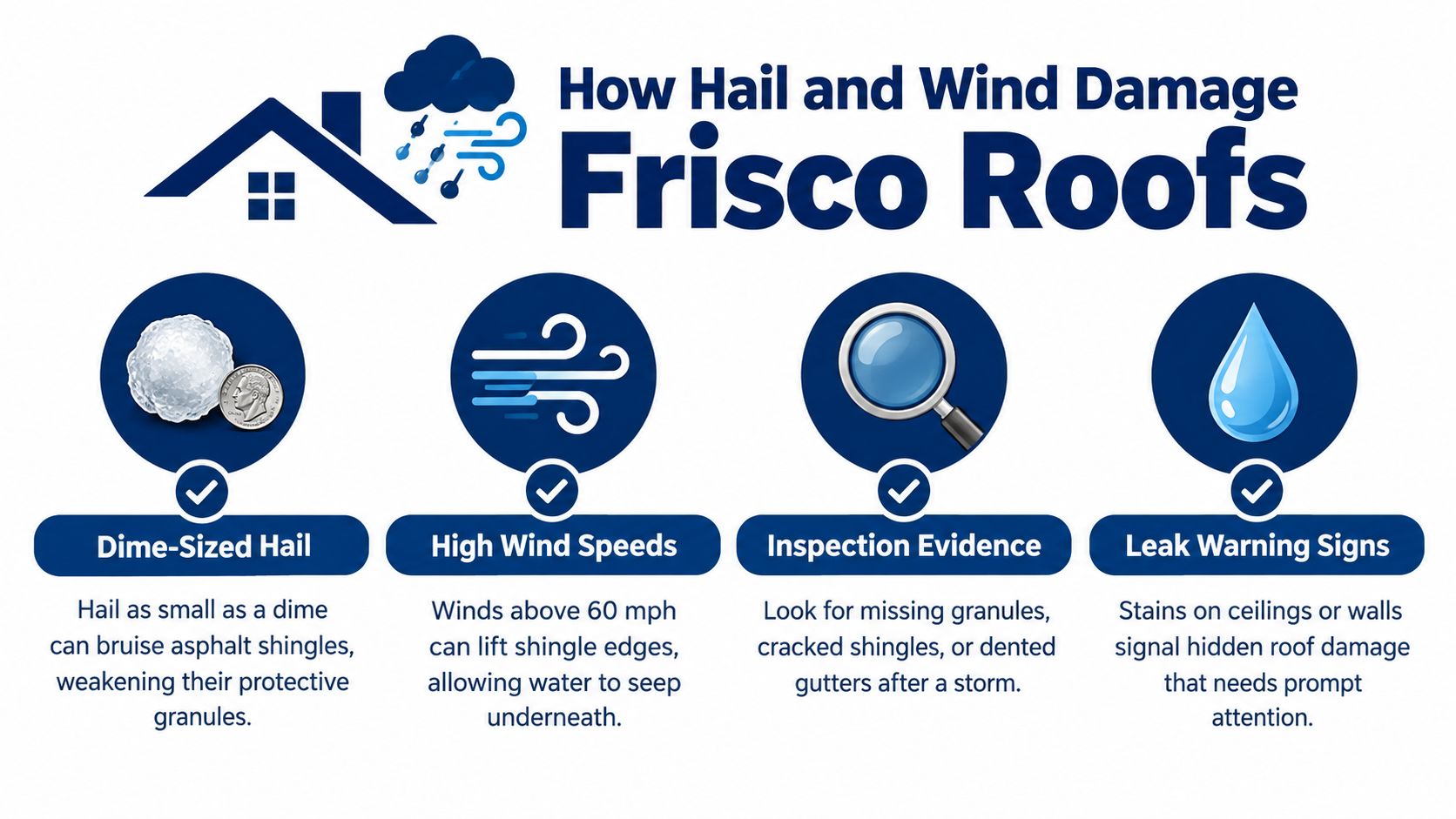
The City of Frisco states that hail approximately dime-sized or larger can dent vehicles, damage roofs, break windows, and create significant injury risk, as described in its severe-weather guidance. On asphalt shingles, the damage may look subtle. Hail can bruise the shingle surface, displace protective granules, fracture the fiberglass mat, or expose the underlying material without creating an immediate ceiling stain.
A bruised shingle is like bruised fruit. The outside may appear mostly intact, but the impact has weakened what lies underneath. Wind can then lift a shingle edge or open a flashing transition, allowing rain to travel beneath the visible surface.
What an inspection should document
A useful inspection is systematic rather than limited to the easiest roof slope.
- Roof-slope orientation: Record which planes face the storm and whether impact patterns differ from one elevation to another.
- Shingle condition: Look for bruising, fractures, missing granules, creases, lifted edges, and exposed fiberglass.
- Metal evidence: Check gutters, downspouts, vents, flashing, valleys, and other exposed metal for dents or deformation.
- Water-entry points: Examine eaves, pipe boots, skylights, wall transitions, and penetrations.
- Interior indicators: Photograph ceiling or wall staining, damp insulation, peeling finishes, and musty areas, while recognizing that no stain doesn't prove the roof is undamaged.
Date-stamped, close-range photographs should include scale where possible. A coin, measuring reference, or clearly identified object can help show the size and location of an impact. A roof plan identifying affected planes gives the contractor and insurance adjuster a way to connect each photograph to a physical area.
Commercial roofs need a different checklist. After hail or severe thunderstorms, inspect membrane seams, perimeter attachment, edge metal, drains, and rooftop equipment curbs. A membrane may remain visually continuous while a seam, termination, or drain detail needs attention.
Avoid using roof age as the only test. Age can inform the evaluation, but the decision should be based on observed functional damage, installation condition, remaining performance, and the scope required to restore water-shedding capacity.
Repair Replace or Wait After a Storm
A storm date doesn't prove that every property needs a new roof. The same is true of neighborhood-wide contractor activity. Collin County recorded 313 hail reports, 108 thunderstorm-wind events, and 9 tornadoes from 2016 through 2026, and 2025 was described as the busiest complete year with 64 severe-weather events, according to the National Roofing Directory's Frisco storm-damage reporting. Those figures establish regional exposure, not damage at a particular address.
Use a three-way decision after the inspection.
- Repair when the contractor finds localized functional damage and the remaining roof can continue to perform with a defined repair.
- Replace when damage is widespread, the roof assembly has failed in multiple areas, or repair would leave connected components unreliable.
- Wait and monitor when the inspection finds cosmetic wear, normal aging, installation defects, or no verified storm damage. Set a follow-up date instead of treating uncertainty as proof of failure.
Build the claim record before filing
Gather the roof's approximate age, previous maintenance records, repair invoices, photographs, and details about any interior moisture. Keep receipts for temporary mitigation, and ask for an itemized scope tied to observed damage. The scope should distinguish shingles, membranes, flashing, vents, gutters, metal, decking, and interior consequences rather than combining everything into a single vague line.
Evidence matters: An independent, evidence-based inspection can reduce unnecessary replacement and help prevent an under-scoped claim.
A qualified contractor can coordinate with the adjuster, but the homeowner should still review the scope and policy terms. Insurance coverage depends on the policy, deductible, exclusions, and the carrier's evaluation. Severe weather creates a reason to inspect. It doesn't automatically create a reason to replace.
Frisco Permit Paths, Codes, and Inspection Milestones
Frisco regulates roofing and exterior work as construction activity. City permits can apply to commercial, residential, and miscellaneous structures, including projects that are erected, constructed, enlarged, altered, repaired, moved, improved, removed, converted, or demolished, according to its residential permit information.
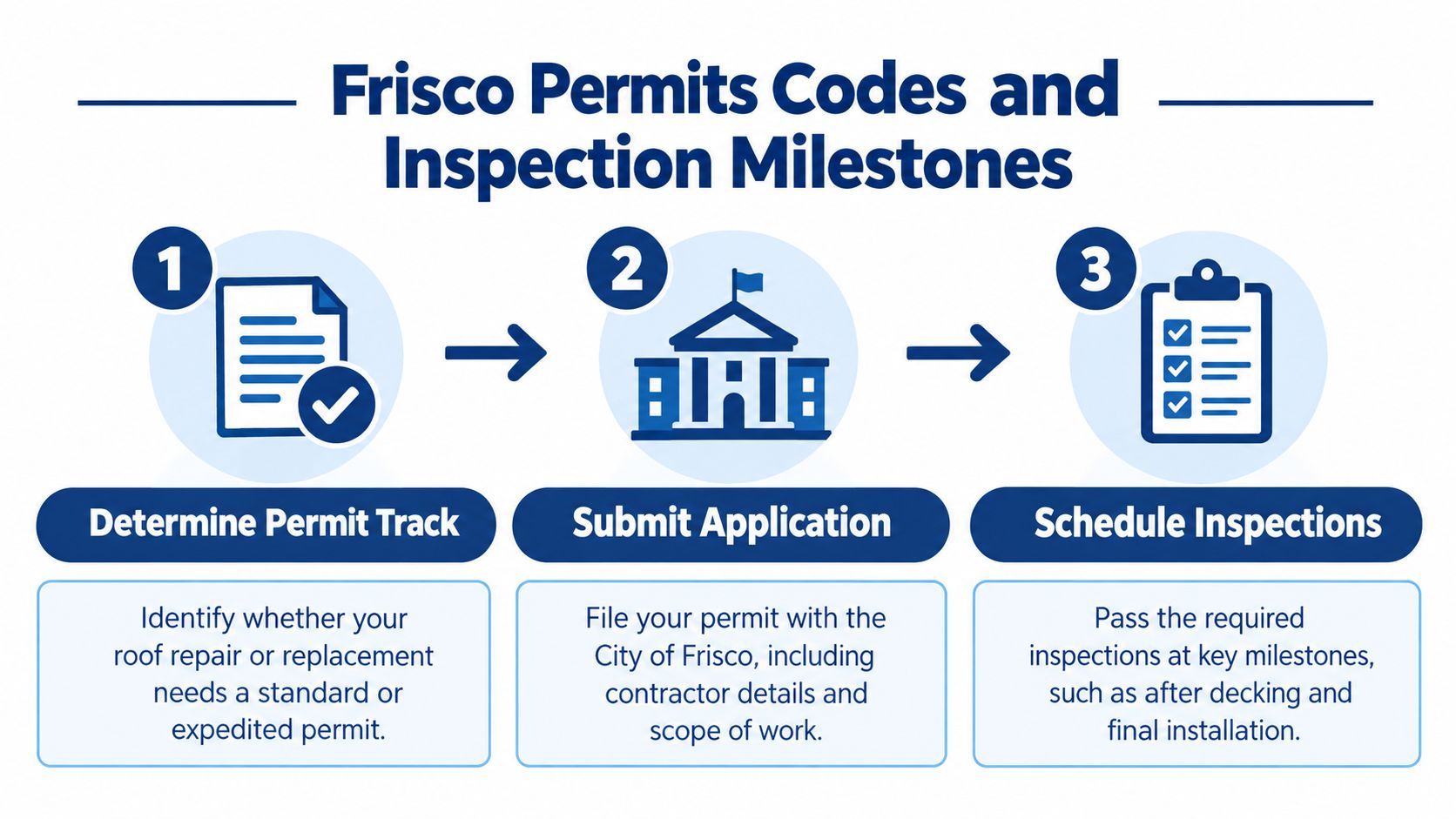
The practical question is which permit path applies and what documents keep the project moving. A same-material reroof may follow a simpler or self-service route. Changing materials, modifying structure, installing a specialty roof, or working on a commercial system may require fuller review. Confirm the current path with the City of Frisco before work begins, especially after storm damage when scheduling pressure can tempt rushed decisions.
Prepare the project file
Build the application packet around the work being proposed:
- Property information: Address, ownership or authorization details, and municipal jurisdiction.
- Contractor details: Registration information and a current company contact.
- Scope of work: Repair or replacement areas, materials, roof type, and related exterior work.
- Structural information: Supporting documentation for heavier slate, tile, or another material that changes loading.
- Installation details: Manufacturer requirements, flashing approach, ventilation plan, and product specifications.
- Inspection coordination: Planned milestones for decking, installation, flashing, and final approval.
- Community requirements: HOA review or architectural approval when exterior appearance or materials change.
Building-permit applications must be submitted online. Contractors generally need current registration before submitting most permits. Frisco's adopted-code framework also changed when the 2024 International Building Code and local amendments became effective March 1, 2026, according to the city's adopted-code information.
Inspection requirements follow the project type. A replacement may involve exposed decking, installation details, flashing, ventilation, and final completion. Specialty or structural work may add review steps. Ask who schedules each inspection, which work must remain visible, and whether the crew can begin the next phase before approval.
Development Services reports can show the city's active construction environment, but project-specific confirmation still comes from the permit technician, plans examiner, inspector, HOA, and contractor. Each handles a different part of the approval path.
Cool Roofs Ventilation and Service From Fort Worth to Frisco
Roof material selection should account for the whole assembly. The U.S. Department of Energy reports that traditional dark roofs can reach at least 150°F in summer sun, while a cool roof under comparable conditions may remain more than 50°F cooler. DOE also reports that replacing a conventional roof with a cool roof can reduce annual air-conditioning energy use for a single-story building by up to 15%, although results vary with insulation, roof slope, building orientation, climate, and HVAC efficiency, as explained in its cool-roof guidance.
That doesn't make a reflective roof the automatic choice. Compare solar reflectance, thermal emittance, insulation, air sealing, attic ventilation, roof slope, substrate compatibility, warranty requirements, and annual performance. A low-slope commercial building may be a candidate for TPO or coated metal, while a residential owner may prefer shingles or standing-seam metal that fit the home's appearance and structure.
Service geography matters too. Fort Worth is part of the officially designated Dallas–Fort Worth–Arlington Metropolitan Statistical Area, so a Fort Worth-led roofing footprint can naturally extend to Arlington and surrounding communities. The North Central Texas Council of Governments identifies North Central Texas as a 16-county metropolitan region, and its metropolitan planning area covers 12 counties, including Tarrant, Collin, Denton, Dallas, Parker, Johnson, Ellis, Rockwall, Kaufman, Hunt, Wise, and Hood, as documented in its regional planning materials.
A practical DFW service area starts with Fort Worth and Arlington, then reaches Frisco, Plano, McKinney, Allen, Denton, Lewisville, Dallas, Irving, Grand Prairie, Mansfield, Keller, Southlake, Grapevine, and surrounding Tarrant, Collin, Denton, and Dallas County communities. That coverage supports consistent inspection records, storm response, permitting familiarity, commercial maintenance, and warranty follow-through.
Blue Lake Roofing & Remodeling offers residential and commercial repairs, replacement, storm documentation, insurance-claim assistance, specialty roofing, and exterior work across the DFW service area. Request a free on-site inspection through Blue Lake Roofing & Remodeling to review your Frisco roof, document storm conditions, and receive a scope matched to the property.
