
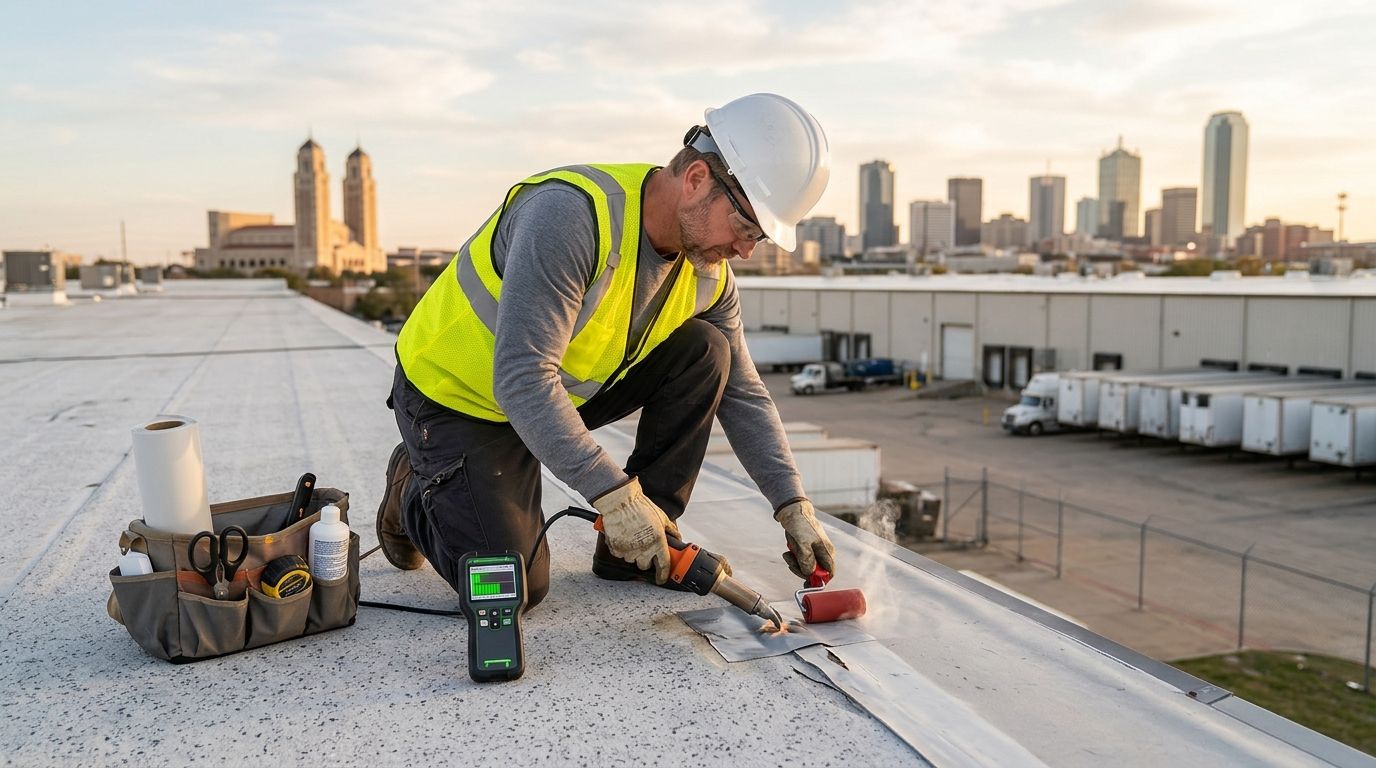
Commercial Roof Repair in Fort Worth and Nearby
A ceiling stain spreads above your Fort Worth warehouse office while employees are answering calls and a delivery waits outside. You need to protect the space, keep the business moving, and decide whether you're authorizing a temporary patch or a repair that fully addresses the roof's condition.
Table of Contents
- When a Fort Worth Roof Interrupts Business
- Why Commercial Roof Repair Depends on the System
- Finding Hidden Moisture Before You Repair
- Choosing TPO EPDM or Metal Repair Methods
- Storm Damage Patterns from Arlington to Keller
- Maintenance That Cuts Repeat Leak Disruptions
- Book a Documented Fort Worth Roof Inspection
When a Fort Worth Roof Interrupts Business
The first question isn't which sealant to use. It's whether the affected area can remain occupied while someone investigates the leak.
For a facility manager, that means moving inventory away from water, keeping people off slippery walkways, and restricting access where ceiling materials or electrical equipment may be affected. Don't send maintenance staff onto a wet roof to chase the drip. Arrange qualified help and record what you can safely observe indoors.
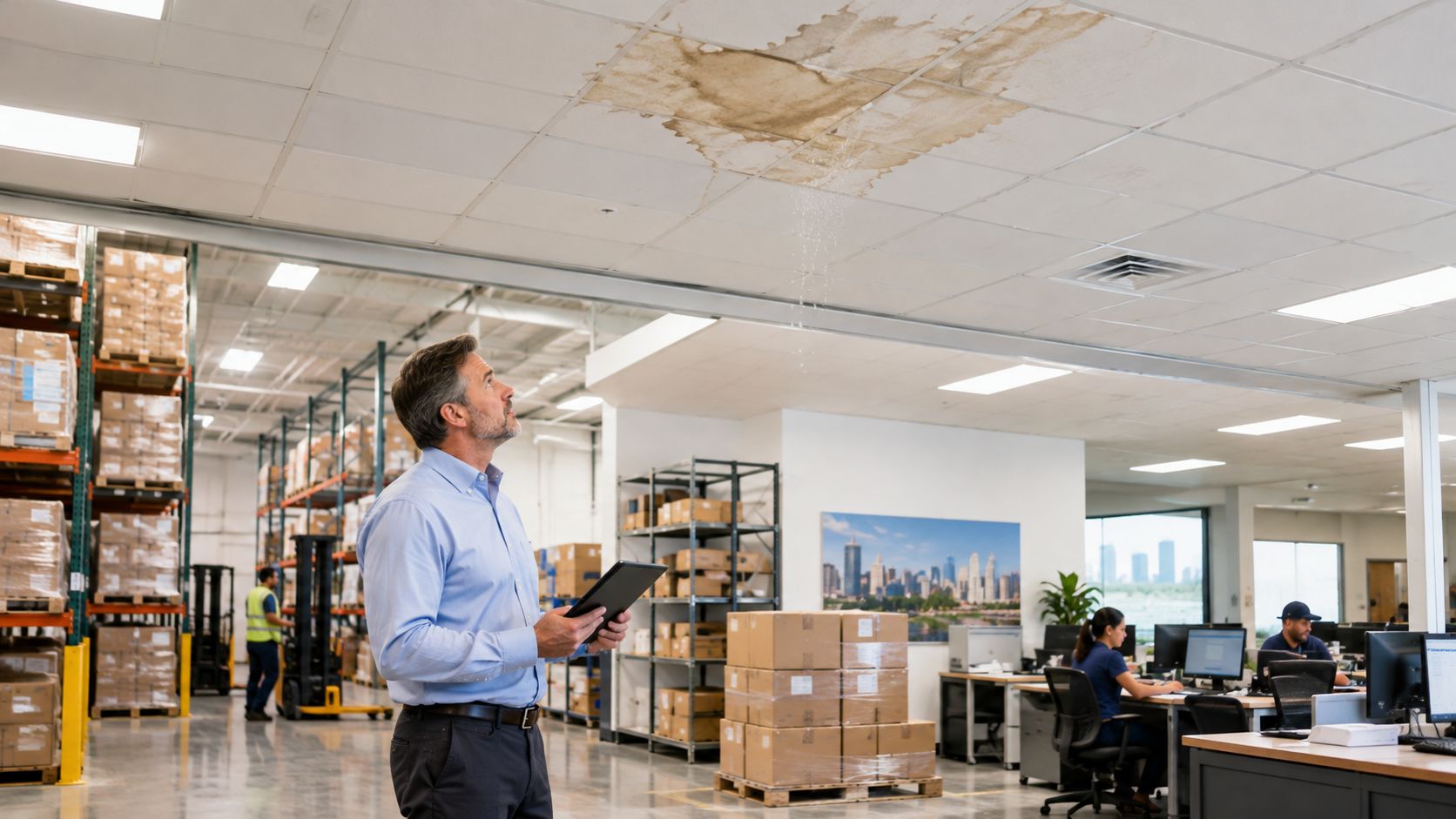
Protect operations before choosing the permanent work
A useful service conversation starts with what's happening inside the building. Tell the contractor whether water is reaching merchandise, tenant space, a public entrance, or equipment that can't be moved. Explain whether the leak is active, intermittent, or only visible as staining.
The same priorities apply across Fort Worth, Arlington, North Richland Hills, Haltom City, Euless, Bedford, Hurst, Grapevine, Southlake, and Keller, before extending to Dallas, Denton, Plano, and other connected DFW cities. These aren't disconnected markets. The North Central Texas Council of Governments describes a region centered on Fort Worth and Dallas, making a Fort Worth-first approach practical for property portfolios across nearby communities.
The cheapest same-day patch can become the most expensive repair if wet materials stay in place.
That's a decision principle, not an argument against emergency work. Temporary protection and permanent restoration serve different purposes. A temporary response aims to limit immediate exposure; the permanent scope needs evidence about what failed and what remains serviceable.
Before approving work, ask for these distinctions:
- Immediate protection: What needs attention to protect people, contents, and occupied areas?
- Diagnostic limits: What can the crew establish today, and what still needs investigation?
- Permanent scope: Does the recommendation address an isolated defect, uncertain moisture extent, or a damaged roof section?
You don't need to become a roofer to make that decision. You need a clear explanation of urgency, uncertainty, and the evidence behind the proposed work.
Why Commercial Roof Repair Depends on the System
Commercial roof repair starts with the assembly already on the building, not the material a crew happens to have on its truck. Existing roofs can include built-up roofing, EPDM, TPO, PVC, metal, and layers left by earlier repairs or reroofing.
The historical context helps explain that variety. A survey summarized by Professional Roofing reported that 71% of roof construction activity involved reroofing around 1988, while single-ply systems represented approximately 50% of the commercial market in 1988; its historical comparison also reported EPDM as the leading low-slope membrane in 2007, accounting for 27.8% of commercial contractors' business (Professional Roofing's industry retrospective).
Those figures describe historical work, not today's Fort Worth market share. Their practical lesson is that contractors inherit different roof generations, materials, and repair histories.
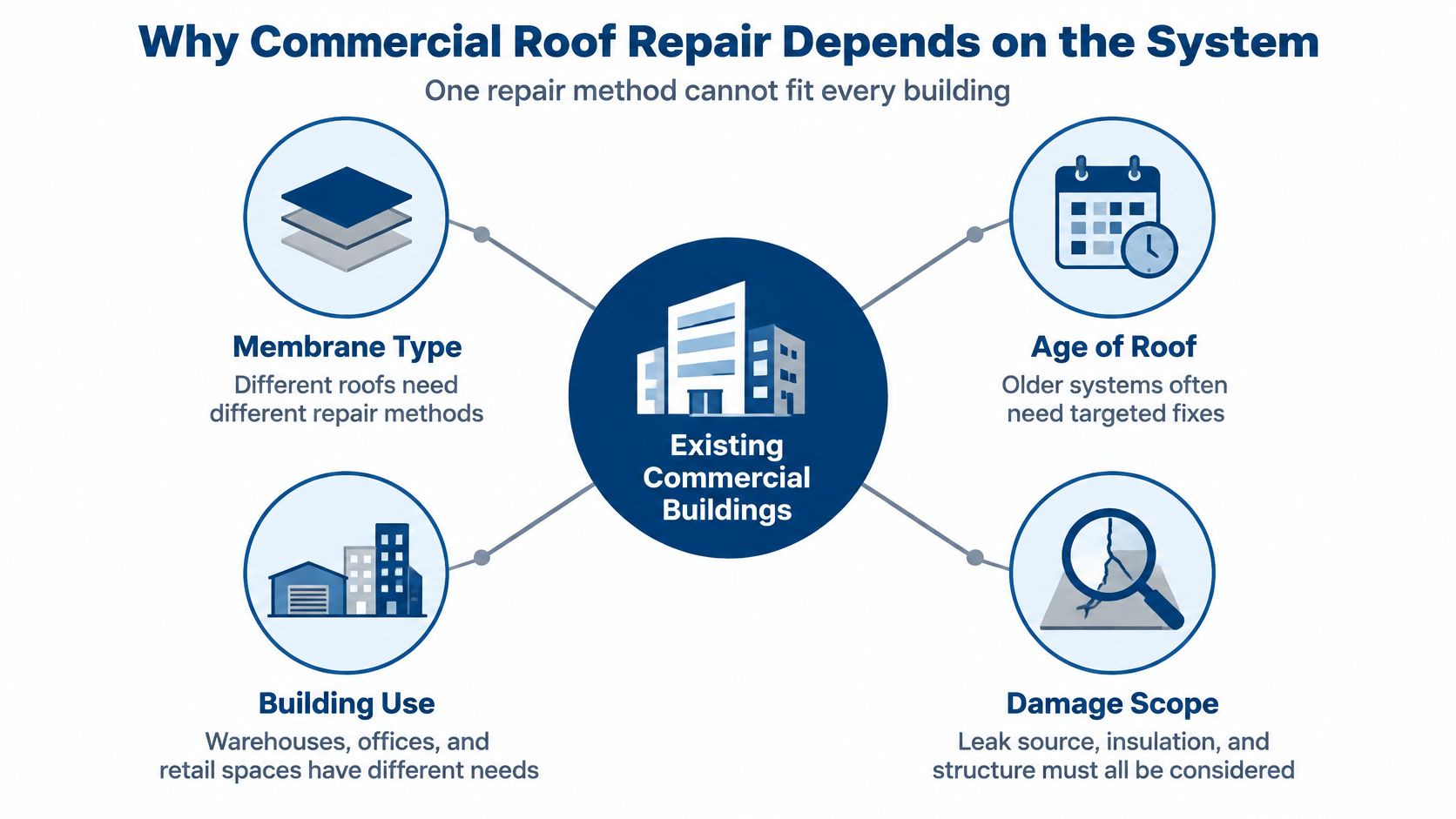
Identify the roof before pricing the fix
Think about repairing a tire that already has a patch. The visible hole matters, but so does the condition underneath and whether the new repair can bond to what's there.
A roof deserves the same discipline. Ask the inspector to identify:
- Roof family: The membrane or panel system, rather than calling it a flat roof.
- Connections: Seams, flashings, penetrations, and edges that connect the weatherproof surface to other components.
- Repair history: Previous patches, coatings, recover layers, and available warranty records.
- Building constraints: Tenant access, rooftop equipment, sensitive operations, and work-area restrictions.
A like-for-like membrane repair addresses damaged roofing material with a compatible system. A detail repair addresses a connection, such as the transition around equipment or along a parapet. They might appear on the same estimate, but they aren't interchangeable tasks.
Make estimates describe the assembly
Ask for separate descriptions of membrane work, detail work, and any underlying material replacement. An estimate labeled only “commercial roof repair” doesn't give you much basis for comparing proposals.
For contractors organizing that scope, Exayard roofing estimating software is a roofing-specific estimating resource to evaluate. Whatever estimating method a contractor uses, your approval should rest on identifiable materials, defined locations, and clear exclusions, not a polished total without an explanation.
Finding Hidden Moisture Before You Repair
A ceiling stain tells you where water became visible, not necessarily where it entered. Moisture can travel laterally beneath roofing materials before it reaches an interior opening, so repairing directly above the stain may miss the entry point.
Moisture investigation is a diagnostic process. The inspector needs to establish both the likely source and the extent of affected materials before recommending removal.
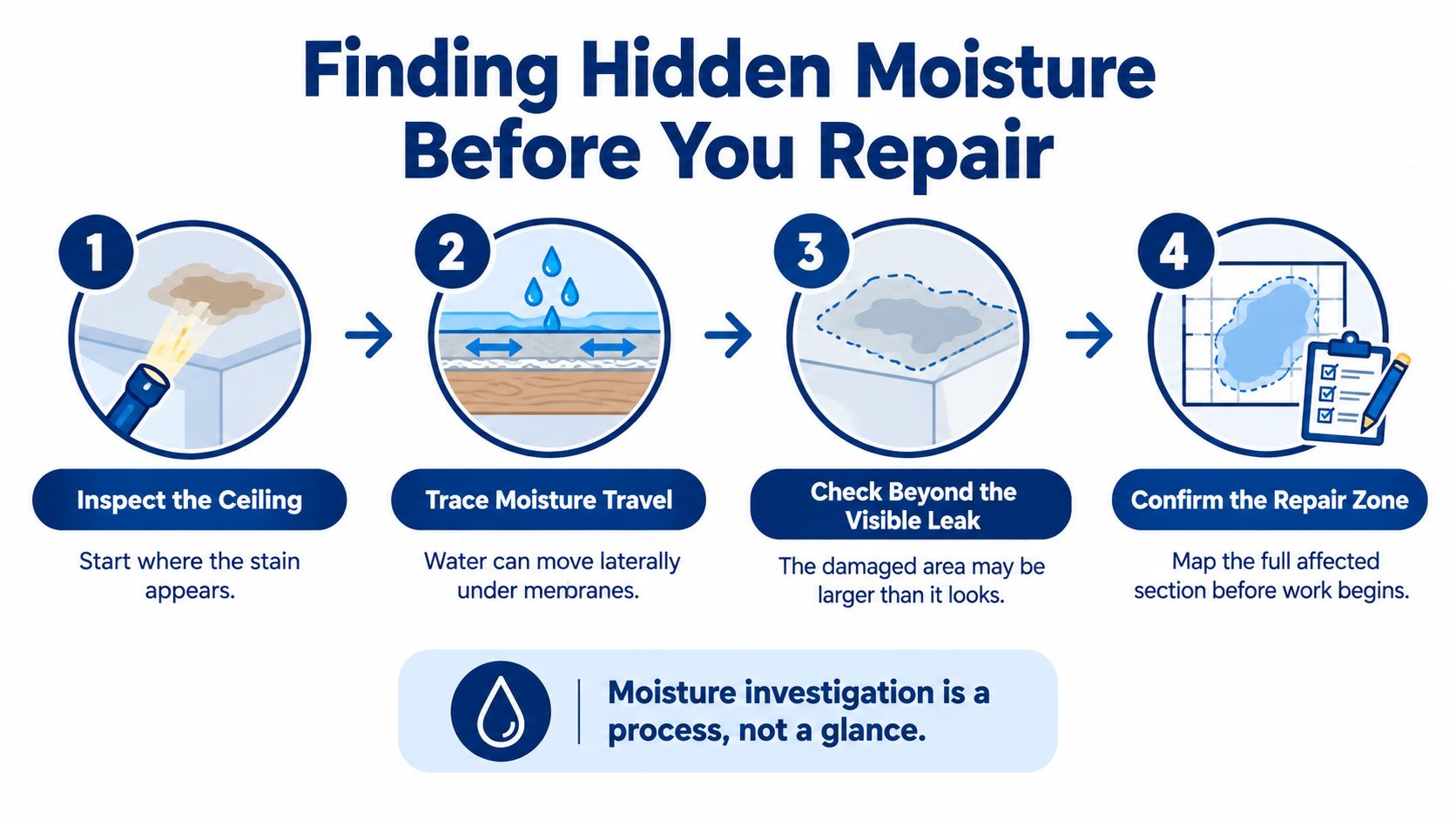
Map uncertainty, then confirm it
Start with a roof plan that connects interior observations to rooftop features. Mark suspected entry points, drainage concerns, previous repairs, and areas the inspector couldn't access.
Where visual inspection leaves uncertainty, a non-destructive survey can help identify suspected wet areas. Nuclear radioisotopic thermalization is a recognized method for locating and quantifying latent moisture in roofing or roof-deck materials and tracing subsurface migration under ANSI/SPRI/RCI NT-1.
That technical name doesn't mean every building needs that particular test. Ask the investigator why the selected method fits your assembly, what conditions limit it, and how suspected findings will be confirmed.
Infrared scanning, drone surveys, and moisture mapping are also tools discussed for large or complex roofs in J.S. Held's commercial roofing engineering guidance. They should answer a defined question, not substitute for a repair recommendation.
Representative locations may need targeted core cuts or another approved confirmation method. A survey indication alone shouldn't become an unsupported assumption that every material beneath it needs removal.
Separate the findings in the scope
The report should distinguish materials by condition:
- Wet insulation: Identify the affected area and proposed removal boundaries.
- Deteriorated decking: Describe the condition and whether further evaluation is needed.
- Membrane damage: Locate the opening, failed connection, or damaged surface.
- Dry, stained materials: Separate evidence of past leakage from confirmed current moisture.
FM guidance calls for replacing wet insulation during roof repairs. Its inspection checkpoints include holes, open seams, backed-out fasteners, loose flashing, and membrane shrinkage, with the recurring inspection schedule addressed in the maintenance program below.
Practical rule: A recent, accessible, isolated defect may need only a careful visual inspection. Recurring leaks, hail exposure, or inaccessible areas justify asking whether moisture mapping is needed.
The useful deliverable isn't just a patch invoice. Request the survey map, confirmation locations, photographs, and remaining limitations, so the permanent scope reflects evidence rather than guesswork.
Choosing TPO EPDM or Metal Repair Methods
A Fort Worth warehouse has a TPO seam pulling apart. An Arlington property has an EPDM flashing detail that leaks again after repair. In Grapevine, a standing-seam metal panel has a damaged connection. Each case calls for a different repair method because the materials join and move in different ways.
Once the condition is established, match the repair to the existing roof assembly. Blue Lake Roofing & Remodeling installs and repairs these systems across Tarrant, Collin, Denton, and Dallas counties, using its own licensed local crews. Its commercial roofing and storm-restoration services include assessing hail and wind damage and coordinating inspections, repairs, and insurance documentation.
Match the connection, not just the surface
For TPO, ask how the crew will prepare the existing sheet and make a compatible heat-welded seam or patch. The proposal should identify the membrane thickness and attachment requirements. A patch must bond to a properly prepared surface, not cover a puncture.
For EPDM, the repair depends on compatible seam tape, adhesives, primers, and flashing materials. Ask which system-specific detail the contractor will use and whether the preparation products suit the existing sheet. A product labeled for roof repair is not automatically compatible.
For standing-seam metal, look at the panel, clips, fasteners, transitions, and flashing. A coating or surface patch cannot restore a connection that needs mechanical repair or panel work.
Repair Fit by Commercial Roof System
| System | Common failure | Compatible repair | Consider partial replacement when |
|---|---|---|---|
| TPO | Puncture, damaged seam, or failed flashing connection | Prepared, compatible heat-welded patch or seam repair matched to the specified assembly | The damaged section can't support a dependable repair or underlying materials require removal |
| EPDM | Open seam, damaged flashing, or torn sheet | System-compatible tape, adhesive, primer, and flashing repair | Repeated failures or damaged surrounding material prevent a reliable localized detail |
| Standing-seam metal | Damaged panel, clip connection, fastener, or transition | Assembly-matched panel and attachment work, with properly fabricated flashing | Panel deformation or attachment damage makes a surface repair inadequate |
Ask for the reason behind partial replacement
Partial replacement isn't an admission that repair failed. It can be the better-controlled option when a defined section needs removal and the surrounding roof remains serviceable. The key is a clear boundary: ask where removal will stop and how the new work will connect to the roof that stays.
Before signing, request the applicable manufacturer detail, an explanation of any warranty implications, and a description of how the crew will check the finished connections. If proposals differ, compare what each assumes about the existing roof and the work included. A lower price may cover less work rather than perform the same repair more efficiently.
Storm Damage Patterns from Arlington to Keller
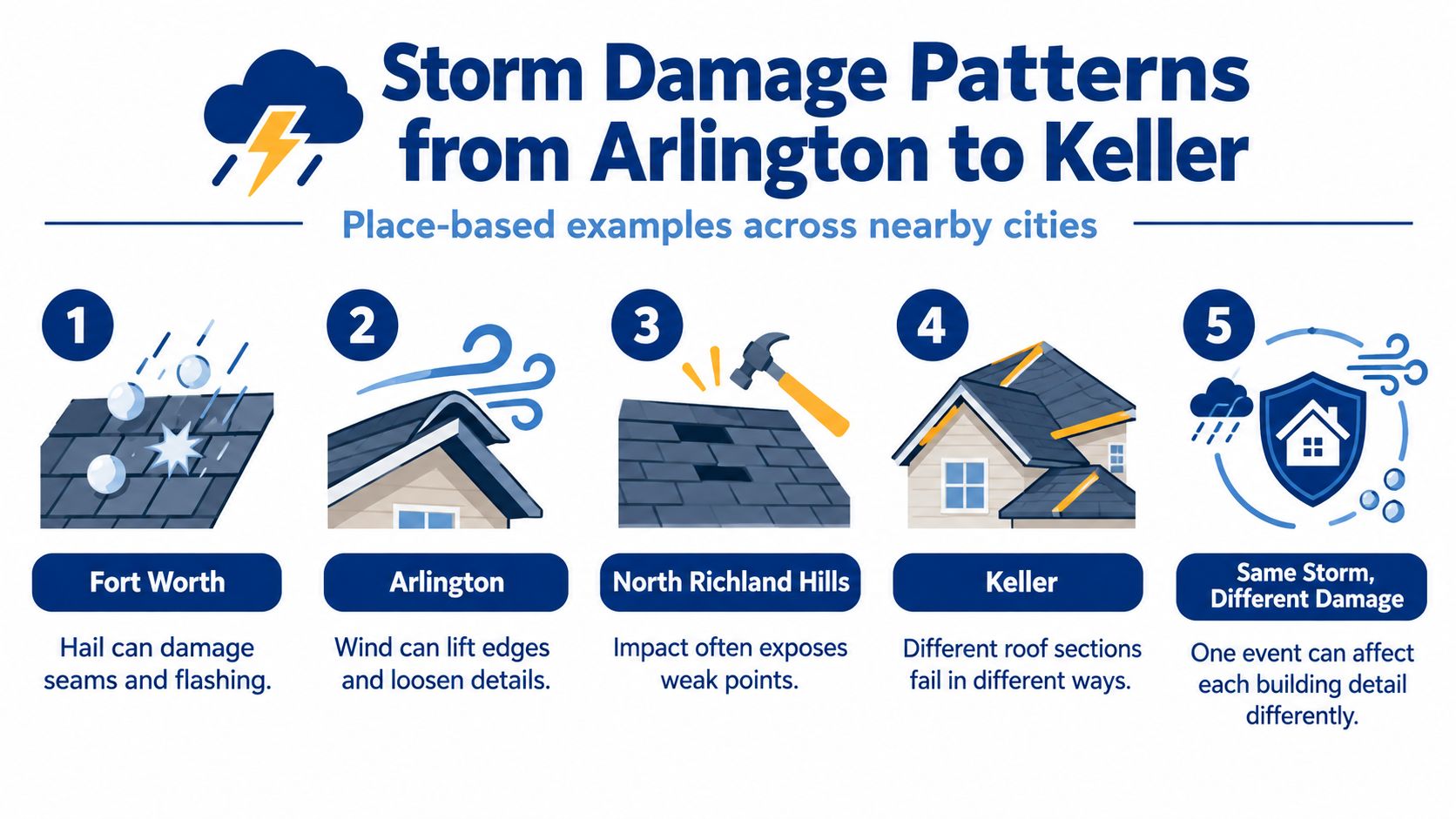
In Fort Worth, a warehouse seam may open near a corner after a storm. Across Arlington, coping may lift along a retail building's parapet. In North Richland Hills or Haltom City, wind may leave roof fasteners that need closer inspection. These are representative situations, not reports of specific local losses. The city helps identify the property, but the roof assembly and observed damage determine the next step: a targeted repair, moisture mapping, or removal and replacement of a defined section.
Trace the damage through the roof assembly
At a Bedford, Hurst, or Euless property, an inspector might find an older repair beside membrane shrinkage. The first task is to determine whether the storm made a new opening, exposed an existing weakness, or left conditions that remain uncertain. If water may have spread beneath the surface, moisture mapping can help define the affected area before repair limits are set. A localized opening may support targeted repair; broader wet materials may call for partial replacement.
At a Grapevine, Southlake, or Keller building, inspection may focus on edge metal and flashing. The repair must restore the tested load path, from the roof deck through the attachment and above-deck components, rather than cover visible membrane damage.
FM's roof-deck securement and above-deck roofing guidance recommends evaluating the assembly against applicable wind criteria and FM Approvals ratings using RoofNav. Its guidance also addresses opened seams, loose anchorages, flashing and other deterioration, replacing wet insulation during repairs, and semi-annual and post-storm inspections.
A surface patch alone doesn't show that the assembly has the required wind resistance. Depending on the conditions, the repair scope may include documented construction observation or uplift testing.
Keep a clear, usable record
A maintenance team or adjuster should be able to distinguish what was observed from what was concluded. Keep:
- Dated photographs: Show the roof area and close views of affected details.
- Assembly information: Note substrate condition, attachment patterns, replacement materials, and applicable approval requirements.
- Event context: Keep weather timing with earlier condition photographs and maintenance records.
- Scope boundaries: Separate documented storm-created damage from prior deterioration and unresolved questions.
File roof plans, moisture notes, and invoices with those records. SterlingRisk's discussion of severe convective storm losses and coverage issues explains why storm damage and deterioration may be treated differently in insurance reviews.
Record what the inspector can support. Keep uncertain observations clearly marked as uncertain.
Documentation supports review, but it doesn't guarantee that a policy will cover a repair.
Maintenance That Cuts Repeat Leak Disruptions
A leak that stops dripping can still leave a management question unanswered. Was it an isolated event, or another repair on a roof section that needs planned capital work?
Historical lifecycle records show why that distinction matters. A Carnegie Mellon University database covering 38 buildings from July 1998 through December 2006 recorded 1,781 leak-related maintenance and work records, averaging 5.2 leaks per building per year; reported repair totals varied from $15,416 to $200,338, while inflation-adjusted replacement costs were 3.6 times combined repair and maintenance costs (roof-lifecycle cost analysis summarized by Choice Roof Contractor Group).
Those historical findings aren't a current Fort Worth price guide. They show recurring service exposure and the importance of comparing repair history with replacement planning, rather than treating each invoice as an unrelated expense.
Put the roof on an operating calendar
Use the semi-annual and post-storm inspection cadence identified in the FM guidance above as the foundation of a written program. Assign responsibility for scheduling visits and reviewing findings, not just arranging access.
A practical annual calendar can include:
- Spring review: Arrange inspection, drain and scupper clearing, and a review of seams, flashings, and outstanding corrective work.
- Fall review: Revisit previously repaired areas and update priorities before changing weather complicates access.
- After storms: Request a condition check where exposure or observed damage warrants it.
- After every repair: Attach the invoice, photographs, material information, and completion notes to the corresponding roof-plan location.
The roof plan makes recurrence visible. Several work orders tied to the same equipment curb deserve a different conversation from unrelated damage scattered across otherwise serviceable areas.
Schedule around the people below
Ask the contractor to stage materials away from occupied entrances and delivery routes. Coordinate noisy work outside peak operating periods where practical, and tell tenants which access areas will be restricted.
Keep emergency dry-in separate from permanent restoration in work orders and approvals. Otherwise, a temporary response can remain on the roof without anyone owning the follow-up decision.
A managed program shouldn't become an excuse to patch indefinitely. Escalate to partial or full replacement planning when repeated work no longer produces dependable results, affected areas expand, or the retained assembly can't support the proposed restoration.
The economic lesson isn't that repair always wins. It's that premature replacement and repeated inadequate repairs are both avoidable planning mistakes. Leaving confirmed wet insulation in place also undermines the logic of spending less today.
Book a Documented Fort Worth Roof Inspection
A leak over an active workspace can call for a quick repair, moisture mapping, or a larger replacement discussion. A useful inspection should clarify which path fits the roof, what evidence supports it, and what work can wait. Commercial owners, facility managers, HOA boards, and multi-family managers can ask for those decisions before approving a scope.
Start in Fort Worth, then identify nearby properties in Arlington, North Richland Hills, Haltom City, Euless, Bedford, Hurst, Grapevine, Southlake, and Keller. For sites farther out in Dallas, Denton, and Plano, list each address when requesting service. Knowing the locations helps coordinate access and scheduling.
Prepare the information that changes the visit
Before the appointment, have the building contact gather a short property file:
- Leak locations: Mark affected rooms and note when occupants first saw water.
- Prior invoices: Include repair descriptions, photographs, and recommendations that remain unresolved.
- Warranty papers: Provide available manufacturer and contractor documents.
- Storm timing: Note the suspected event date, without treating timing alone as proof of cause.
- Access requirements: List escorts, roof access points, tenant restrictions, and sensitive operating hours.
Blue Lake Roofing & Remodeling, a family-owned Forest Hill contractor, says its company has served DFW since 1995. It offers free on-site inspections and estimates in Tarrant, Collin, Denton, and Dallas counties. Requesting a visit before storm season can help address roof questions before another leak interrupts occupied space.
Define what you expect back
Ask for photographs and a visual roof plan. If signs point to concealed moisture, ask whether moisture mapping is warranted before repairs are scoped. The written scope should distinguish targeted repair from partial or broader replacement, and explain why the recommended option fits the roof system. For hail or wind concerns, request notes that separate observed conditions from assumptions.
Confirm who receives urgent calls and who can authorize work. Roofing businesses assessing intake options can review AI reception for roofing businesses; property managers should still ask how emergency messages reach the contractor's responsible person.
A free estimate should leave you with a defined next step and a record of remaining uncertainty. You should not need to approve full replacement just to get an explanation of a leak, or be left with an unspecified patch.
Set the appointment around local crew availability, a work schedule that limits downtime, and documentation for the next maintenance cycle. Those details help an operating business judge whether the proposed inspection and follow-up will fit its needs.
Blue Lake Roofing & Remodeling offers free on-site inspections and estimates for commercial roof repair, maintenance, and storm-related restoration across its DFW service area. To request an inspection, have leak locations, prior repair records, and warranty information ready so the crew can assess the appropriate next step.
