
Class 4 Shingles Guide for Fort Worth Homeowners
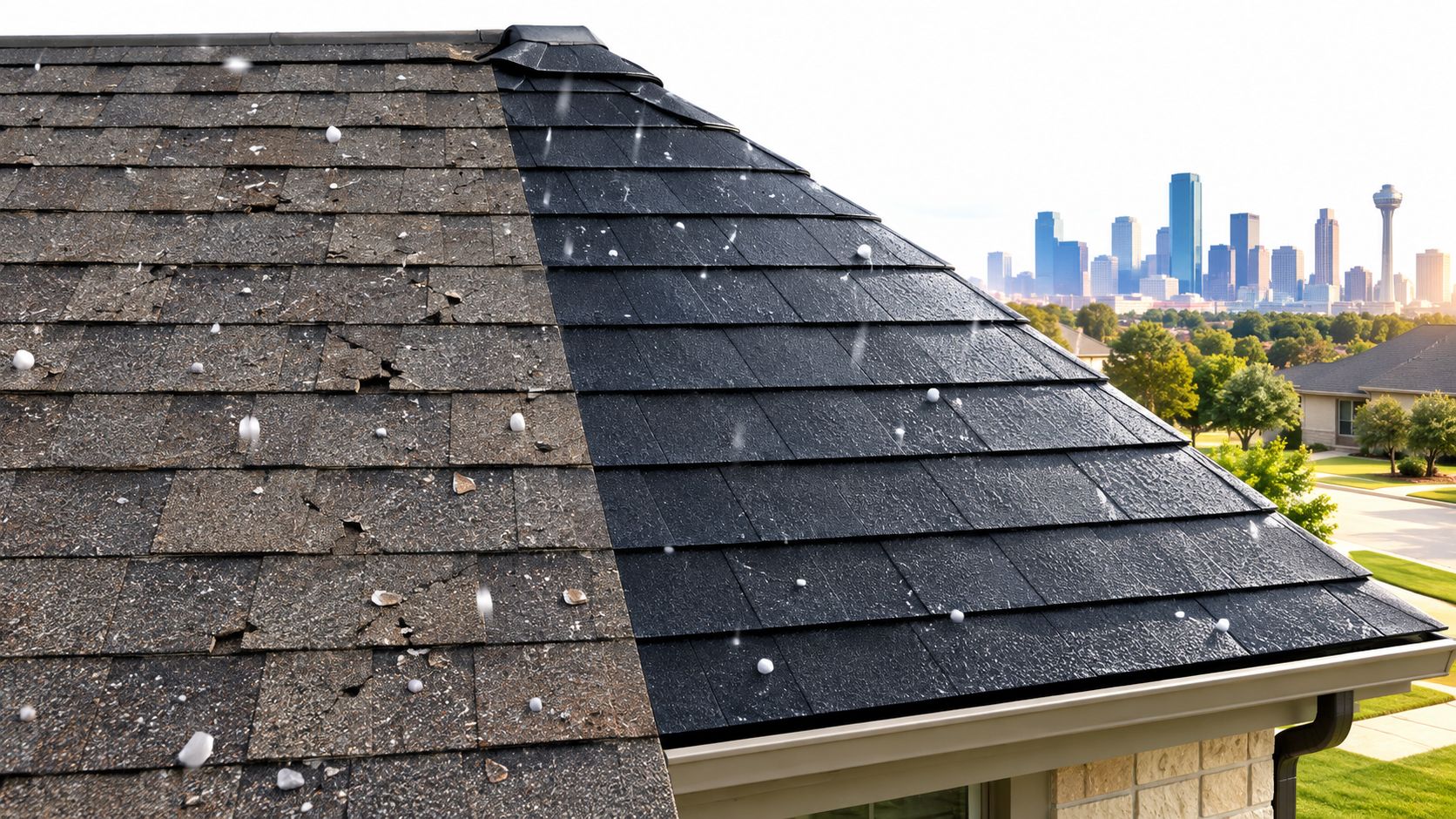
The morning after a North Texas hailstorm usually looks the same. Driveways in Fort Worth, Arlington, and Grand Prairie fill with people staring up at their roofs, wondering whether those loud hits in the night were just noise or the start of an expensive problem. From the street, many roofs still look fine. Up close, the story can be different.
That's why so many homeowners in Tarrant County search for Class 4 shingles after storm season ramps up. They want a roof that can take a harder hit. They also want straight answers. What does “Class 4” mean, and does it really make sense for a home in Fort Worth, Dallas, Plano, Irving, Garland, Denton, McKinney, or the rest of the DFW metroplex?
A practical answer has to start with our local weather. Fort Worth sits in one of the nation's most hail-active metro areas, with hail-history sources based on NOAA records showing hundreds of verified hail days or events within roughly ten miles of the city over multi-year records, which is exactly why hail risk isn't a side topic here, it's a real planning issue for homeowners in Fort Worth hail history records.
Blue Lake Roofing & Remodeling is a family-owned contractor based in Forest Hill, serving Fort Worth and the wider Dallas-Fort Worth Metroplex since 1995. After decades of inspecting hail and wind damage across Tarrant, Collin, Denton, and Dallas counties, one pattern stands out. People rarely regret understanding their options before the next storm arrives.
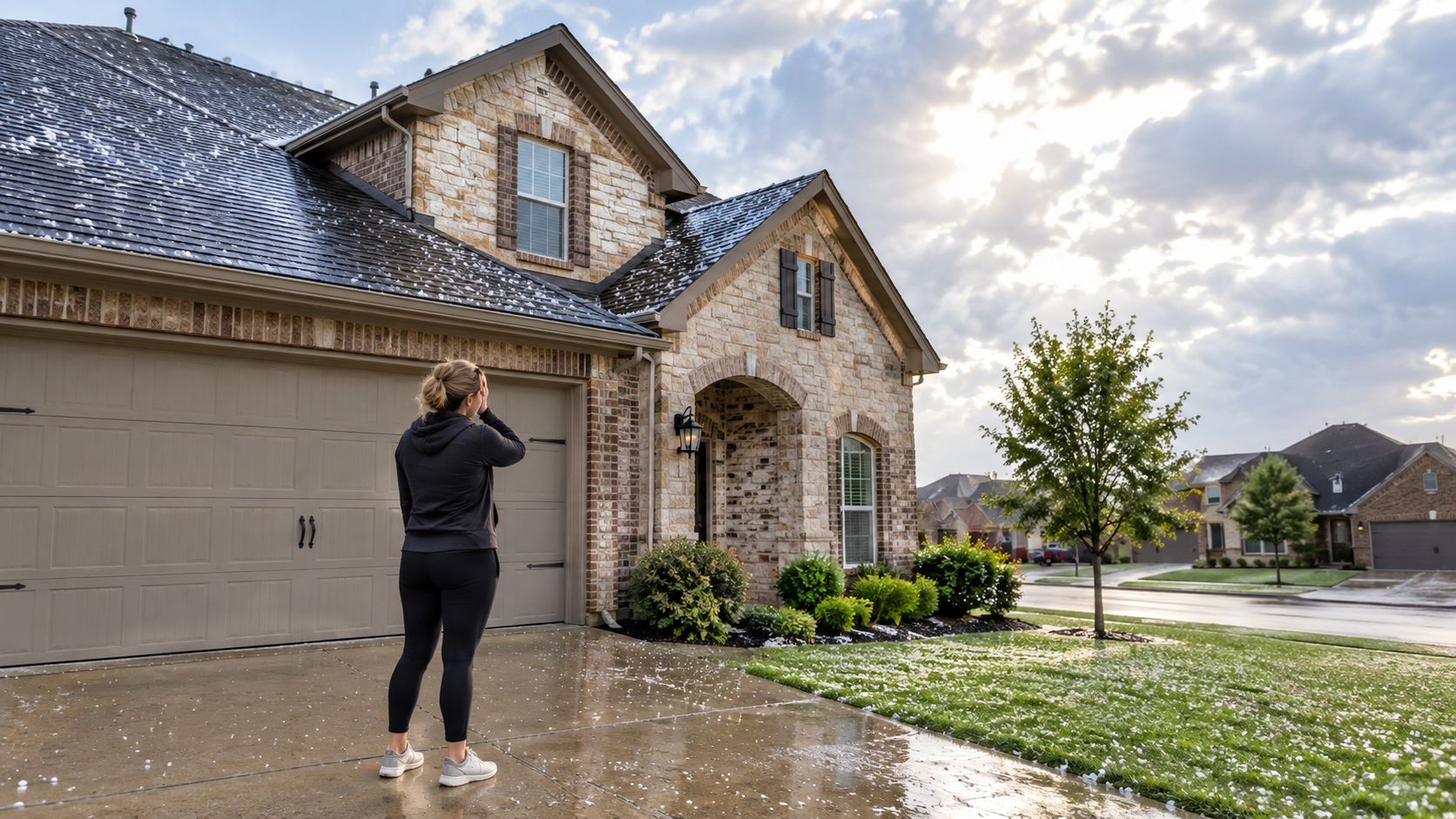
Most confusion starts with one bad assumption. Homeowners hear “impact resistant” and think “hail proof.” That's not what the rating means, and knowing the difference can save you money and frustration.
Table of Contents
- Introduction Why Fort Worth Homeowners Are Asking About Impact Resistance
- What Class 4 Shingles Are and How UL 2218 Testing Works
- What Class 4 Really Means for Hail Protection in Texas
- How Class 4 Shingles Compare to Standard Shingles
- Insurance Savings and ROI for Fort Worth and DFW Homes
- Best Applications for Class 4 Shingles Across Tarrant Collin Denton and Dallas Counties
- Choosing Class 4 Shingles With a Trusted Fort Worth Roofer
Introduction Why Fort Worth Homeowners Are Asking About Impact Resistance
In Fort Worth, a roof isn't just part of the house's appearance. It's the surface that takes the first beating when a spring storm rolls across Tarrant County. If you've already replaced a roof once after hail, it's natural to ask whether your next roof can be tougher.
Why this question keeps coming up in DFW
The Dallas-Fort Worth metroplex is built around four core counties: Dallas, Tarrant, Collin, and Denton, which makes county-specific roof decisions relevant far beyond one ZIP code in the TxDOT DFW metroplex map. Fort Worth anchors Tarrant County, but the same concern shows up in surrounding population centers such as Arlington, Dallas, Plano, Irving, Garland, Grand Prairie, Denton, and McKinney, all of which matter when homeowners compare roof options across the region in the DFW city list.
When people ask about impact resistance, they usually mean three different things at once:
- Storm survival: Can this roof handle hard hail better than a basic shingle roof?
- Insurance value: Will my policy treat this roof differently after installation?
- Long-term cost: If I pay more now, will I feel good about that decision later?
Those are fair questions. They're also easy to answer badly if someone skips the testing details and jumps straight to sales talk.
What a practical answer should do
A useful explanation has to connect the lab rating to what happens on homes in Fort Worth and nearby cities. It should also explain why one homeowner in Arlington might benefit from Class 4 shingles while another in Plano or Garland might decide the upgrade doesn't pencil out.
Practical rule: A roofing decision in North Texas should balance weather exposure, policy language, expected time in the home, and the quality of the full roof system, not just the shingle label.
What Class 4 Shingles Are and How UL 2218 Testing Works
A Fort Worth homeowner usually asks about Class 4 shingles after a hailstorm hits nearby and the neighborhood starts trading stories. One roof needs full replacement. Another has bruising but fewer broken tabs. That is the moment the label starts to matter, because Class 4 is tied to a specific lab test, not just a sales term.
The basic definition
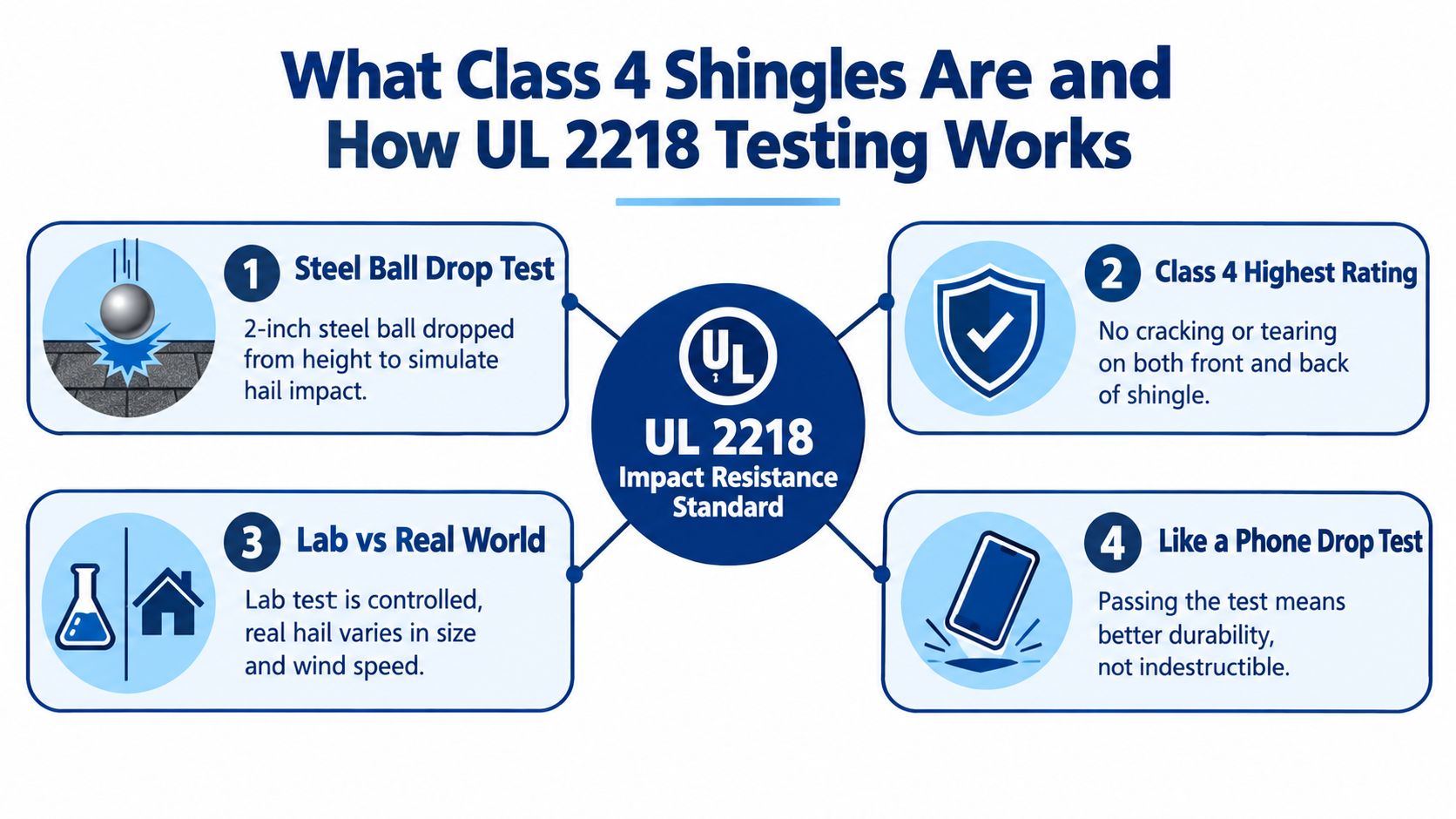
Class 4 shingles are asphalt shingles that meet the highest rating under UL 2218, the industry test commonly used to measure impact resistance. In plain terms, the test checks whether the roofing material can take a hard, standardized hit without cracking or splitting through.
For homeowners, that matters because it gives everyone the same yardstick. A contractor, manufacturer, and insurance carrier can all point to the same test standard instead of using vague words like "tougher" or "better built."
How the UL 2218 test works
The test works a lot like a helmet certification. The question is not whether the product can survive every possible accident. The question is whether it can pass a repeatable impact under controlled conditions.
A local roofing explanation summarizes the standard in homeowner terms. The UL 2218 test uses a 2-inch steel ball dropped from 20 feet, and products that pass are intended to resist cracking under that impact condition in this Class 4 impact shingle guide.
Here is the part that usually clears up the confusion:
- It is a lab test. The setup is controlled so different products can be compared on the same basis.
- It focuses on impact resistance. Inspectors are looking for damage such as cracking, fracture, or material failure after impact.
- It is not a storm replica. Real hail in Fort Worth can come with wind direction changes, repeated strikes, roof aging, attic heat, and installation differences.
That third point is where homeowners often get tripped up.
A Class 4 rating does not mean hail proof. It means the shingle cleared the toughest UL 2218 classification. That is useful, but it is still a lab result. A roof on a house has valleys, ridges, vents, flashing, and soft metal accessories that a drop test does not fully capture.
Why this rating gets so much attention in DFW
In North Texas, the rating gets attention for a practical reason. Homeowners are not just buying shingles. They are making a weather and insurance decision.
If you live in Fort Worth, Arlington, Denton, McKinney, Plano, or Frisco, the question is usually broader than "Is Class 4 stronger?" The question is whether paying more for a better-tested shingle is likely to reduce damage enough, or lower premiums enough, to make sense for your house, your policy, and how long you plan to stay.
That is the right way to read the label.
A Class 4 shingle has passed a tougher impact benchmark. It has not purchased immunity from Texas hail.
So UL 2218 gives you a starting point. It tells you the product has cleared a meaningful durability hurdle. The return on that upgrade depends on where the home sits in DFW, how the insurer treats impact-resistant roofing, and whether the full roof system is installed well enough to support the shingle's test performance.
What Class 4 Really Means for Hail Protection in Texas
A Fort Worth roof can look fine from the driveway the morning after a hailstorm and still have bruising that shows up later as granule loss, cracked matting, or shortened roof life. That is why the Class 4 question matters here. Homeowners are not really asking whether a label sounds stronger. They are asking whether paying more now changes what happens during the kind of hail North Texas gets.
Better odds, not a force field
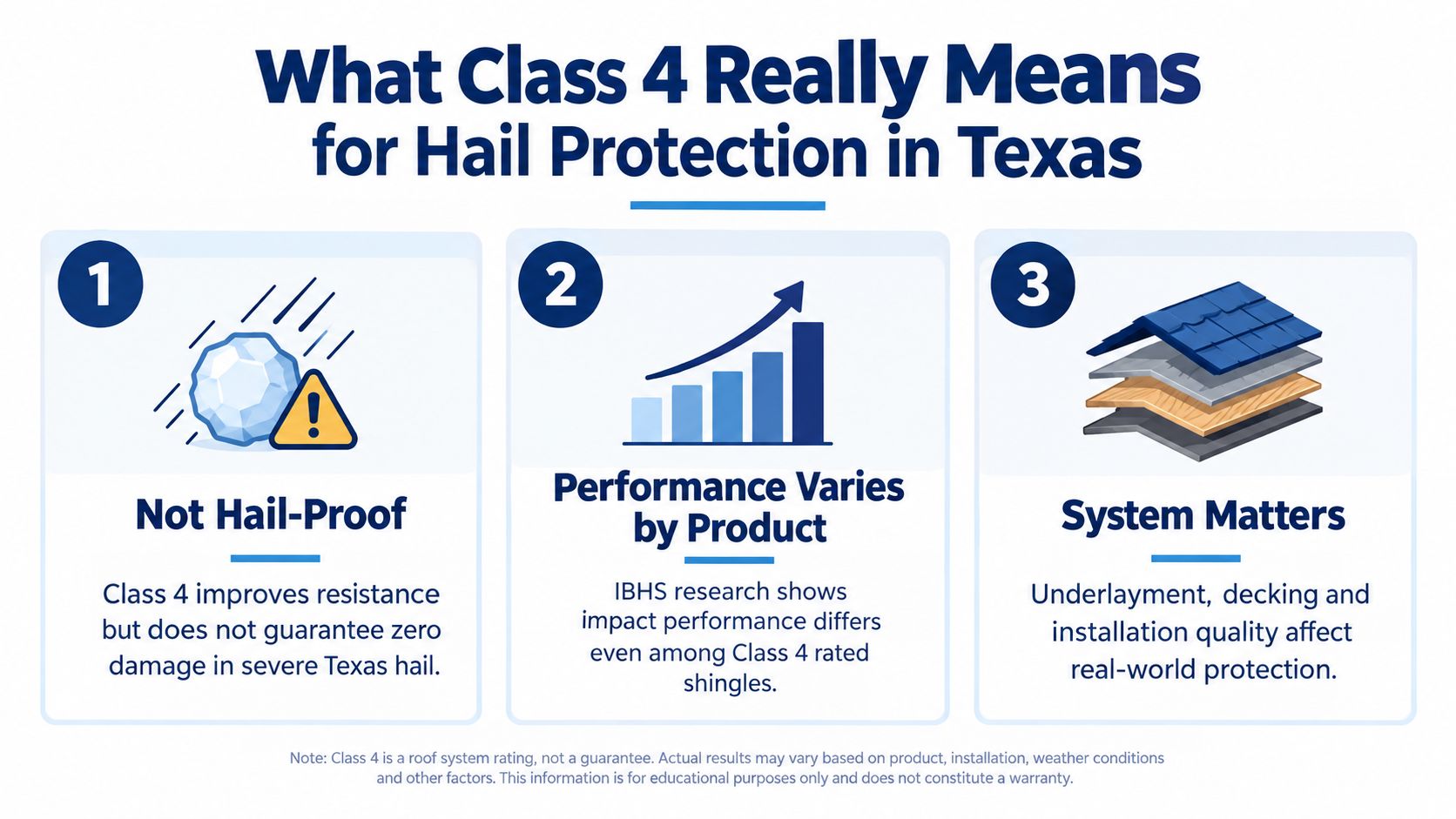
A Class 4 rating improves the odds that a shingle will handle impact without damage during lab testing. It does not mean every Class 4 shingle performs the same on a real roof, and it does not mean hail stops being a threat.
That distinction matters in DFW.
Researchers at IBHS found clear differences between standard shingles and impact-resistant products, and they also found that products sharing the same Class 4 label can still separate from each other under more realistic impact conditions in the IBHS impact resistance report. The plain-English takeaway is simple. The rating helps you narrow the field, but it does not finish the comparison for you.
What that looks like on a Fort Worth roof
Lab testing is a little like testing a truck tire on a machine before sending it down I-35. The test is useful because it shows the tire can take a harder hit under controlled conditions. It still cannot copy every pothole, every summer heat cycle, or every loaded turn at highway speed.
Roofs work the same way. In Fort Worth, hail often comes with shifting wind, mixed stone sizes, repeat hits, and very hot attic conditions. Then you add the parts the lab test does not fully represent, such as ridges, valleys, vents, flashing, and other roof accessories. A stronger shingle can reduce risk, but the whole system still has to absorb the storm.
If you are sorting out what happened after a storm, practical storm damage repair advice can help with first-step documentation, safety, and deciding what deserves a closer inspection.
The DFW question that matters most
For North Texas homeowners, the value of Class 4 is financial as much as physical.
If your neighborhood sees frequent hail claims, your insurer offers a meaningful impact-resistant discount, and you expect to stay in the home long enough to collect that savings, Class 4 often makes more sense. If the premium difference is high, the discount is small, or you may move soon, the return can be weaker even if the shingle itself is better.
That is why I tell Fort Worth homeowners to read Class 4 as a risk-management tool. It can reduce the chance of damage. It can improve the case for insurance savings. It cannot promise that a Texas hailstorm will leave your roof untouched.
- Use the label to narrow choices: Start with products that passed the tougher test, then compare the actual product line.
- Match the upgrade to your house and policy: Hail history, insurer credits, and how long you will own the home affect the payoff.
- Remember the weak spots: Accessories and installation details still influence claim outcomes after a storm.
Two pickup trucks can both pass a safety test and still hold up differently on rough ranch roads west of Fort Worth. Class 4 shingles are similar. The badge means something. It just does not mean every roof gets the same real-world result.
How Class 4 Shingles Compare to Standard Shingles
A Fort Worth roof after a hailstorm often looks fine from the street and tells a different story up close. One shingle may shrug off a hit. The next one may lose granules, crease, or crack. That is the practical difference homeowners are trying to sort out when they compare Class 4 shingles with standard options.
The simple comparison
Standard 3-tab shingles are the basic work-boot version of asphalt roofing. They cover the house, but they are thinner and generally less resistant to impact. Standard architectural shingles are a step up in thickness, shape, and curb appeal.
Class 4 shingles are built for harder hits.
That does not make them indestructible. It means they have a higher tested impact rating and are usually made with design features that help them flex or absorb force better than basic shingles. In North Texas terms, they are closer to a truck with heavier suspension than a sedan with standard tires. Both can drive the same road. One is better prepared for potholes.
Class 4 vs Standard Shingles at a Glance
| Feature | Class 4 Impact-Resistant | Standard Architectural / 3-Tab |
|---|---|---|
| Impact rating | Highest UL 2218 classification | Lower or basic impact performance, depending on product |
| Hail performance | Better chance of resisting bruising, cracking, or surface damage from hail | More likely to show damage under stronger impacts |
| Upfront cost | Usually higher | Usually lower |
| Typical buyer | Homeowners planning around hail risk, longer ownership, or possible insurance credits | Homeowners focused mainly on initial price |
| Appearance | Available in more styles and colors than many people expect | Familiar neighborhood look, widely used |
| Real-world question | Does the extra cost fit your storm risk and time in the home? | Does lower upfront cost matter more than added impact resistance? |
What changes in real life
The easiest mistake is to compare these products as if the label alone settles the decision. It does not. A Class 4 shingle gives you a better tool, not a force field.
On many DFW homes, the comparison works like this. Standard shingles may perform perfectly well for years, then show damage sooner in a severe hail event. Class 4 shingles may reduce that risk, but they still rely on good attic ventilation, correct nail placement, solid flashing, and the condition of the rest of the roof system.
That last part matters. Hail claims are not decided by shingles alone.
Where Fort Worth homeowners usually get stuck
The question is rarely, “Which product is stronger?” The question is, “What am I paying for, and will it pay me back here?”
A homeowner in west Fort Worth who has seen repeated hail activity may view Class 4 as added staying power. A homeowner planning to sell soon in an area with limited insurance credit may reasonably choose a standard architectural shingle and keep the project cost lower. Both choices can make sense.
A practical way to compare them is:
- Choose Class 4 if hail risk is a major part of your roofing decision.
- Choose standard architectural shingles if upfront budget is the main driver.
- Treat 3-tab shingles as the entry-level option, not the durability benchmark.
For DFW homes, that is the clearest side-by-side view. Class 4 usually buys more impact resistance and a stronger case for long-term value. Standard shingles usually buy a lower starting price. The better choice depends on how often your roof is likely to be tested by North Texas weather, not just what the product brochure says.
Insurance Savings and ROI for Fort Worth and DFW Homes
A Fort Worth homeowner replaces a roof after hail, pays extra for Class 4, then waits for the savings to show up. The part that surprises many people is simple. The payoff usually depends less on the shingle brochure and more on three local facts: your carrier, your neighborhood's hail pattern, and how long you expect to keep the house.
UL 2218 testing matters here, but only as one piece of the decision. The lab test shows how a shingle handles a controlled impact. Your insurance ROI depends on what happens after that product is installed on a real roof in North Texas, under a real policy, through several storm seasons.
Insurance credits can help, but they are not automatic
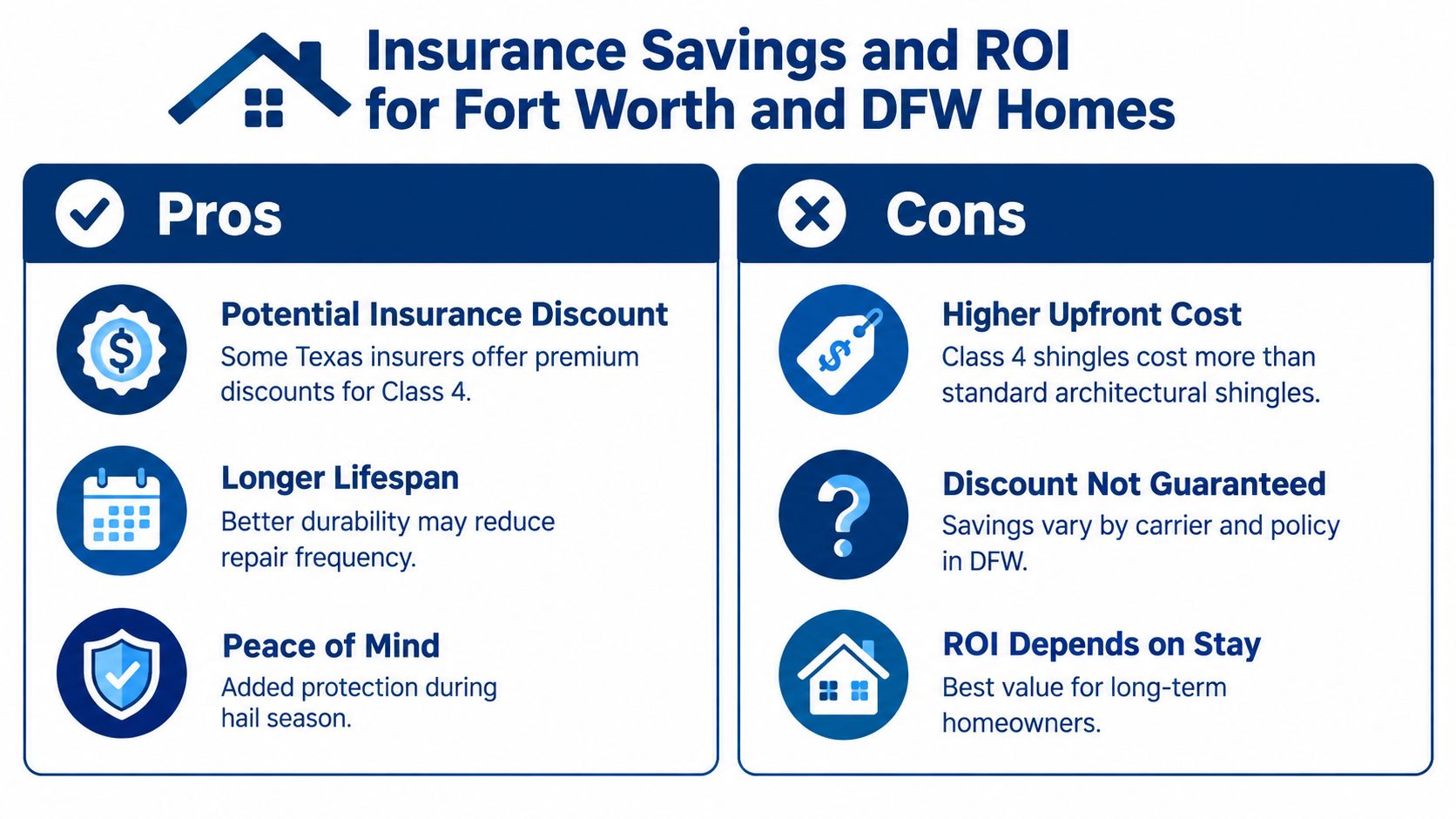
Some DFW homeowners do get an insurance credit for impact-resistant roofing. Some do not. Even when a credit is available, the amount and the rules can vary by carrier, policy form, and product documentation.
That is why Class 4 should be treated like a calculator problem, not a slogan.
A good insurance call should cover four points:
- Carrier approval: Ask whether your insurer recognizes the exact shingle line, not just the phrase "Class 4."
- Policy details: Ask how the policy handles hail, cosmetic damage, and depreciation.
- Proof after installation: Keep the product name, manufacturer paperwork, and contractor invoice.
- Ownership timeline: A credit that looks modest in year one may matter more if you plan to stay in the home for years.
A DFW ROI framework that is easier to use
The clearest way to judge return is to stack the roof decision in layers, the same way a roofer examines storm damage layer by layer.
Layer one is upfront cost. Class 4 shingles usually cost more than standard architectural shingles.
Layer two is insurance credit. That credit may offset part of the added cost, but rarely answers the whole question by itself.
Layer three is storm history. In parts of Tarrant, Denton, Collin, and Dallas Counties that see repeated hail activity, the bigger value may come from avoiding some premature damage or shortening the cycle of repair, claim, and replacement.
Layer four is time in the home. The longer you expect to stay, the more chances you have to benefit from that tougher roof surface and any policy discount that applies.
That layered approach helps homeowners avoid a common mistake. They focus only on the premium discount and ignore the local storm pattern. In North Texas, the weather often has a bigger say than the spreadsheet.
When Class 4 usually pays off better
Class 4 often pencils out better for homeowners who expect to stay in the home through multiple hail seasons, have already dealt with hail-related roof work, or want to reduce the odds of another claim cycle after a recent replacement.
It can also make sense on homes where a roof failure creates larger costs around it, such as damaged gutters, stained interiors, disrupted schedules, or a hard-to-sell house after visible storm wear.
When the ROI may be weaker
The return is often less convincing for short-term owners, homes with very limited insurance credit available, or buyers who need to keep the initial project cost as low as possible.
That does not make Class 4 a bad product. It means the fit is wrong for that ownership plan.
Three questions to ask before you upgrade
- Has my part of DFW seen the kind of hail activity that makes added impact resistance worth paying for?
- Will my carrier credit this exact product, and what proof will they require?
- Am I likely to own this home long enough to benefit from both the roof and the policy terms?
Bottom line: For Fort Worth and DFW homes, Class 4 ROI is strongest when lab-tested impact resistance lines up with real hail exposure, real insurance credit, and a long enough ownership window to make the extra cost worth it.
Best Applications for Class 4 Shingles Across Tarrant Collin Denton and Dallas Counties
Not every roof needs the same strategy. The right use for Class 4 shingles depends on the property, the owner's goals, and the part of DFW where the building sits.
Homes where Class 4 usually deserves a serious look
In Fort Worth and wider Tarrant County, Class 4 often makes sense for homeowners who have already seen hail-related repairs, have broad roof exposure, or want a tougher replacement after a storm claim. The same logic often applies in Arlington and Grand Prairie, where many homes have large roof planes that catch straight-on weather.
In Collin County cities like Plano and McKinney, homeowners often weigh resilience together with curb appeal. Many want a product that doesn't look overly rugged or commercial but still gives them stronger impact resistance than a standard shingle.
Properties that benefit from a broader risk view
Some buildings benefit from Class 4 because the roof decision affects more than one household.
- HOAs and multi-family properties: One storm can create headaches across many units, so reducing avoidable roof damage can simplify management.
- Commercial properties: Fewer repairs and fewer disruptions can matter as much as material choice.
- Premium homes: Owners with custom exterior details often want a roof that better matches the overall investment in the property.
When standard shingles may still be reasonable
A standard architectural shingle can still be a sensible choice when the budget is tight, the owner expects a shorter stay, or the roof project is already balancing multiple needed upgrades. Denton County and Dallas County homeowners sometimes make that choice when they want a solid replacement without moving into a more premium tier.
That doesn't mean “cheap roof.” It means the owner is matching the product to the plan.
Some homes need maximum resilience. Others need a well-installed, code-compliant roof that fits the budget and the ownership timeline. Those are two different decisions, and both can be valid.
A simple local fit guide
- Fort Worth and Tarrant County: Strong candidate for Class 4 when hail exposure is top of mind.
- Plano and McKinney: Good fit for homeowners balancing protection with appearance.
- Irving, Garland, and Dallas: Often depends on policy details, roof age, and expected years in the home.
- Denton and surrounding areas: Worth considering when storm history and long-term ownership line up.
Choosing Class 4 Shingles With a Trusted Fort Worth Roofer
A good Class 4 decision comes down to clarity. You want to know what the rating means, how it translates to Fort Worth hail risk, and whether the insurance and ownership math works for your house.
You also want someone looking at the roof who can tell storm damage from ordinary wear. That matters in Tarrant, Collin, Denton, and Dallas counties, where similar-looking roofs can have very different hail histories and very different claim outcomes.
If you're comparing contractors, it helps to review an outside comparison for roofing contractors so you can ask better questions about licensing, inspection process, documentation, crews, and warranty support. Those questions become even more important when you're selecting an impact-resistant system rather than a basic replacement.
For homeowners who want local inspection and installation support, Blue Lake Roofing & Remodeling provides on-site roof inspections, storm-damage documentation, insurance-claims assistance, residential and commercial replacement, and specialty roofing across the four-county DFW service area using its own local licensed crews. That kind of consistency matters because Class 4 performance doesn't rest on product selection alone. Installation quality, roof details, and documentation all affect the final result.
The best next step is simple. Have the roof inspected, confirm whether there's existing hail damage, ask for product-specific options, and compare the insurance implications before the job is ordered.
If you're weighing Class 4 shingles for a home in Fort Worth or anywhere across Tarrant, Collin, Denton, or Dallas counties, Blue Lake Roofing & Remodeling can inspect the roof on site, document storm damage, and walk you through practical replacement options based on your home and policy situation. To review roofing services, impact-resistant shingle options, and schedule a free estimate, visit Blue Lake Roofing & Remodeling.
